
Emergency Septic Tank Pumping
24/7 Emergency Line: (503) 542-9660
Septiclear Inc provides 24-hour emergency septic tank pumping for homeowners and commercial property owners across Oregon. When sewage backs up into your home or a septic alarm activates, we dispatch within 2 to 4 hours – any time of day or night.
Full System Inspection Every Visit
We check baffles, walls, and drain field signs – not just pump and leave
Emergency & Scheduled Service
Same-day emergency response for residential, commercial, and industrial
Written Report After Every Job
Compliant Effluent Disposal
Hauled and disposed at state-approved facilities – groundwater protected
Prompt Arrival Windows
Vetted Local Partners Statewide
All 36 Oregon counties covered through licensed local service partners
5 Highlights on Emergency Septic Tank Pumping
24/7 dispatch, any day of the year
Septiclear Inc answers emergency calls on weekends, holidays, and overnight. You reach a live dispatcher who routes the nearest available crew to your location.
2--4 hour response window
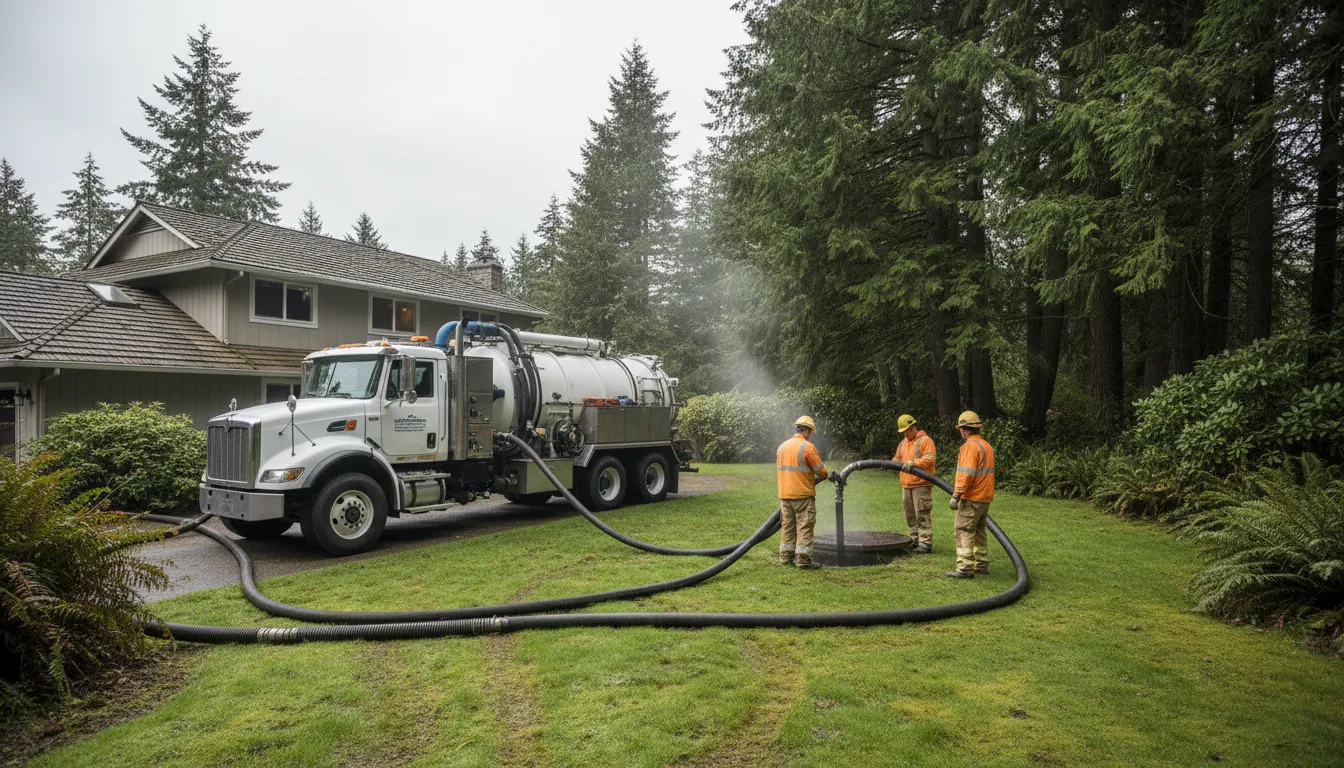
Our service area is staffed to deliver a 2 to 4 hour on-site response for most Oregon locations. We arrive equipped to pump, inspect, and document on the same visit.
Fully equipped pump trucks on every emergency call
Our vacuum trucks carry the hose length, suction capacity, and inspection tools to handle tanks from 750 to 10,000+ gallons, including multi-compartment commercial systems.
No surprise fees for after-hours service
Septiclear Inc does not charge a premium for nights, weekends, or holiday calls. The rate you receive is the same regardless of when you call.
30-day satisfaction guarantee
If a problem recurs within 30 days that is attributable to our service, we return at no additional charge.
Across Oregon since founding
Trusted in the Pacific Northwest
All Oregon health & env. codes
Need service today? We're ready.
Call now for same-day emergency pumping or schedule your next routine visit.
Why Choose Our Emergency Septic Tank Pumping
Septiclear Inc has been responding to septic emergencies across Oregon since 2012, serving Multnomah, Clackamas, Washington, Yamhill, Columbia, and Marion counties. Our technicians are dispatched with fully loaded vacuum trucks and inspection equipment, prepared to pump, assess, and document your system on the same visit.
We don’t send a crew that has to come back the next day with the right equipment. Our emergency trucks carry extended hose lengths for deep tanks and restricted access points, camera inspection equipment for diagnosing the failure cause, and all required safety gear for confined space work.
Septiclear Inc is licensed, bonded, and insured in compliance with Oregon DEQ OAR 340-071 and all applicable county health department requirements. All waste is transported in licensed vehicles and disposed of at Oregon DEQ-approved treatment facilities. We provide a completed manifest and service report on every emergency call – documentation your insurance company, property manager, or health department may require.
We pump all tank types and sizes on emergency calls: concrete tanks, fiberglass tanks, polyethylene tanks, and commercial multi-compartment systems. Our technicians are trained in OSHA confined space entry protocols and carry the required safety equipment for every pump-out.
No surprise charges. No hidden fees for after-hours dispatch. You receive a written quote before any work begins and a written service report after every visit.
Our emergency response is led by Ryan Lear, an Oregon DEQ-certified septic contractor. Our technicians are certified through the National Association of Wastewater Technicians (NAWT). Call (503) 542-9660 any time – day or night.
Certified, Insured & Compliant - Every Job, Every Time
State Licensed
Fully licensed by Oregon health & DEQ
Fully Insured
Liability & workers’ comp coverage
Approved Disposal
Licensed effluent disposal facilities only
Written Reports
Documented service record after every job
DEQ Compliant
Full Oregon environmental code compliance
Signs You Need Emergency Septic Tank Pumping
Sewage backup through floor drains, toilets, or sinks:
Blackwater or greywater surfacing through interior fixtures is the most urgent sign of a full or failed septic tank. When the tank reaches capacity and the outlet is blocked or the drain field is overwhelmed, effluent reverses course. This situation cannot wait – the longer sewage backs up inside a structure, the greater the contamination risk to floors, walls, and air quality.
Active alarm on the control panel:
A triggered float switch or pump chamber alarm means the system has reached a high-water condition. This happens when the dosing pump has failed, the dosing cycle is not completing, or the drain field is saturated and no longer accepting effluent. An alarm on a commercial aerobic system or a residential pressure distribution system requires same-day attention.
Sewage odors indoors from multiple drains:
When sulfur or sewage odors are present at multiple fixtures simultaneously, the tank is likely at or near overflow capacity. Hydrogen sulfide and methane gas will escape the system wherever they find an opening. This is a safety and health risk – not just a nuisance.
Wet soil or standing water over the absorption field:
Saturation above the drain field indicates the soil absorption system can no longer accept effluent. This typically happens when a full tank sends solids into the lateral lines, accelerating biomat formation and blocking the soil interface. Emergency pumping relieves the hydraulic load and slows further damage to the drain field.
Sewage surfacing in the yard near the tank or drain field:
Visible sewage on the surface of your property is an immediate environmental and public health hazard. Surface discharge may violate Oregon DEQ OAR 340-071 and local county health codes. Contact us immediately – we respond to surface discharge emergencies on a priority basis.
Is It Time to Pump Your Tank?
Our Emergency Septic Tank Pumping Process
Dispatch and ETA confirmation
You call, we answer. We confirm your address, assess the situation over the phone, dispatch the nearest available crew, and give you an estimated arrival time. We do not put you on hold or route you to a call center.
On-site assessment
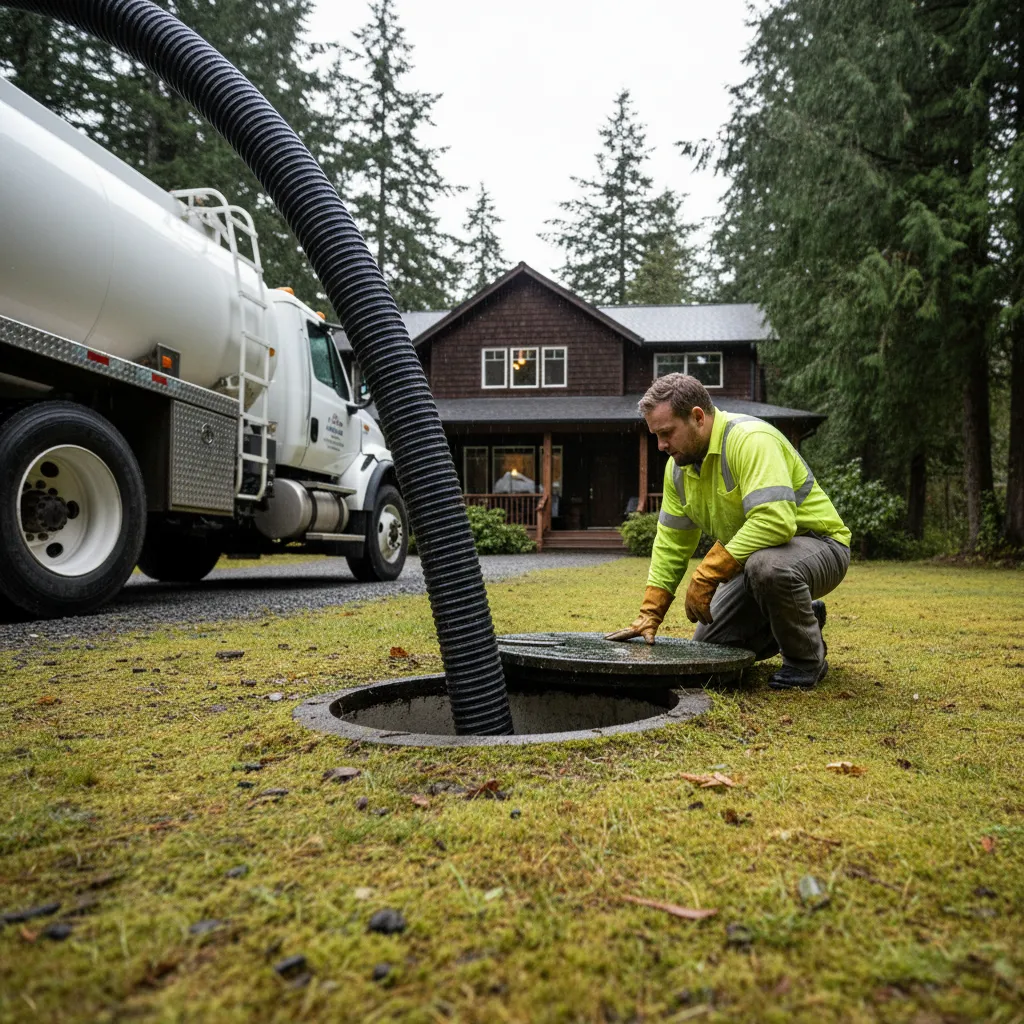
Our technician arrives, locates the tank and access points, and assesses the extent of the failure before starting the pump-out. We check effluent levels, inspect the inlet and outlet baffles, and confirm whether the failure is tank-related or drain field-related.
Emergency pump-out
We evacuate all sludge, effluent, and scum from the tank using our commercial vacuum truck. We break up compacted solids and ensure complete evacuation before rinsing the interior. For active backups into the structure, we prioritize clearing the outlet path first.
Post-pump inspection
After evacuation, we inspect the baffle condition, effluent filter, and tank walls using a probe or camera. We assess whether the drain field has been impacted and document all findings for your service record.
Disposal and documentation
All waste is transported to a licensed Oregon treatment facility. We complete the required hauler manifest and provide you with a written service report covering findings, work performed, and any follow-up needed.
Follow-up recommendations
Based on the on-site findings, we provide a clear written recommendation for any follow-up service – including drain field assessment, baffle replacement, effluent filter service, or pump chamber inspection. If the emergency was caused by a structural failure that needs immediate repair, we explain the scope and can schedule follow-up work directly.
Never Miss a Pump Date Again
We offer annual and biannual scheduled pumping plans for residential and commercial customers – set it once, stay consistently maintained.
Brands We Use
Septiclear Inc uses professional-grade vacuum and inspection equipment on every emergency pump-out.







Equipment is maintained and ready for emergency deployment at all times.
Other Services
Emergency septic tank pumping
24 hour septic pumping
After hours septic service
Emergency septic pump out
Same day septic pumping
Overnight septic tank service
Emergency septic service near me
Urgent septic tank pumping
Sewage backup emergency service
Emergency septic pump out service
Licensed emergency septic contractor
Oregon emergency septic service
Commercial emergency septic pumping
Residential emergency septic pumping
Weekend emergency septic service
Ready to schedule your service?
Prompt arrival windows, transparent pricing, no surprise fees – guaranteed.
FAQs About Emergency Septic Tank Pumping
How quickly can Septiclear Inc respond to an emergency?
For most locations in our Oregon service area, we dispatch within the hour and arrive on-site within 2 to 4 hours. Response time can vary depending on time of day and crew availability, but we prioritize active sewage backups and surface discharge situations. Call (503) 542-9660 for an immediate response estimate based on your location.
How much does emergency septic pumping cost?
Most residential emergency pump-outs in Oregon range from $350 to $600 depending on tank size and access conditions. Septiclear Inc does not charge additional fees for after-hours, weekend, or holiday emergency calls – the rate is the same regardless of when you call. We provide a written quote before work begins.
What happens if the tank is pumped but the problem continues?
If the problem recurs within 30 days and is attributable to our service, we return at no additional charge – that is our written satisfaction guarantee. If the continuing problem is from a separate issue such as a failed drain field, a cracked baffle, or a structural failure that was present before the pump-out, we provide a written diagnosis and a repair recommendation with associated costs.
What happens to the waste after pumping?
All waste is transported in a licensed vacuum truck and disposed of at an Oregon DEQ-approved treatment facility under Oregon DEQ OAR 340-071. You receive a completed hauler manifest and service report documenting the disposal chain.
Is it safe to use the plumbing after an emergency pump-out?
Yes, for standard household use once we confirm the tank is evacuated and the outlet pipe is clear. If the drain field was saturated or a structural component failed, we will advise you on any usage restrictions until follow-up repairs are completed.
How do I schedule emergency septic service?
Call (503) 542-9660 any time – 24 hours a day, 7 days a week, including holidays. You reach a live dispatcher who confirms your address, assesses the situation, and routes a crew to your location immediately. Do not wait if you have active sewage backup into your home or surface discharge in your yard.
Ready to Work With Us?
We’d love to hear from you. Whether you need routine service, a system inspection, or emergency help today, our team is ready.