
Drain Field Replacement
Professional drain field replacement service that restores your septic system’s full treatment capacity
Full System Inspection Every Visit
We check baffles, walls, and drain field signs – not just pump and leave
Emergency & Scheduled Service
Same-day emergency response for residential, commercial, and industrial
Written Report After Every Job
Compliant Effluent Disposal
Hauled and disposed at state-approved facilities – groundwater protected
Prompt Arrival Windows
Vetted Local Partners Statewide
All 36 Oregon counties covered through licensed local service partners
5 Highlights on Drain Field Replacement
Full system diagnosis before any excavation begins
Septiclear Inc inspects your laterals, distribution box, manifold, and perforated pipes to confirm drain field failure before recommending replacement
Certified soil evaluation and perc testing
Our soil scientists conduct hydraulic load assessments and soil morphology reviews to size your new absorption field correctly
Compliant permitting and setback verification
We pull every permit, confirm easement boundaries, and meet all local setback requirements before a single trench gets cut
Engineered leach field design
New installations use gravel aggregate, chamber systems, or mound configurations based on your soil’s permeability and infiltration rate
Complete backfilling, grading, and compaction
After installing your new drainfield, we restore the surface with proper grading, ensuring effluent disperses evenly across the absorption field
Across Oregon since founding
Trusted in the Pacific Northwest
All Oregon health & env. codes
Need service today? We're ready.
Call now for same-day emergency pumping or schedule your next routine visit.
Why Choose Our Drain Field Replacement
Septiclear Inc has been completing drain field replacement projects across Oregon since 2012, serving homeowners and property managers in Multnomah, Clackamas, Washington, Yamhill, Columbia, and Marion counties across a wide range of soil conditions, lot configurations, and system types. Our team includes licensed installers, certified inspectors, and on-staff soil scientists who evaluate every site before recommending a replacement plan.
We don’t guess. We test. Every drain field replacement starts with a formal perc test and soil morphology review so the new leach field matches your property’s actual hydraulic load capacity. That means fewer callbacks and better performance over time. We keep you informed at every stage so there are no surprises.
Our installers work with conventional gravel and pipe systems, chamber drainfields, mound systems, and pressure manifold configurations. We review all available options and match the design to your specific property’s soil permeability, household organic load, and local health department treatment level requirements – selecting the approach that best fits your property needs.
Septiclear Inc pulls all permits, coordinates with your local inspector, and handles every step from trenching to final grading. You won’t need to manage multiple contractors, access permits on your own, or chase down paperwork. We guide you through every requirement from start to finish.
Our work is led by Ryan Lear, an Oregon DEQ-certified septic contractor. Our installation team is certified through the National Association of Wastewater Technicians (NAWT) and follows current Oregon DEQ engineering standards for septic system installation. We back every drain field replacement with a 2-year workmanship warranty on all installation work – covering labor and materials from trenching through final grading. Our equipment is maintained, our crews are insured, and we ensure your new drain field is functioning correctly before we close the site. Call (503) 542-9660 to schedule a site evaluation.
Certified, Insured & Compliant - Every Job, Every Time
State Licensed
Fully licensed by Oregon health & DEQ
Fully Insured
Liability & workers’ comp coverage
Approved Disposal
Licensed effluent disposal facilities only
Written Reports
Documented service record after every job
DEQ Compliant
Full Oregon environmental code compliance
Signs You Need Drain Field Replacement
Soggy or waterlogged ground above the absorption field:
Standing water or persistently wet soil over your leach field – distinct from stormwater pooling – signals that effluent is surfacing instead of percolating downward. Saturated soil above the laterals means the drainfield can no longer accept hydraulic load. This is one of the clearest indicators that replacement is necessary.
Sewage odors in the yard or near the outlet:
When your drain field fails, it creates serious health and environmental issues – untreated wastewater and blackwater back up through the soil or discharge at the surface. Strong sewage or sulfur odors near your septic tank outlet or above the absorption field indicate the system is no longer treating effluent before dispersing it.
Slow drains and recurring backups inside the home:
Clogged or blocked lateral pipes restrict effluent flow from the distribution box into the leach field. When wastewater has nowhere to go, it backs up through your inlet baffle and into the home’s plumbing. Over time, repeated backups after pumping and jetting point to a compromised drainfield, not just a full tank.
Biomat buildup confirmed during inspection:
A thick biomat layer along the trench walls and perforated pipe blocks infiltration entirely. Once anaerobic biomat seals the soil interface, no aerating, flushing, or hydrojetting techniques will improve permeability or restore function. A soil scientist or hydrogeologist can confirm biomat saturation during a formal inspection.
Failed perc test on an aging system:
Older drainfields built with deteriorated pipe, compacted soil, or undersized aggregate often fail updated perc tests. If your soil no longer meets minimum infiltration standards, rehabilitation isn’t enough. Full drain field replacement with a properly engineered design specific to your site is the correct fix.
Is It Time to Pump Your Tank?
Our Drain Field Replacement Process
Site Inspection and Diagnosis
We inspect your septic tank, distribution box, manifold, and existing laterals to understand the full picture of your site conditions. We check for biomat, sludge accumulation, deteriorated pipe, and compacted soil. This step confirms whether repair or full replacement is the right call.
Soil Evaluation and Perc Testing
Our soil scientist conducts a perc test and soil morphology review to determine your soil’s infiltration rate and hydraulic load capacity. This data drives the entire replacement design and allows for careful planning tailored to your specific property.
Permitting and Engineering
We submit your drain field replacement plan to the local health department, confirm setback and easement requirements, and obtain all required permits to ensure work starts without delays.
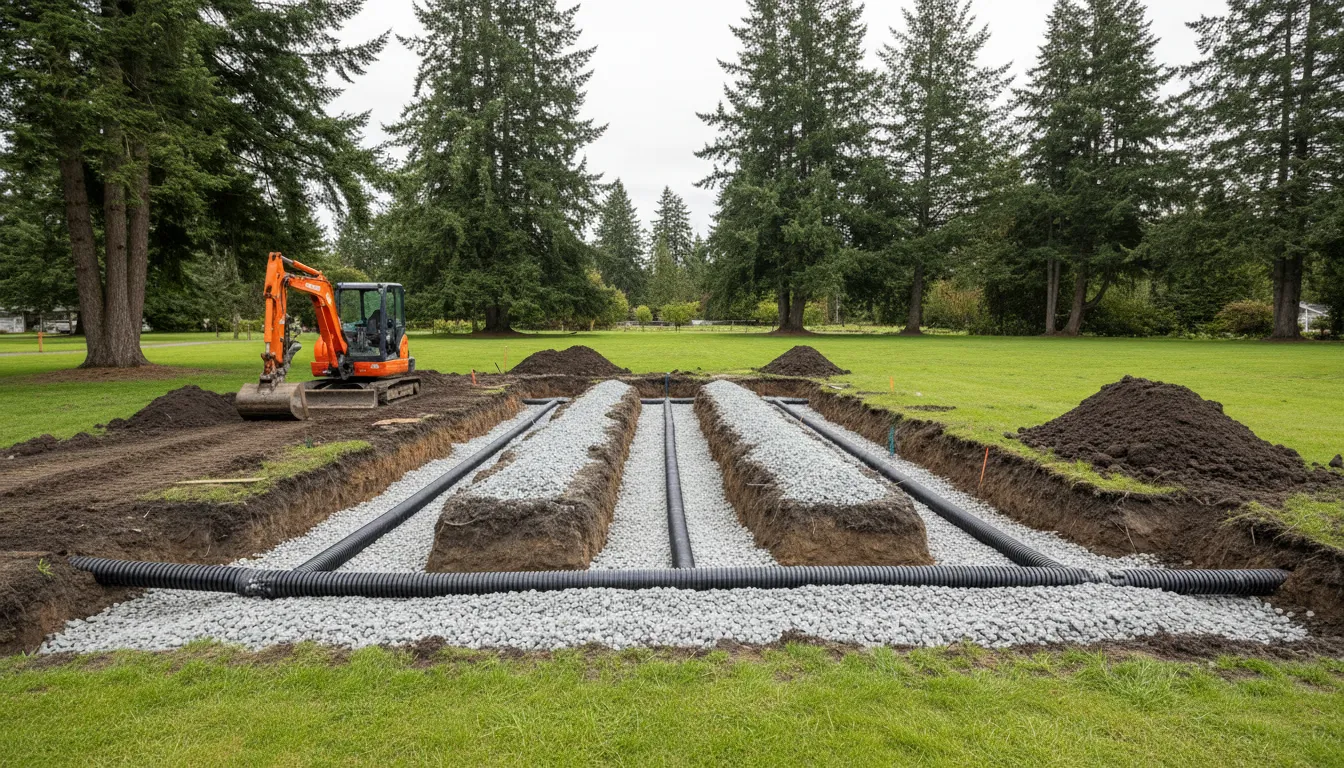
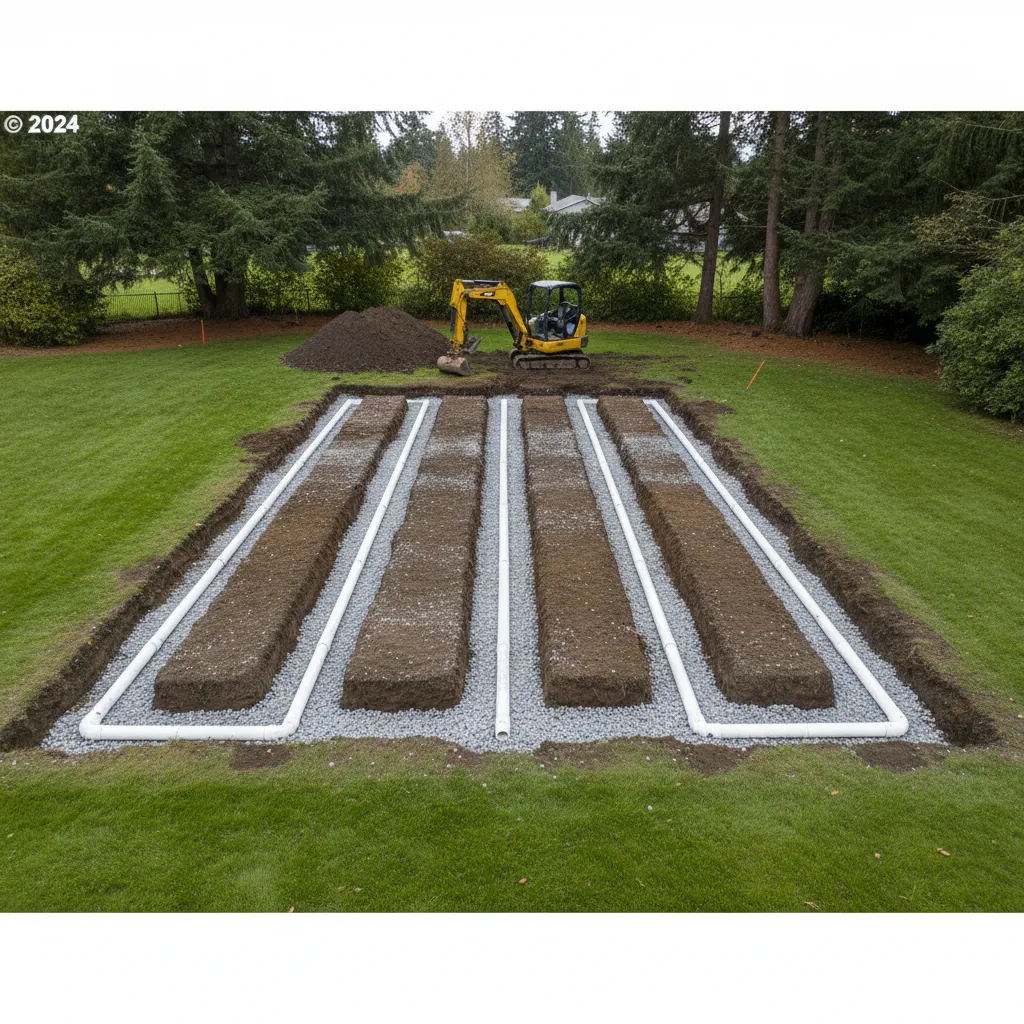
Excavation and Trenching
Our crew carries out the extensive excavation of the failed absorption field, removes deteriorated pipe, gravel, and aggregate, and prepares clean trenches to the engineered depth and width. Careful planning at this stage keeps the installation process on schedule.
Installation
We install new perforated pipe, chamber systems, or pressure manifold laterals depending on your approved design – each option selected to give your new system the best possible long-term performance. We place clean gravel aggregate, set the distribution box, and connect the header pipe.
Backfilling, Grading, and Final Inspection
We backfill trenches, compact the soil to spec, and grade the surface for proper, efficient drainage. A licensed inspector signs off before we close the site.
Never Miss a Pump Date Again
We offer annual and biannual scheduled pumping plans for residential and commercial customers – set it once, stay consistently maintained.
Brands We Use
Septiclear Inc installs drain field components from trusted, proven manufacturers. Quality materials extend the life of your new absorption field and reduce the risk of early failure.




All drain field replacement work involves excavation near active septic components.
Other Services
Drain field replacement
Leach field replacement
Septic absorption field repair
Drainfield installation
Septic field replacement
Perforated pipe installation
Drain field repair
Seepage bed replacement
Perc test and soil evaluation
Failed drain field replacement
Septic leach field repair
Biomat removal and drainfield restoration
Drain field replacement cost
Affordable drainfield replacement
Septic system drain field installer
Ready to schedule your service?
Prompt arrival windows, transparent pricing, no surprise fees – guaranteed.
FAQs About Drain Field Replacement
What is drain field replacement?
Drain field replacement is the full removal and reinstallation of your septic system’s absorption field. It includes excavating failed laterals, removing deteriorated pipe and gravel aggregate, and installing a new engineered leach field designed to match your soil’s infiltration capacity and your household’s hydraulic load. Use this page as a guide to understand the process and stay fully informed before work begins.
When does a drain field need to be replaced?
Replacement is necessary when your absorption field shows signs of irreversible failure – saturated soil, surfacing effluent, confirmed biomat buildup, or a failed perc test. These issues typically develop over time as the system ages and soil permeability degrades. Pumping, jetting, or flushing won’t fix a drainfield where the soil’s permeability is permanently compromised.
Why does a drain field fail?
Drain fields fail for several reasons: biomat sealing the soil interface, compacted or impermeable soil, deteriorated perforated pipes, hydraulic overload from excessive water usage, and age-related breakdown of gravel aggregate and laterals. Anaerobic conditions in the soil accelerate failure once effluent treatment stops.
How long does drain field replacement take?
Most residential drain field replacements take two to four days on site, depending on system size, soil conditions, and permit timelines. Larger mound systems or pressure manifold installations may take longer. We give you a clear time estimate at the start of every project.
Can a drain field be repaired instead of replaced?
Sometimes. If only a section of the laterals is blocked or a single distribution box is damaged, targeted repairs may be a viable option. A proper inspection and perc test determine the right approach. We recommend scheduling a site visit if you have questions about your system – call (503) 542-9660 and we will help you find the right solution.
Does Septiclear Inc handle the permits?
Yes. As your dedicated service provider, we manage the entire permitting process, including soil evaluation reports, engineered design submission, setback verification, and final inspection coordination with your local health department. We believe in sharing all relevant documentation with you so you have full visibility into what has been submitted and approved.
Ready to Work With Us?
We’d love to hear from you. Whether you need routine service, a system inspection, or emergency help today, our team is ready.