
Septic System Design Planning
Professional septic system design planning that meets code, protects your property, and gets your permit approved the first time.
Full System Inspection Every Visit
We check baffles, walls, and drain field signs – not just pump and leave
Emergency & Scheduled Service
Same-day emergency response for residential, commercial, and industrial
Written Report After Every Job
Compliant Effluent Disposal
Hauled and disposed at state-approved facilities – groundwater protected
Prompt Arrival Windows
Vetted Local Partners Statewide
All 36 Oregon counties covered through licensed local service partners
5 Highlights on Septic System Design Planning
Site-specific design plans
Septiclear Inc evaluates your soil profile, soil morphology, and percolation rate to produce a design plan tailored to your exact lot size, topography, and daily flow requirements.
Full permit documentation
Every septic system design plan includes stamped blueprints, site maps, specifications, and all forms required by your local health department for permit approval.
Accurate hydraulic loading calculations
We calculate design flow in gallons per day based on bedroom count, occupancy load, and soil absorption capacity to size your tank, drain field, and distribution system correctly.
Alternative and conventional system expertise
From gravity-fed conventional systems to mound systems, chamber systems, drip systems, and aerobic treatment units, we design the right system for your site conditions.
Setback compliance built in
Every design accounts for well setback, property line setback, surface water setback, and foundation setback distances required by local zoning and health codes.
Across Oregon since founding
Trusted in the Pacific Northwest
All Oregon health & env. codes
Need service today? We're ready.
Call now for same-day emergency pumping or schedule your next routine visit.
Why Choose Our Septic System Design Planning
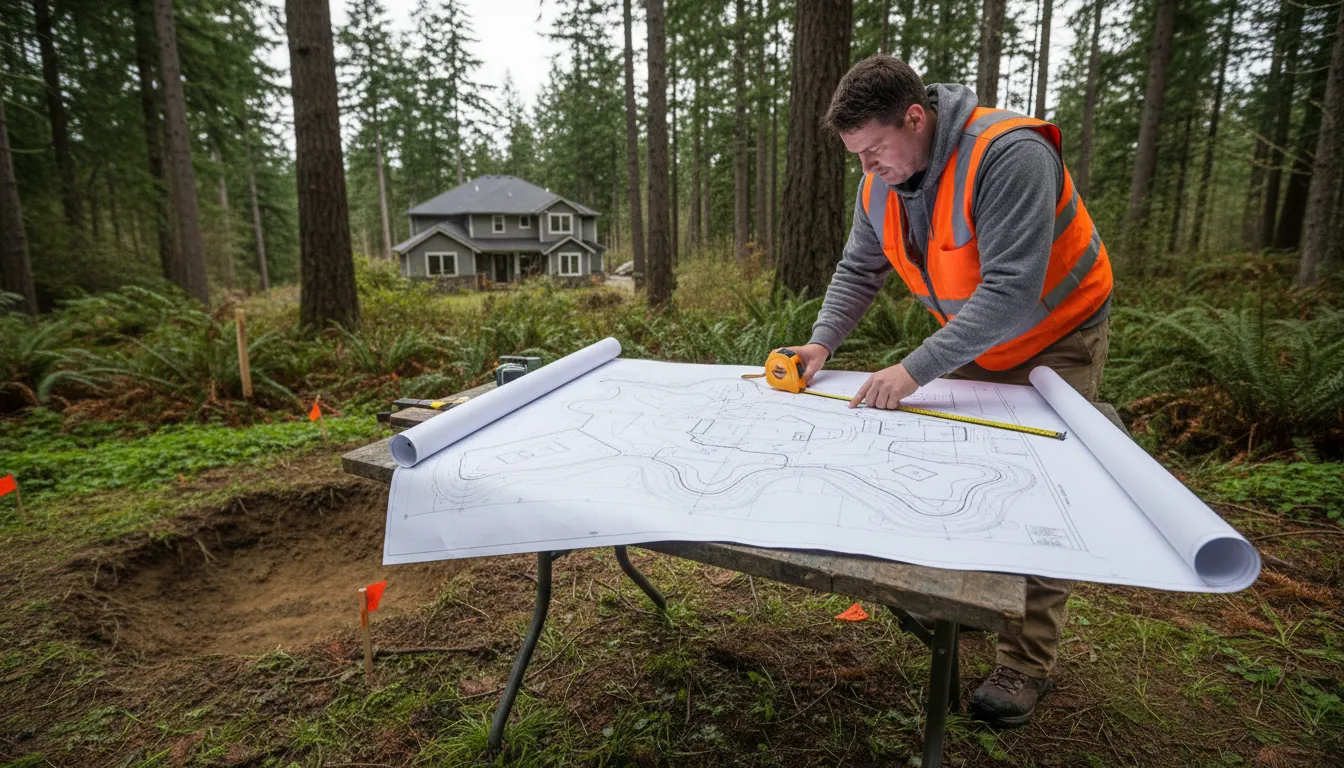
Septiclear Inc has been bringing certified, licensed designers and soil scientists to every septic system design planning project since 2012, serving Multnomah, Clackamas, Washington, Yamhill, Columbia, and Marion counties. We don’t hand you a generic template. We survey your property, map your site, and measure your soil horizons before we draw a single line.
Our designers hold current certifications and work directly with county health departments and state regulators. That relationship speeds up permit approval and cuts down on costly revision cycles. We’ve designed residential systems for single-family lots and commercial systems for high-occupancy facilities, and we apply the same rigor to both.
We use licensed soil scientists to conduct soil evaluations and perc tests. That data drives every hydraulic loading rate calculation and every drain field sizing decision we make. You get a design plan that reflects real site conditions, not assumptions.
Septiclear Inc stands behind its work. If your permit application is rejected due to a design error on our part, we revise the plan at no additional charge. Our designs are compliant with Oregon DEQ OAR 340-071 and local county health department codes, and we submit complete, accurate packages that hold up under regulatory review and perform in the field for decades.
Our design work is led by Ryan Lear, an Oregon DEQ-certified septic contractor. Our team is certified through the National Association of Wastewater Technicians (NAWT). Call (503) 542-9660 to schedule your site assessment.
Certified, Insured & Compliant - Every Job, Every Time
State Licensed
Fully licensed by Oregon health & DEQ
Fully Insured
Liability & workers’ comp coverage
Approved Disposal
Licensed effluent disposal facilities only
Written Reports
Documented service record after every job
DEQ Compliant
Full Oregon environmental code compliance
Signs You Need Septic System Design Planning
You're building on a vacant lot:
Any new construction that won’t connect to a municipal sewer line requires a permitted onsite system. Septic system design planning must happen before you break ground. Without an approved design plan and permit, your building permit won’t clear.
Your existing system has failed or is malfunctioning:
A failed drain field, a cracked septic tank, or a clogged leach field often can’t be repaired in place. When a system collapses or backs up repeatedly, the health department may require a full replacement with a new design plan that meets current code. That means starting the design process from scratch.
You're adding bedrooms or increasing occupancy load:
Adding a bedroom, converting a garage to living space, or expanding a commercial facility increases your daily flow and hydraulic loading rate. Your current system may be undersized for the new demand. A revised septic system design plan ensures your tank capacity and soil absorption system can handle the increased load.
Your perc test results are outside conventional parameters:
Impermeable soils, high groundwater, a shallow water table, or saturated soil conditions rule out standard gravity-fed systems. Sites like these need alternative system designs – mound systems, pressure distribution systems, or drip-irrigated systems – that require detailed engineering and specialized design plans.
You're purchasing property and need a site assessment:
Before you close on a lot, you need to know whether it can support a compliant onsite system. A professional site evaluation and septic system design feasibility assessment tells you what system type the site can accommodate and what the installation will cost.
Is It Time to Pump Your Tank?
Our Septic System Design Planning Process
Site Assessment and Survey
We visit your property to survey the lot, map topography, measure elevation and slope gradient, and locate existing structures, wells, and surface water features. We record all setback distances and document property lines.
Soil Evaluation and Perc Testing
Our soil scientist digs test pits to examine soil profile, soil texture, soil porosity, and soil horizons. We conduct percolation tests to measure the perc rate and determine the hydraulic loading rate your soil can accept.
System Selection and Sizing
We select the appropriate system type – conventional, mound, chamber, drip, or aerobic treatment unit – based on site conditions, daily flow calculations, and local code requirements. We size the septic tank, drain field, distribution box, and all lateral and header pipes.
Design Plan and Specifications
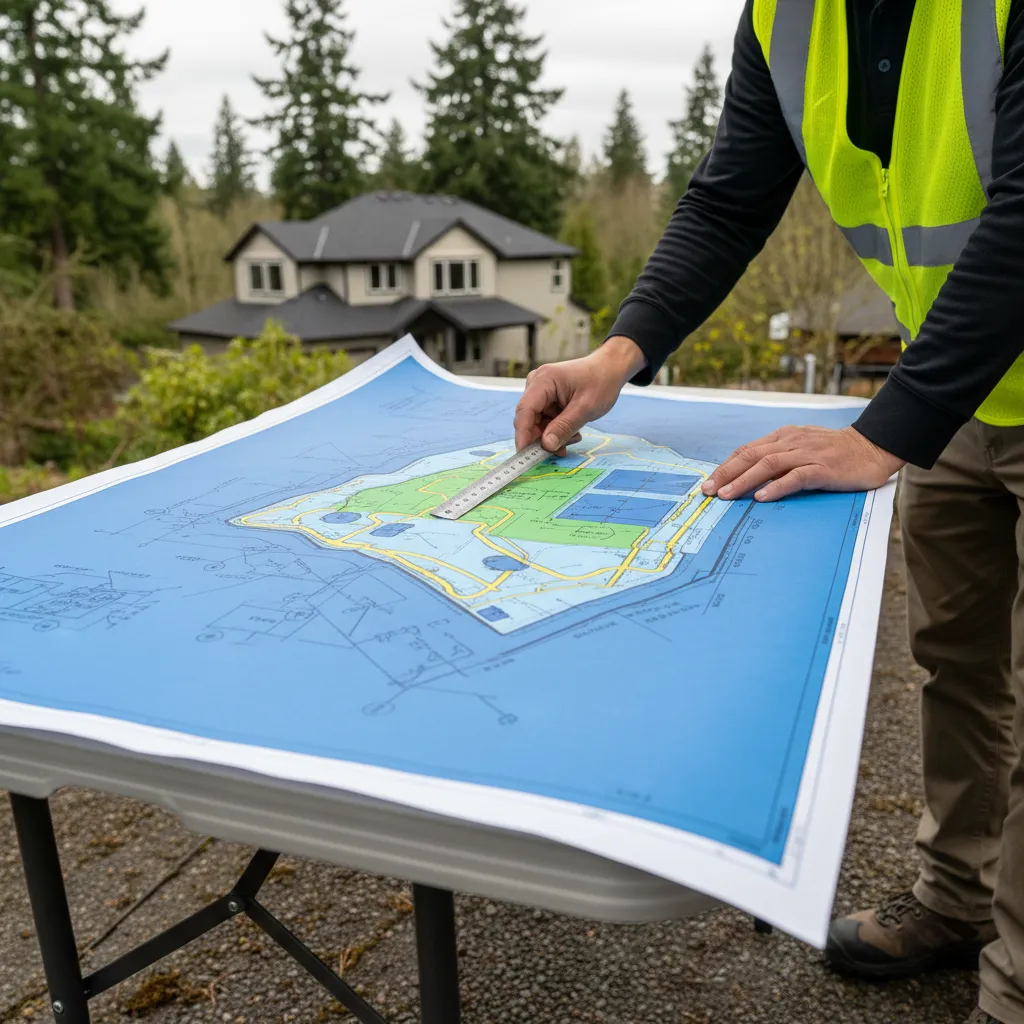
We draft a complete site plan, blueprint, and written specifications. The package includes tank placement, leach field layout, pipe routing, gravel and aggregate details, geotextile fabric specs, and riser and access port locations.
Permit Submission and Approval
We submit the design plan to the health department, respond to any reviewer comments, and track the permit through to approval. You receive a certified, permitted design plan ready for your contractor to install.
Never Miss a Pump Date Again
We offer annual and biannual scheduled pumping plans for residential and commercial customers – set it once, stay consistently maintained.
Brands We Use
Septiclear Inc specifies and works with trusted, proven brands in septic system design planning and installation. The products we include in our design plans are selected for durability, code compliance, and long-term performance.






Every product specified in a Septiclear Inc design plan meets or exceeds local health department and state regulatory standards. We only recommend equipment we’d install on our own properties.
Other Services
Septic system design planning
Onsite system design
Perc test, soil evaluation, drain field sizing
Septic design plan
Septic system site plan
Hydraulic loading rate, daily flow, bedroom count
Residential septic design
Home septic system planning
Leach field design, soil absorption system, setback
Alternative septic system design
Mound system design planning
Pressure distribution, aerobic treatment unit, drip system
Septic permit design
Health department septic approval
Septic blueprint, site assessment, soil scientist
Ready to schedule your service?
Prompt arrival windows, transparent pricing, no surprise fees – guaranteed.
FAQs About Septic System Design Planning
What is septic system design planning?
Septic system design planning is the process of evaluating a site, testing the soil, calculating daily flow and hydraulic loading rates, selecting the right system type, and producing a stamped design plan and specifications that meet local health department and zoning requirements.
When do you need a septic system design plan?
You need one any time you’re installing a new onsite system, replacing a failed system, expanding a structure that increases occupancy load, or purchasing a lot where no system currently exists. Most jurisdictions require a permitted design plan before any excavation begins.
How does the perc test affect the design?
The percolation rate determines how fast your soil absorbs effluent. A fast perc rate allows a smaller drain field. A slow rate requires a larger field or an alternative system like a mound or drip-irrigated system. Impermeable soils that fail the perc test entirely may require an aerobic treatment unit or a holding tank.
Can a septic system be designed for any lot?
Most lots can support some type of onsite system, but the system type depends on soil conditions, lot size, groundwater depth, and setback requirements. A site assessment tells you what’s feasible before you commit to a design.
Does Septiclear Inc handle the permit submission?
Yes. We prepare all permit documentation, submit the design plan to the health department, and manage the review process through to approval. You don’t need to navigate the regulatory process on your own. Call (503) 542-9660 to get started.
How long does septic system design planning take?
Most residential design projects take two to four weeks from the initial site visit to permit submission, depending on soil testing schedules and health department review timelines. Complex sites or alternative system designs may take longer.
Ready to Work With Us?
We’d love to hear from you. Whether you need routine service, a system inspection, or emergency help today, our team is ready.