
Septic Tank Replacement
When your septic tank can no longer be repaired, Septiclear Inc provides professional, fully permitted septic tank replacement for residential and commercial properties across Oregon. Call (503) 542-9660 to schedule your assessment.
Full System Inspection Every Visit
We check baffles, walls, and drain field signs – not just pump and leave
Emergency & Scheduled Service
Same-day emergency response for residential, commercial, and industrial
Written Report After Every Job
Compliant Effluent Disposal
Hauled and disposed at state-approved facilities – groundwater protected
Prompt Arrival Windows
Vetted Local Partners Statewide
All 36 Oregon counties covered through licensed local service partners
5 Highlights on Septic Tank Replacement
Concrete, fiberglass, and polyethylene tanks installed
Septiclear Inc replaces all tank types – matching material to site conditions, soil type, depth of burial, and local health department acceptance.
Full permit management
We prepare the permit application, submit it to your county health department, and coordinate all required inspections under Oregon DEQ OAR 340-071 before and after installation.
In-house excavation crew
We do not subcontract the excavation, tank removal, or installation. Our licensed crew operates every phase of the replacement from soil exposure through final backfill.
Same-day assessment available
When a tank failure creates an urgent situation, we respond quickly, assess the damage, and give you a clear replacement recommendation within the same visit.
Written workmanship guarantee
Every septic tank replacement is backed by a written workmanship guarantee covering all installation labor and component placement.
Across Oregon since founding
Trusted in the Pacific Northwest
All Oregon health & env. codes
Need service today? We're ready.
Call now for same-day emergency pumping or schedule your next routine visit.
Why Choose Our Septic Tank Replacement
Septiclear Inc has been replacing septic tanks across Oregon since 2012, completing 500+ tank replacements in Multnomah, Clackamas, Washington, Yamhill, Columbia, and Marion counties. Our licensed contractors and certified operators handle residential and commercial replacements on a daily basis – concrete tanks, fiberglass tanks, polyethylene tanks, and systems of all sizes.
We carry our own excavation equipment. When we arrive at your site, our crew assesses the existing tank condition, determines the correct replacement tank based on your household size and soil conditions, and prepares a permit application for your county health department under Oregon DEQ OAR 340-071. We don’t subcontract any phase of the job.
We install tanks and components that carry NSF/ANSI certifications for water quality and environmental compliance – the standard recognized by Oregon county health departments for wastewater system materials. Our 10-brand product list includes manufacturers whose products are tested and certified for subterranean wastewater applications.
Every replacement we complete is inspected by your county health department before we backfill. You receive a certified as-built drawing and a complete permit record.
Our tank replacement work is led by Ryan Lear, an Oregon DEQ-certified septic contractor. Our team is certified through the National Association of Wastewater Technicians (NAWT). Every replacement is backed by a 2-year workmanship warranty on all installation labor and component placement. Call (503) 542-9660 for a free site assessment.
Certified, Insured & Compliant - Every Job, Every Time
State Licensed
Fully licensed by Oregon health & DEQ
Fully Insured
Liability & workers’ comp coverage
Approved Disposal
Licensed effluent disposal facilities only
Written Reports
Documented service record after every job
DEQ Compliant
Full Oregon environmental code compliance
Signs You Need Septic Tank Replacement
Sewage backup inside the home:
When sewage backs up through floor drains, toilets, or sinks, the tank is either full to the point of failure or the inlet and outlet connections are blocked by a collapsed baffle or corroded pipe. If pumping provides only temporary relief and the backup returns within a short time, structural tank failure is the likely cause.
Visible cracks or structural damage to the tank:
Concrete tanks develop cracks along the walls and around the inlet and outlet pipes from hydrogen sulfide corrosion, soil pressure, and freeze-thaw cycles. Steel tanks deteriorate from the inside out. When the structural wall of the tank fails, effluent can escape into the surrounding soil and groundwater before reaching the drain field – requiring immediate replacement.
Abnormally lush or rapidly growing grass above the tank:
Saturated soil above the tank location, or a visibly greener area of grass directly above the buried tank, indicates effluent is surfacing through a crack or failed seal. Untreated effluent reaching the surface carries pathogens and requires prompt attention.
The tank is 30+ years old and has never been inspected:
Concrete tanks installed before 1990 may have deteriorating baffles, corroded outlet pipes, and aged walls that no longer meet current structural integrity standards. Without a recent inspection, a tank of this age is a risk for unexpected failure – particularly if the property has changed ownership and no service history is available.
The distribution box or drain field shows signs of failure:
When the distribution box is cracked, unlevel, or overloaded, and the drain field shows biomat buildup or saturation, the issue sometimes traces back to a tank that is consistently overflowing solids into the system. Replacing the tank – and installing a proper effluent filter – can protect the drain field and delay the need for full system replacement.
Is It Time to Pump Your Tank?
Our Septic Tank Replacement Process
Site Assessment
We locate and expose your existing tank, assess its structural condition, and evaluate the inlet pipe, outlet pipe, baffles, and distribution box. We also check the drain field for signs of damage caused by the failing tank.
Permit Application
We prepare the replacement permit package, including tank specifications, site plan, and supporting documentation, and submit it to your county health department under Oregon DEQ OAR 340-071. We track the review and confirm approval before excavation begins.
Excavation and Existing Tank
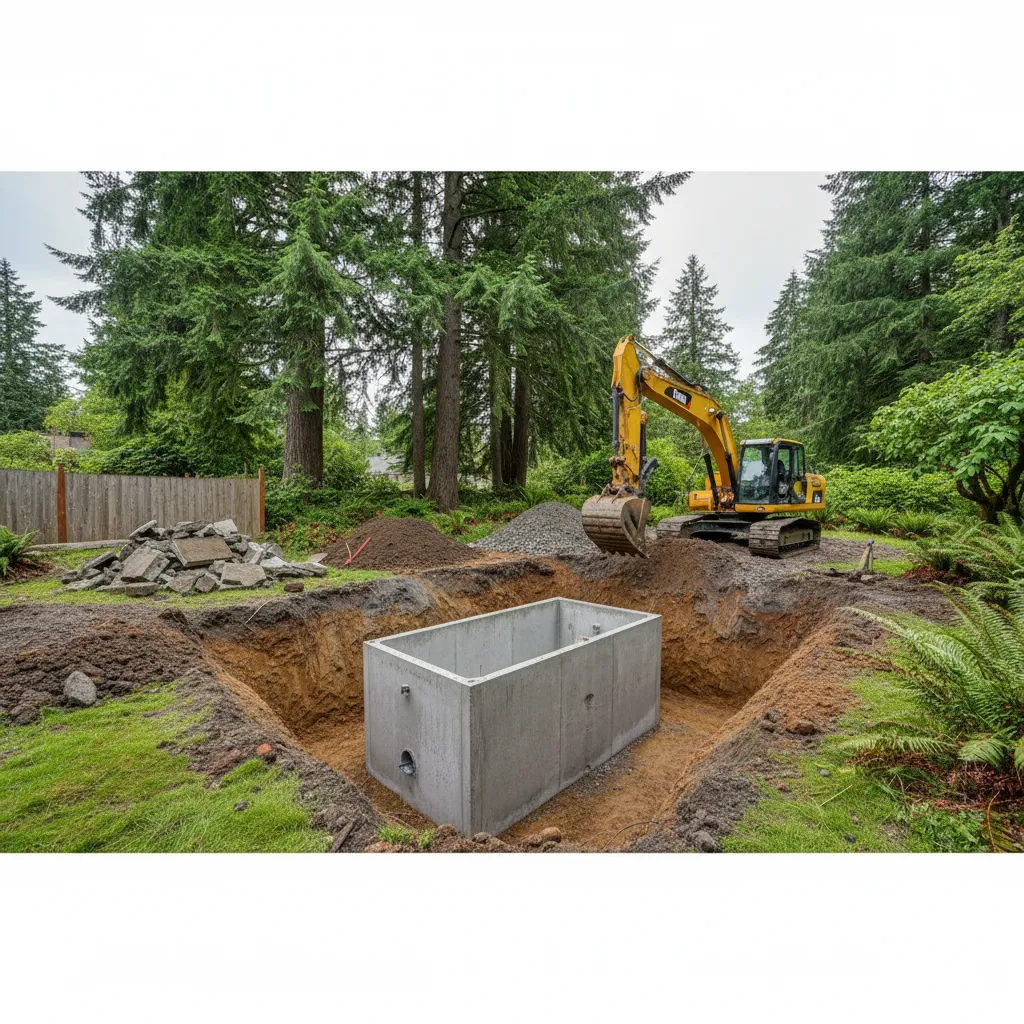
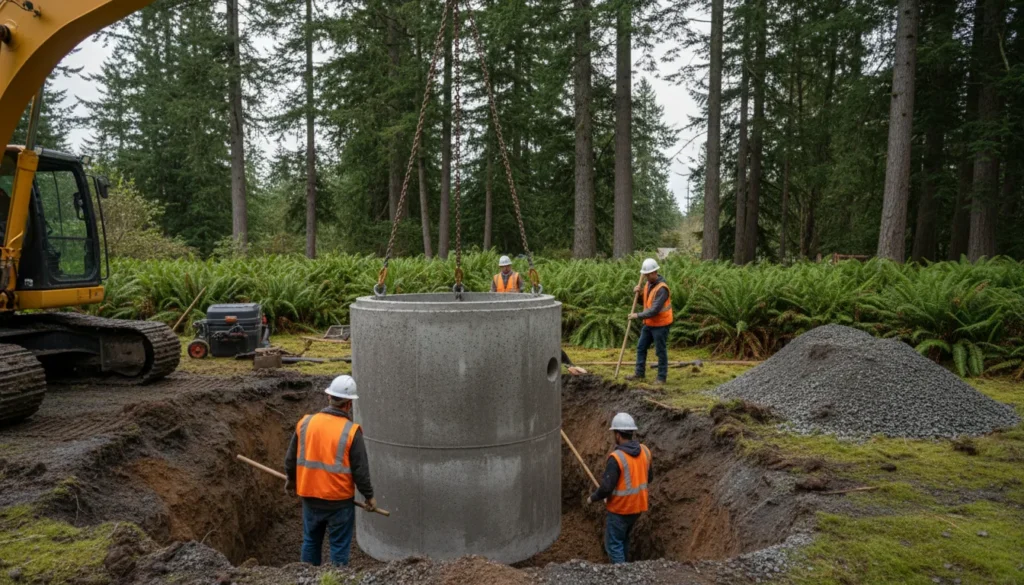
Removal Our crew excavates the existing tank, pumps and decommissions it per Oregon DEQ requirements, and prepares the installation bed for the replacement tank.
New Tank Installation
We set the replacement tank, install new inlet and outlet baffles, connect the effluent filter, and seal all pipe connections. Risers and lids are installed to current access requirements.
Backfill and Grading
We backfill the excavation, compact to prevent settling, and grade the surface to match the surrounding area.
Inspection and Certification
The county inspector verifies the installation before we close the site. After sign-off, we provide the certified as-built drawing and permit record for your files.
Never Miss a Pump Date Again
We offer annual and biannual scheduled pumping plans for residential and commercial customers – set it once, stay consistently maintained.
Brands We Use
Septiclear Inc sources septic tanks and components from trusted manufacturers whose products carry NSF/ANSI certifications recognized by Oregon county health departments.






All brands we install carry NSF/ANSI certifications and meet Oregon DEQ and local county health department acceptance requirements.
Other Services
Septic tank replacement
Replace septic tank
Concrete septic tank replacement
Residential septic tank replacement
Commercial septic tank replacement
Fiberglass septic tank installation
Polyethylene septic tank installation
Septic tank removal and replacement
Old septic tank replacement
Septic tank replacement cost
Wastewater tank replacement near me
Licensed septic tank installer
Emergency septic tank replacement
Permitted septic tank replacement
Oregon DEQ compliant tank replacement
Ready to schedule your service?
Prompt arrival windows, transparent pricing, no surprise fees – guaranteed.
FAQs About Septic Tank Replacement
How do I know I need a tank replacement vs. a repair?
Repair is the right answer when the failure is localized – a cracked baffle, a corroded pipe connection, or a faulty effluent filter. Replacement is necessary when the tank wall is structurally compromised, when there are multiple simultaneous failures across the tank body, or when the tank is so deteriorated that repair would cost more than a replacement and would not provide a reliable long-term result.
How long does a septic tank replacement take?
Most residential septic tank replacements take one to two days from excavation through final backfill and inspection. The permit approval process from your county health department typically adds one to three weeks to the total timeline before installation can begin.
What does septic tank replacement cost?
In Oregon, costs depend on tank material, tank size, burial depth, access conditions, and local permit fees. As a guide: polyethylene tank replacement (1,000 gallon) typically ranges from $3,500 to $6,000; concrete tank replacement (1,500 gallon) from $5,000 to $9,000. Larger commercial tanks and difficult access conditions raise costs further. We provide a written estimate before any work begins – call (503) 542-9660 for a free site assessment.
Does Septiclear Inc pull the permits?
Yes. We prepare all required documentation, submit the permit application to your county health department under Oregon DEQ OAR 340-071, and coordinate the required pre-installation and post-installation inspections. You don’t need to manage the permit process.
Can the drain field be preserved during tank replacement?
In most cases, yes. If the drain field is still functioning and the failure is isolated to the tank itself, we replace only the tank. We inspect the distribution box and lateral lines as part of the assessment to confirm the drain field condition before we finalize the replacement scope.
What tank material should I choose?
Polyethylene tanks are lightweight, corrosion-resistant, and easier to set in tight access situations. Concrete tanks are heavier, more stable in high-water-table sites, and accepted by all county health departments. Fiberglass tanks offer chemical resistance and low weight. We recommend the material best suited to your site conditions and what your county health department prefers.
How soon can Septiclear Inc complete a tank replacement?
Once a permit is approved by your county health department, most replacements are scheduled within a week or two depending on workload and site access. Same-day assessments are available for urgent situations. Call (503) 542-9660 to schedule your assessment and we’ll give you an honest timeline based on current permit processing in your county.
Ready to Work With Us?
We’d love to hear from you. Whether you need routine service, a system inspection, or emergency help today, our team is ready.