
Septic System Design and Permitting
Professional septic system design and permitting services for homeowners and commercial property owners – engineered to code, approved on time.
Full System Inspection Every Visit
We check baffles, walls, and drain field signs – not just pump and leave
Emergency & Scheduled Service
Same-day emergency response for residential, commercial, and industrial
Written Report After Every Job
Compliant Effluent Disposal
Hauled and disposed at state-approved facilities – groundwater protected
Prompt Arrival Windows
Vetted Local Partners Statewide
All 36 Oregon counties covered through licensed local service partners
5 Highlights on Septic System Design and Permitting
Licensed site evaluation included
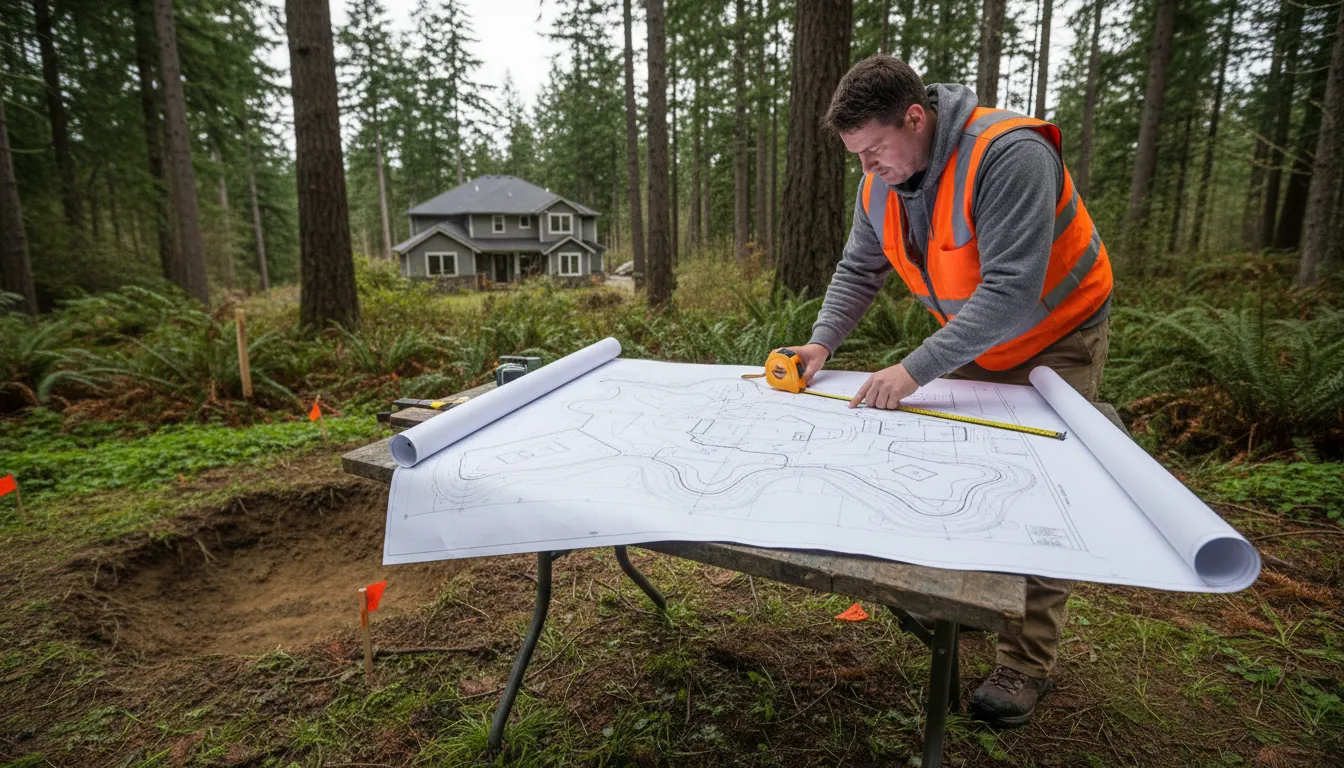
Septiclear Inc assigns a licensed site evaluator and soil scientist to every project, conducting perc tests, test pit excavations, and field soil profile analysis before any design work begins.
Full permit application management
We prepare, submit, and track your permit application through the local health department, coordinating with engineers, inspectors, and zoning officials so you don’t have to.
Engineered site plans and as-built drawings
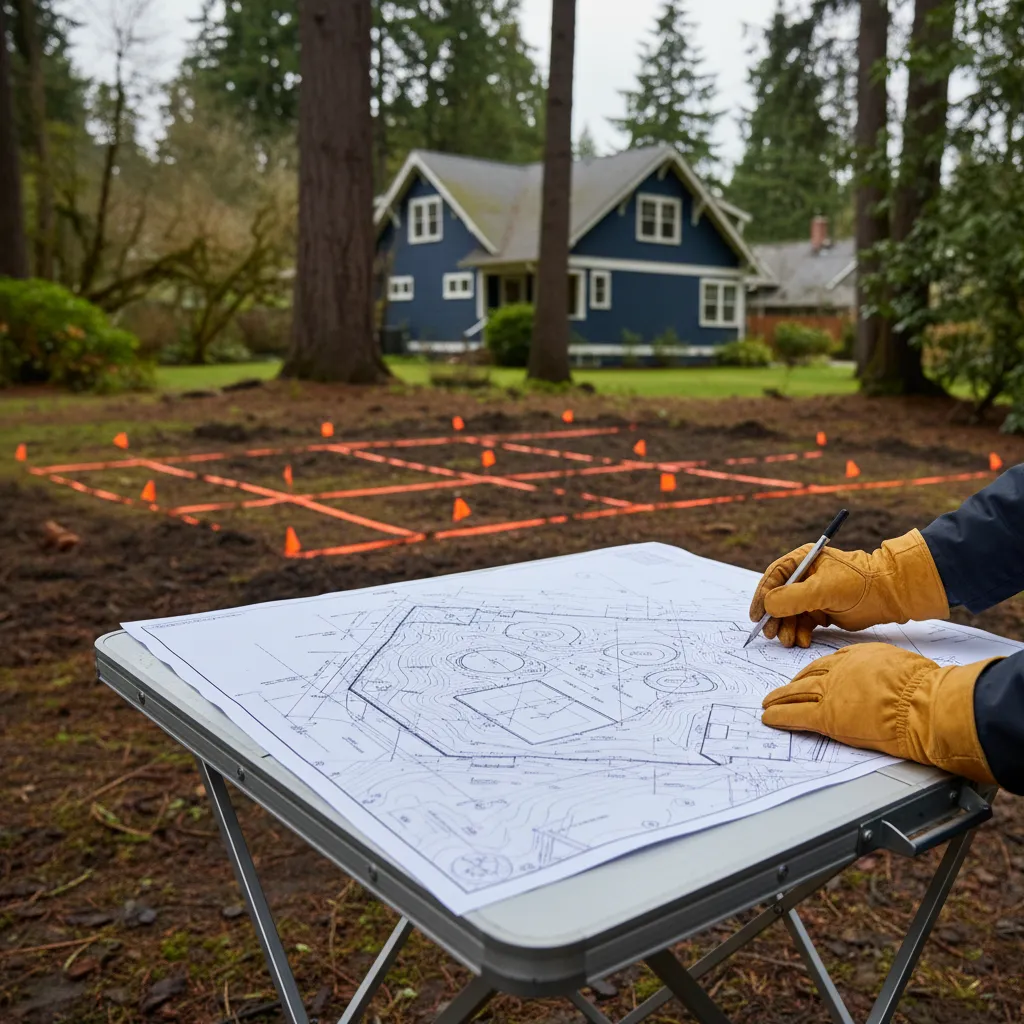
Every design includes a certified site plan with topographic mapping, setback distances, benchmark elevations, and drain field sizing calculated to match your lot’s percolation rate and hydraulic capacity.
Conventional and alternative system design
We design gravity-fed conventional systems, mound systems, drip systems, and aerobic treatment units based on site conditions, groundwater depth, and loading rate requirements to ensure proper waste treatment for every property.
Compliance with Oregon DEQ OAR 340-071 and local sanitary codes
All designs meet applicable building codes, sanitary codes, and setback requirements from wells, wetlands, property lines, and floodplains, ensuring quality outcomes that protect public health and the environment.
Across Oregon since founding
Trusted in the Pacific Northwest
All Oregon health & env. codes
Our Septic System Design and Permitting Services:
Need service today? We're ready.
Call now for same-day emergency pumping or schedule your next routine visit.
Why Choose Our Septic System Design and Permitting Services
Septiclear Inc has been bringing certified engineering expertise and hands-on field experience to every septic system design and permitting project since 2012, serving Multnomah, Clackamas, Washington, Yamhill, Columbia, and Marion counties. Our team of licensed designers has processed hundreds of permit applications across residential, commercial, and municipal properties. We know what health departments require, and we submit complete, accurate applications the first time.
We conduct thorough site assessments before designing anything. That means perc testing, test pit excavation, soil horizon evaluation, and groundwater table measurement – all performed by licensed professionals with field expertise. We don’t guess at percolation rates or loading rates. We measure them.
Our designs account for every variable: lot size, parcel topography, setback distances from wells and wetlands, seasonal groundwater fluctuations, and soil permeability. Whether your site needs a conventional drain field, a pressurized mound system, or an advanced aerobic treatment unit, we size and engineer the right solution.
We manage the full permitting process. We prepare the feasibility study, draft the site plan, calculate hydraulic capacity, and submit directly to the health department. We track review status, respond to reviewer comments, and secure your operation permit without delays.
Our design and permitting work is led by Ryan Lear, an Oregon DEQ-certified septic contractor. Our team holds certifications through the National Association of Wastewater Technicians (NAWT) and operates in full compliance with Oregon DEQ OAR 340-071. Septiclear Inc stands behind every design with documented service records, certified as-built drawings, and full regulatory compliance. Call (503) 542-9660 for a site-specific consultation.
Certified, Insured & Compliant - Every Job, Every Time
State Licensed
Fully licensed by Oregon health & DEQ
Fully Insured
Liability & workers’ comp coverage
Approved Disposal
Licensed effluent disposal facilities only
Written Reports
Documented service record after every job
DEQ Compliant
Full Oregon environmental code compliance
Signs You Need Septic System Design and Permitting
You're building on a vacant lot:
Any new construction on a parcel without sewer access or an existing septic system requires a full design and permit before breaking ground. The health department won’t issue a building permit without an approved septic site plan. Septiclear Inc handles the perc test, soil evaluation, and permit application from day one.
Your existing system is failing or non-compliant:
A failing drain field, a saturated leach field, or a system discharging untreated waste into groundwater triggers a mandatory replacement or upgrade. These are among the most common issues homeowners face, and they can cause serious damage to surrounding soil, water sources, and nearby properties. Non-compliant systems require a new engineered design and a fresh permit application before any remediation work begins.
You're adding bedrooms or expanding a commercial facility:
Increasing the number of bedrooms on a residential lot or expanding a commercial operation raises the hydraulic loading rate beyond what your current septic systems were designed to handle. The health department requires a new design and permit to verify the absorption field can manage the increased effluent volume.
Your property has never been perc tested:
If you’re purchasing land and planning to build, you need a percolation test and soil evaluation to confirm the site can support a septic system. Clayey or impermeable soils may require an alternative system design – a mound system or drip system – which demands additional engineering and permitting steps.
You need a variance or waiver from standard setback requirements:
Some lots can’t meet standard setback distances from wells, wetlands, or property lines. Securing a variance requires a detailed engineering justification, a site plan, and formal review by the health department. Septiclear Inc prepares and submits the full variance application on your behalf.
Is It Time to Pump Your Tank?
Our Septic System Design and Permitting Process
Site Assessment and Feasibility Study
We visit your lot, review topographic maps, and assess site conditions, groundwater depth, and available area for a drain field or alternative system. This step typically involves evaluating access to the installation area and confirming the site can support a compliant septic design before any further work proceeds.
Perc Testing and Soil Evaluation
Our licensed site evaluator excavates test pits, examines soil horizons, and conducts percolation tests. We measure percolation rates, identify seasonal high groundwater, and document field soil texture – sandy, silty, loamy, or clayey – to determine the correct loading rate and system type.
Engineered System Design
We calculate hydraulic capacity, size the septic tank, distribution box, dosing chamber, and absorption field, and select the appropriate system – conventional, mound, drip, or aerobic treatment unit. Our designs account for tank installation requirements, field installation specifications, and routine pumping intervals to ensure the system performs reliably. We draft a certified site plan with setback distances, benchmark elevations, and slope grades.
Permit Application Submission
We compile the complete permit application package – site plan, soil evaluation report, feasibility study, and engineering calculations – and submit directly to the health department.
Review, Approval, and Documentation
We track the application, respond to reviewer requests, and secure your signed operation permit. We deliver certified as-built drawings, maintenance guidelines, and a complete service record for your files.
Never Miss a Pump Date Again
We offer annual and biannual scheduled pumping plans for residential and commercial customers – set it once, stay consistently maintained.
Brands We Use
Septiclear Inc specifies and works with trusted, industry-proven brands on every septic system design and permitting project. The equipment we design around meets or exceeds regulatory standards for performance, durability, and compliance.







Every brand we specify carries the certifications required by health departments and sanitary codes.
Other Services
Septic system design and permitting
Septic permit application
Perc test and soil evaluation
Residential septic system design
New septic system permit
Drain field sizing and loading rate
Commercial septic design services
Septic system approval process
Oregon DEQ compliance and setback requirements
Licensed septic system engineer
Septic design for new construction
Mound system and alternative septic design
Septic permitting services near me
Health department septic permit
As-built drawing and operation permit
Ready to schedule your service?
Prompt arrival windows, transparent pricing, no surprise fees – guaranteed.
FAQs About Septic System Design and Permitting
What is septic system design and permitting?
Septic system design and permitting is the engineering and regulatory process of planning a compliant wastewater treatment system for a property. It involves site assessment, perc testing, soil evaluation, hydraulic calculations, site plan preparation, and permit application submission to the local health department.
When do I need a septic permit?
You need a permit any time you install a new septic system, replace a failing system, expand an existing system, or make significant repairs to a drain field or septic tank. Most health departments also require a permit for any system upgrade or alternative system installation.
How long does the permitting process take?
Timelines vary by jurisdiction. Most Oregon health departments typically review and approve a complete permit application within two to eight weeks. Incomplete applications, variance requests, or sites with complex soil conditions can extend that timeline. Septiclear Inc submits complete, accurate packages to avoid unnecessary delays.
Can I design my own septic system?
Oregon DEQ requires a licensed installer or registered contractor to prepare and stamp the site plan and engineering calculations for any permitted septic system. A licensed site evaluator must conduct the perc test and soil evaluation. Septiclear Inc handles all licensed and certified components of the design and permitting process.
Does a perc test guarantee permit approval?
A passing perc test confirms the soil can absorb effluent at an acceptable percolation rate, but permit approval also depends on setback compliance, lot size, groundwater depth, and system sizing. Septiclear Inc evaluates all factors before submitting your application.
How much does septic system design and permitting cost?
Costs depend on system type, lot complexity, soil conditions, and local permit fees. In Oregon, residential septic system design and permitting typically ranges from $1,500 to $4,500 for conventional gravity-fed systems. Mound systems, drip systems, and aerobic treatment units require additional engineering and run higher. Contact Septiclear Inc at (503) 542-9660 for a site-specific estimate.
Ready to Work With Us?
We’d love to hear from you. Whether you need routine service, a system inspection, or emergency help today, our team is ready.