Routine Annual Septic Inspection
Schedule your routine annual septic inspection today and stay ahead of costly repairs. Call (503) 542-9660 for same-day or next-available service across Oregon.
Full System Inspection Every Visit
We check baffles, walls, and drain field signs – not just pump and leave
Emergency & Scheduled Service
Same-day emergency response for residential, commercial, and industrial
Written Report After Every Job
Compliant Effluent Disposal
Hauled and disposed at state-approved facilities – groundwater protected
Prompt Arrival Windows
Vetted Local Partners Statewide
All 36 Oregon counties covered through licensed local service partners
5 Highlights on Routine Annual Septic Inspection
Full tank condition assessment
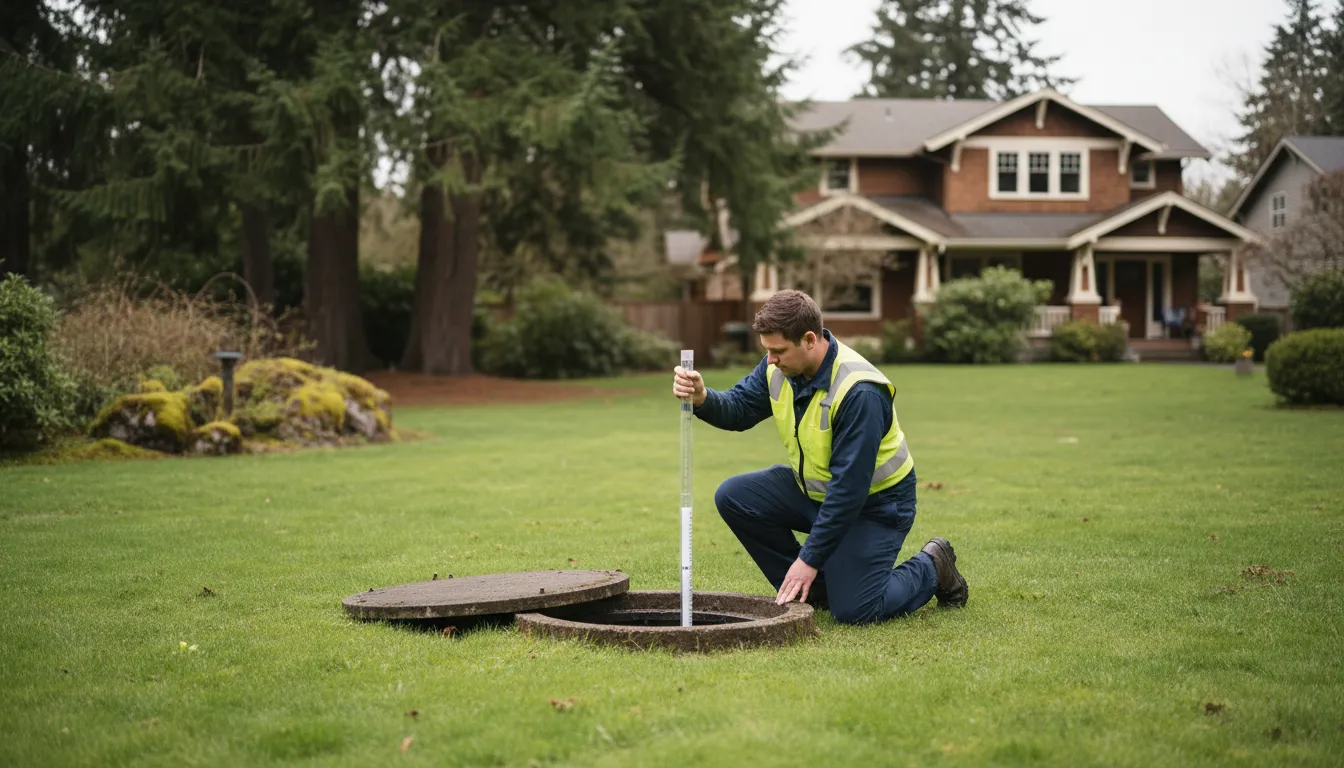
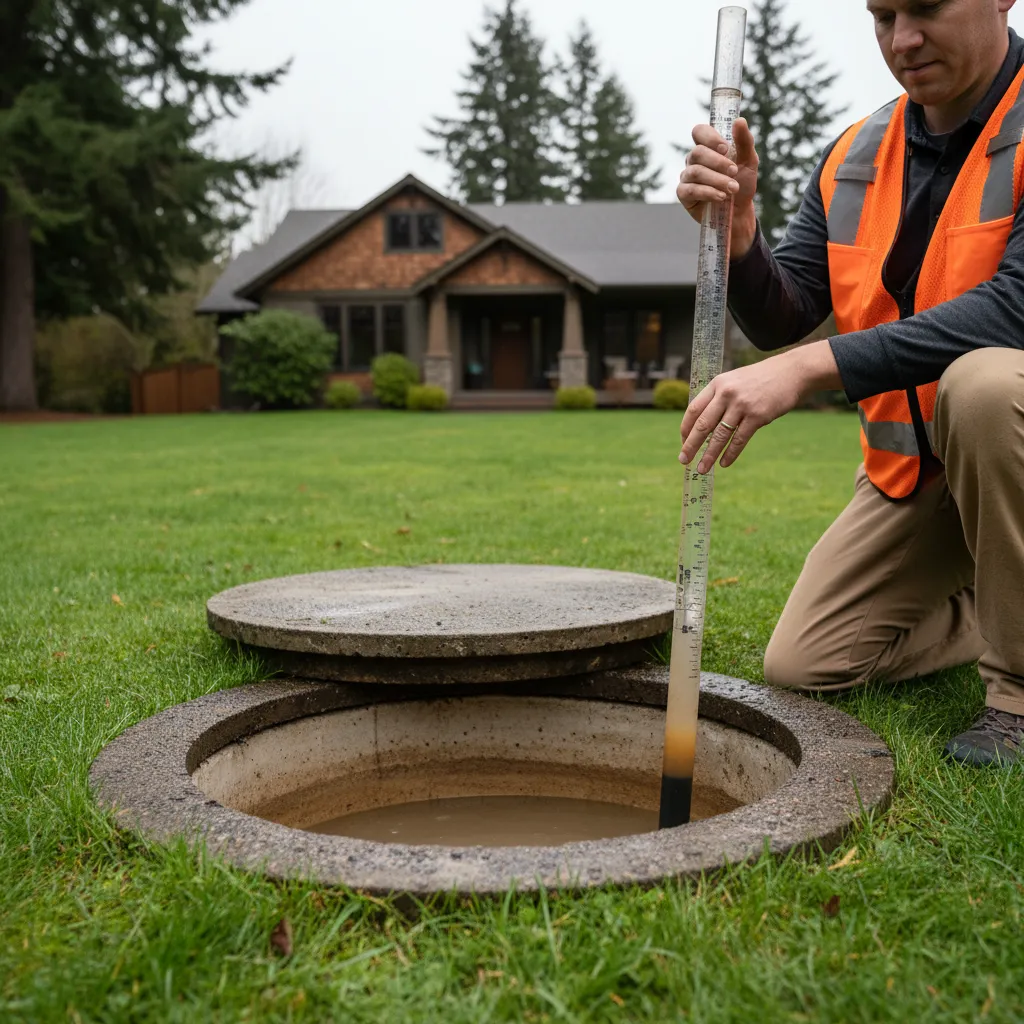
Septiclear Inc uses a sludge judge and calibrated probes to measure sludge and scum layer thickness, giving you an accurate picture of how close your tank is to needing pumping – and how efficiently it’s processing waste.
Baffle and filter inspection
We inspect the inlet and outlet baffles for corrosion, displacement, or deterioration, and clean or replace the effluent filter to protect your drain field from solids overflow.
Drain field and absorption zone evaluation
Our inspector probes the soil above the leach field to detect saturation, pooling, or biomat formation that signals the absorption system is struggling.
Pump chamber and alarm testing
For pressurized and pump-assisted systems, we test the float switch, dosing pump, and control panel alarm to confirm your system will respond correctly to high water conditions.
Written inspection report
Every annual inspection produces a written report with current component conditions, measured sludge and scum levels, photos, and a recommendation for your next maintenance interval.
Across Oregon since founding
Trusted in the Pacific Northwest
All Oregon health & env. codes
Need service today? We're ready.
Call now for same-day emergency pumping or schedule your next routine visit.
Why Choose Our Routine Annual Septic Inspection
Septiclear Inc has been inspecting residential and commercial septic systems across Oregon since 2012, serving Multnomah, Clackamas, Washington, Yamhill, Columbia, and Marion counties. Our licensed inspectors are trained to evaluate every system type – conventional gravity tanks, mound systems, aerobic treatment units, pump chambers, and holding tanks.
We follow Oregon DEQ OAR 340-071 and county health department standards on every inspection. Our written reports are formatted to satisfy Health Department compliance requirements and provide your maintenance record for real estate transactions, insurance purposes, or property management files.
Our technicians arrive with sludge judges, soil probes, camera scopes, effluent filter tools, and pump testing equipment. We don’t cut corners on the evaluation. Every component gets checked, measured, and documented before we leave.
We’re honest with our findings. If your system is functioning well, we’ll tell you that. If we find a deteriorating baffle, a saturated drain field, or an effluent filter overdue for replacement, we tell you what it will cost to fix and what happens if you wait. You get the information you need to make the right call.
Our inspections are led by Ryan Lear, an Oregon DEQ-certified septic contractor. Our inspectors hold certification through the National Association of Wastewater Technicians (NAWT) and carry full liability coverage. Call (503) 542-9660 to schedule your inspection.
Certified, Insured & Compliant - Every Job, Every Time
State Licensed
Fully licensed by Oregon health & DEQ
Fully Insured
Liability & workers’ comp coverage
Approved Disposal
Licensed effluent disposal facilities only
Written Reports
Documented service record after every job
DEQ Compliant
Full Oregon environmental code compliance
Signs You Need a Routine Annual Septic Inspection
It's been more than a year since your last inspection:
Most Oregon health departments and septic professionals recommend scheduling an annual inspection to track sludge and scum accumulation, assess baffle condition, and confirm the drain field is operating within acceptable hydraulic load limits. Skipping even one inspection cycle can allow developing issues to go undetected until they require emergency repair.
You notice slow drains or gurgling throughout the house:
When more than one fixture drains slowly, the problem is usually downstream in the tank or drain field rather than an isolated line clog. A sludge layer approaching the outlet baffle or a clogged effluent filter restricts effluent flow system-wide and backs pressure into your household plumbing.
Sewage odors near the tank, cleanout, or yard:
Hydrogen sulfide and methane gas escape from the tank when the vent stack is blocked, baffles are deteriorated, or the tank is overloaded. Odors above the drain field indicate effluent surfacing rather than percolating into the soil absorption zone.
Wet spots or standing water over the leach field:
Saturated soil above your drain field or mound system signals hydraulic overload or biomat formation. Biomat is a dense layer of organic solids and anaerobic bacteria that seals the soil surface and prevents effluent from infiltrating. Annual inspection catches early-stage saturation before it becomes a full drain field failure.
Your system has never been professionally inspected:
If you moved into a property without an inspection record, or inherited a system with no service history, scheduling a baseline annual inspection gives you a complete picture of current component condition and establishes the starting point for your maintenance calendar.
Is It Time to Pump Your Tank?
Our Routine Annual Septic Inspection Process
Access and locate the system
Our inspector locates the septic tank, distribution box, and inspection ports using property records or soil probing. We remove lids and risers to gain direct access.
Sludge and scum measurement
We use a sludge judge to measure the depth of solids at the bottom of the tank and the thickness of the floating scum layer at the top. These measurements tell us how close the tank is to needing pumping and whether solids are approaching the outlet baffle.
Baffle and effluent filter inspection
We examine the inlet and outlet baffles for corrosion, displacement, or missing sections. We clean or replace the effluent filter if it’s clogged or degraded. A functioning outlet baffle is the primary line of defense protecting your drain field from solids overflow.
Distribution box and lateral line assessment
We check the distribution box for level flow across all lateral lines. Unlevel distribution allows some laterals to receive more effluent than others, accelerating saturation in sections of the drain field.
Drain field and soil evaluation
We probe the soil above the leach field and mound system to assess absorption capacity, detect saturation, and identify any areas where effluent is surfacing above grade.
Pump chamber, float switch, and alarm testing
For systems with a pump chamber, we verify the dosing pump operates correctly, test the float switch trigger points, and confirm the control panel alarm responds to high water conditions. We also inspect the pump chamber access, check for odors, and look for signs of water intrusion or component corrosion.
Never Miss a Pump Date Again
We offer annual and biannual scheduled pumping plans for residential and commercial customers – set it once, stay consistently maintained.
Brands We Use
Septiclear Inc uses professional-grade inspection equipment and trusted product brands on every routine annual septic inspection.



We inspect systems manufactured by any brand. Equipment is maintained and calibrated before every job.
Other Services
Routine annual septic inspection
Annual septic system inspection
Septic tank inspection service
Annual septic maintenance inspection
Yearly septic system check
Certified septic inspection
Residential septic annual inspection
Home septic system inspection
Septic system condition assessment
Scheduled septic system inspection
Preventive septic maintenance check
Licensed septic inspector service
Affordable septic inspection
Trusted septic inspection company
Annual septic tank pumping and inspection
Ready to schedule your service?
Prompt arrival windows, transparent pricing, no surprise fees – guaranteed.
FAQs About Routine Annual Septic Inspection
What is a routine annual septic inspection?
A routine annual septic inspection is a scheduled, professional evaluation of your septic tank, baffles, effluent filter, distribution box, drain field, and pump chamber (if applicable). The inspector measures sludge and scum levels, checks each component for deterioration or failure, and produces a written report with findings and maintenance recommendations.
How often does a septic system need to be inspected?
Most Oregon homeowners and health departments recommend a professional inspection every one to three years. High-use households, older systems, and properties near sensitive water sources may need annual visits. A routine inspection schedule helps you catch deteriorating baffles, clogged filters, and early drain field saturation before they escalate into emergencies.
What does the inspection cover?
Our inspection covers tank sludge and scum depth, inlet and outlet baffle condition, effluent filter function, distribution box leveling, lateral line performance, soil saturation above the drain field, and pump chamber and alarm function for pressurized systems. The written report documents all findings in a format that meets Oregon DEQ OAR 340-071 and county health department requirements.
What happens if the inspection finds a problem?
We document every defect clearly in the written report – what it is, what it means for system performance, and what repair or replacement will cost. You leave with a complete picture of your system’s condition and a clear understanding of what needs to happen next.
Can Septiclear Inc pump the tank during the inspection visit?
Yes. If the inspection reveals the tank is approaching capacity or if pumping is needed to access the tank interior properly, we can schedule pumping as part of the same service visit. Let us know when you call to schedule so we can dispatch the right equipment.
How do I schedule a routine annual septic inspection?
Call (503) 542-9660 or email [email protected]. We serve residential and commercial properties across Oregon and can typically schedule your inspection within a few business days. Let us know if you have a specific compliance deadline or real estate closing date and we’ll prioritize accordingly.
Ready to Work With Us?
We’d love to hear from you. Whether you need routine service, a system inspection, or emergency help today, our team is ready.