Pre-Purchase Septic Inspection
Know exactly what you’re buying before you close. Call (503) 542-9660 to schedule a certified pre-purchase septic inspection across Oregon.
Full System Inspection Every Visit
We check baffles, walls, and drain field signs – not just pump and leave
Emergency & Scheduled Service
Same-day emergency response for residential, commercial, and industrial
Written Report After Every Job
Compliant Effluent Disposal
Hauled and disposed at state-approved facilities – groundwater protected
Prompt Arrival Windows
Vetted Local Partners Statewide
All 36 Oregon counties covered through licensed local service partners
5 Highlights on Pre-Purchase Septic Inspection
Full system evaluation before closing
Septiclear Inc inspects every accessible component of the septic system, from the inlet baffle and tank walls to the distribution box, lateral lines, and drain field surface, so you know the full condition of what you’re buying before the transaction completes.
Written report formatted for lenders and real estate agents
Our inspection reports include all findings, photos, measurements, and compliance notes in a structured format your agent, attorney, or lender can act on immediately.
Same-day or next-business-day report delivery
Pre-purchase inspections are time-sensitive. Septiclear Inc delivers written findings within 24 hours of completing the inspection so your transaction stays on schedule.
All system types inspected
We inspect conventional tanks, mound systems, aerobic treatment units, cesspools, pump chambers, and holding tanks across residential and commercial properties.
Identifies issues before they become your problem
A failing outlet baffle, a saturated drain field, or an unpermitted system expansion discovered before closing gives you negotiating leverage or a clear reason to walk away.
Across Oregon since founding
Trusted in the Pacific Northwest
All Oregon health & env. codes
Need service today? We're ready.
Call now for same-day emergency pumping or schedule your next routine visit.
Why Choose Our Pre-Purchase Septic Inspection
Septiclear Inc has been conducting pre-purchase septic inspections across Oregon since 2012, serving Multnomah, Clackamas, Washington, Yamhill, Columbia, and Marion counties. Our qualified, licensed inspectors provide the thorough, documented assessments that home buyers and real estate professionals rely on to make informed decisions.
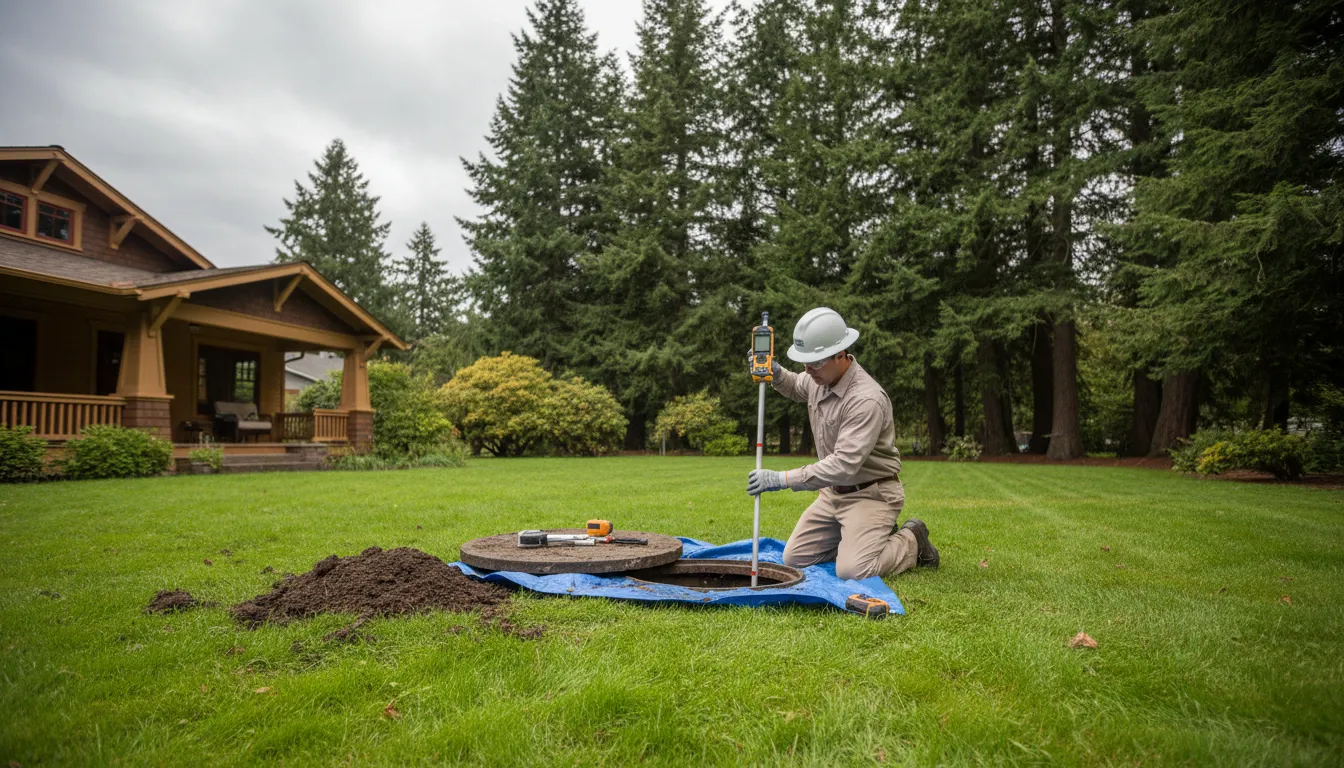
Our inspectors arrive with vacuum trucks, soil probes, dye tablets, measuring equipment, and camera scopes. We don’t rely on a visual-only surface check. We access the tank, measure sludge and scum layers, test the effluent filter, probe the drain field, and document every finding before we leave the property.
Every inspection follows Oregon DEQ OAR 340-071 and applicable county health department standards. Our reports are formatted to meet the documentation requirements that lenders, real estate attorneys, and county health offices recognize, so your findings hold up through closing and beyond.
We handle older designs with the same rigor as newer installations. Conventional tanks, mound systems, aerobic treatment units, cesspools, pump chambers, and holding tanks all get inspected to the same standard. If a component is non-compliant or failing, we document it clearly and explain what repair or replacement will cost.
We’re also available to re-inspect after repairs are made, which gives buyers additional closing protection when the seller agrees to remediation.
Our inspections are led by Ryan Lear, an Oregon DEQ-certified septic contractor. Our inspectors are certified through the National Association of Wastewater Technicians (NAWT) and carry full liability coverage on every inspection. Call (503) 542-9660 to schedule your inspection.
Certified, Insured & Compliant - Every Job, Every Time
State Licensed
Fully licensed by Oregon health & DEQ
Fully Insured
Liability & workers’ comp coverage
Approved Disposal
Licensed effluent disposal facilities only
Written Reports
Documented service record after every job
DEQ Compliant
Full Oregon environmental code compliance
Signs You Need a Pre-Purchase Septic Inspection
The property has a septic system at all:
In most Oregon counties, any residential property that isn’t connected to a municipal sewer line relies on an onsite septic system. If the home you’re buying has one, you need an inspection before closing. Period. The seller’s disclosure is not a substitute for an independent evaluation.
The home has been vacant or unoccupied for a period of time:
Vacant homes have inactive septic systems. Tanks that haven’t been used or maintained can develop cracked walls, dried-out baffles, and corroded components. Drain fields that haven’t processed effluent regularly can suffer soil compaction and biomat formation. Vacancy doesn’t prevent failure – it can accelerate it.
The property is older or has an older system:
Homes built before the 1980s may have cesspools, unlined pits, or substandard installations that don’t meet current Oregon DEQ requirements. Older systems may have unpermitted lateral extensions, failed distribution boxes, or tanks constructed from materials no longer approved. These conditions often require repair or full replacement as a condition of sale.
You've noticed plumbing backflow or drainage issues:
If the seller has disclosed slow drains, recurring backups, or a history of plumbing service calls, those are warning signs that the septic system is struggling. Backflow at sinks, toilets, or floor drains indicates the tank or drain field is failing to accept the hydraulic load.
There are wet spots or unusual grass growth in the yard:
Saturated soil, wet patches, or unusually lush green grass above the drain field or distribution box area signals effluent surfacing instead of percolating. This is a failing drain field – and it’s one of the more expensive septic repairs a buyer can inherit.
Is It Time to Pump Your Tank?
Our Pre-Purchase Septic Inspection Process
Locate and expose the system
Our inspector locates the septic tank, distribution box, and drain field access points using property records, soil probing, and locating equipment. We open risers and lids to gain direct access to the tank interior and baffle assembly.
Tank inspection and measurement
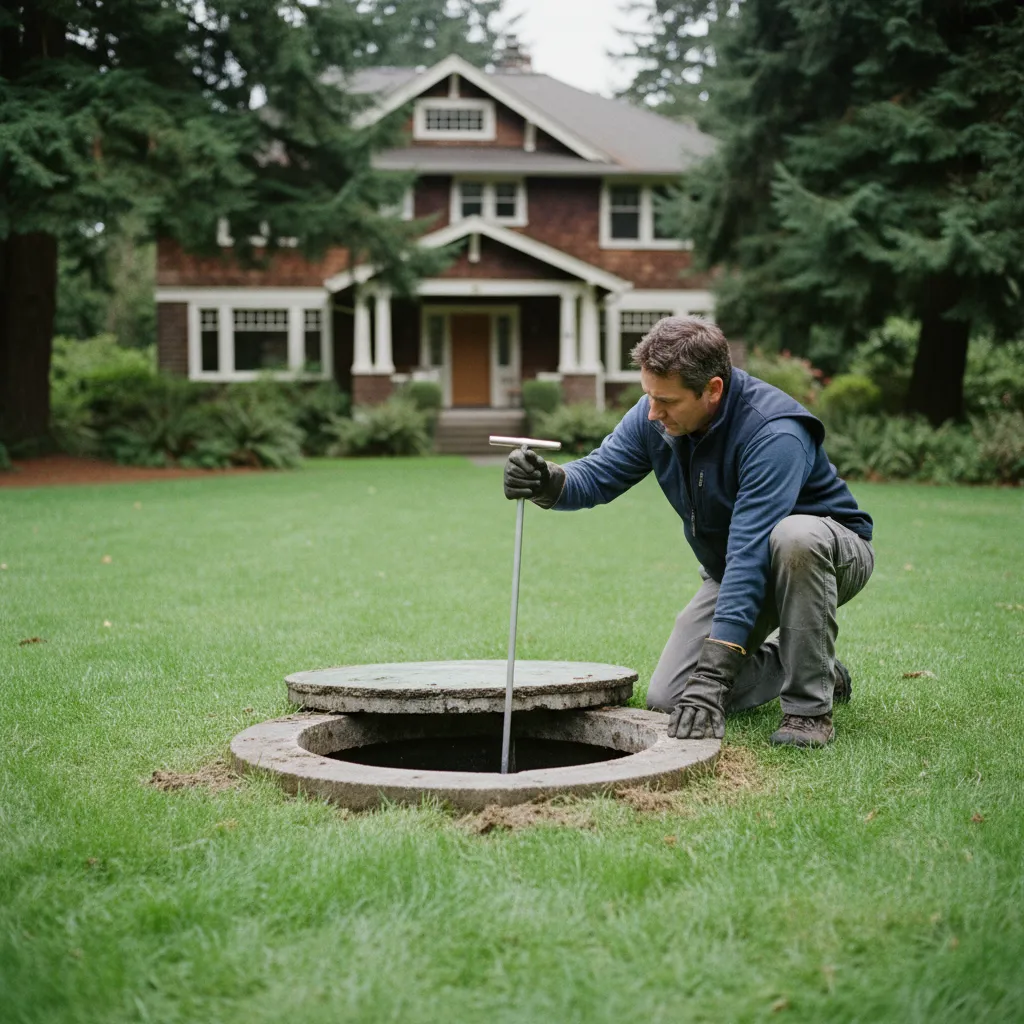
We measure sludge depth and scum layer thickness to assess how full the tank is and whether it needs pumping before the inspection can continue. We inspect the inlet baffle, outlet baffle, and effluent filter for corrosion, deterioration, or displacement. We also check the tank walls for cracks or structural compromise.
Drain field and soil evaluation
We probe the soil above the leach field and mound system to detect saturation, hydraulic overload, or biomat formation at the soil surface. We check the distribution box for even effluent distribution and assess lateral line function.
Dye testing and effluent sampling
We flush dye tablets through the system to detect leaking laterals, failing drain field connections, or discharge near surface water or property lines. For properties near water sources or wells, we can sample effluent to assess pathogen load and treatment effectiveness.
Permit and compliance review
We review available permit records to confirm the system was installed legally, that expansions or modifications were permitted, and that the system meets current setback and design requirements under Oregon DEQ OAR 340-071 and county health department standards.
Never Miss a Pump Date Again
We offer annual and biannual scheduled pumping plans for residential and commercial customers – set it once, stay consistently maintained.
Brands We Use
Septiclear Inc uses professional-grade inspection and diagnostic equipment on every pre-purchase septic inspection.





We inspect systems regardless of brand or manufacturer. Equipment is calibrated and tested before every inspection.
Other Services
Pre-purchase septic inspection
Septic inspection before buying a home
Drain field evaluation
Pre-sale septic inspection
Septic system assessment real estate
Cesspool evaluation before closing
Home buyer septic inspection
Septic inspection for real estate transaction
Septic condition report for lender
Residential septic pre-purchase check
Oregon septic inspection before buying
Certified septic inspection for home sale
Septic report for real estate closing
Septic disclosure inspection service
Pre-purchase septic pump and inspect
Ready to schedule your service?
Prompt arrival windows, transparent pricing, no surprise fees – guaranteed.
FAQs About Pre-Purchase Septic Inspection
What is a pre-purchase septic inspection?
A pre-purchase septic inspection is a professional evaluation of a septic system conducted before a real estate transaction closes. It covers the septic tank, inlet and outlet baffles, effluent filter, distribution box, lateral lines, and drain field. The inspector measures sludge and scum levels, tests system function, and documents every finding in a written report.
Why do you need one before closing?
A septic system failure can cost $5,000 to $30,000 or more to repair or replace. Without a pre-purchase inspection, you have no independent assessment of the system’s condition. The seller’s disclosure may be incomplete, outdated, or based on a visual check rather than a full technical evaluation.
Does the inspection report satisfy lender and real estate requirements?
Yes. Our inspection reports meet Oregon DEQ OAR 340-071, county health department documentation standards, and the format requirements used by real estate agents, attorneys, and lenders across Oregon. We deliver the report same-day or by the next business day.
What happens if the inspection finds a problem?
You receive a written report describing each defect, what caused it, what it means for system performance, and what repair or replacement will cost. You can use that information to negotiate a price reduction, require the seller to repair the system before closing, or walk away from the transaction.
Can you inspect a cesspool or older system?
Yes. We inspect cesspools, unlined pits, and systems predating current Oregon DEQ requirements. We document their condition, flag non-compliant components, and explain what would be required to bring the system up to code if you choose to purchase the property.
How long does the inspection take?
Most residential pre-purchase inspections take two to three hours depending on system complexity, access conditions, and whether pumping is needed. We deliver the written report same-day or by the next business day.
How do I schedule a pre-purchase septic inspection?
Call (503) 542-9660 or email [email protected]. Let us know the property address, the scheduled closing date, and any system details you have from the seller’s disclosure. We’ll confirm availability and schedule your inspection promptly.
Ready to Work With Us?
We’d love to hear from you. Whether you need routine service, a system inspection, or emergency help today, our team is ready.