Septic System Inspection
Get a certified septic system inspection before problems go underground. Whether you need to maintain an existing installation, address emerging issues, or verify a system before a real estate transaction, our reliable expert team is ready to help. Call (503) 542-9660 to schedule same-day or next-available service across Oregon.
Full System Inspection Every Visit
We check baffles, walls, and drain field signs – not just pump and leave
Emergency & Scheduled Service
Same-day emergency response for residential, commercial, and industrial
Written Report After Every Job
Compliant Effluent Disposal
Hauled and disposed at state-approved facilities – groundwater protected
Prompt Arrival Windows
Vetted Local Partners Statewide
All 36 Oregon counties covered through licensed local service partners
5 Highlights on Septic System Inspection
Certified inspectors
camera-inspect your tank, baffles, and drain field using professional-grade scoping equipment to document every component’s condition and keep your system running clean
Full effluent and sludge assessment
our technicians measure sludge depth, scum layer thickness, and effluent clarity to determine if your system is functioning within safe operational limits and to identify any issues before they escalate
Drain field and leach field evaluation
checks for biomat buildup, soil saturation, and hydraulic overload that can cause sewage backup or groundwater contamination, making it easier to maintain a healthy system long-term
Distribution box and lateral line inspection
confirms that effluent flows evenly across all perforated pipe runs and that no lines are clogged, cracked, or blocked – helping you avoid repair and replacement costs down the road
Detailed inspection report
documents tank condition, baffle integrity, riser and lid status, access port locations, and any non-compliant components – ready for your health department, real estate transaction, or personal records
Across Oregon since founding
Trusted in the Pacific Northwest
All Oregon health & env. codes
Our Septic System Inspection Services:
Need service today? We're ready.
Call now for same-day emergency pumping or schedule your next routine visit.
Why Choose Our Septic System Inspection
Septiclear Inc has been performing septic system inspections that go well beyond a visual check since 2012, serving Multnomah, Clackamas, Washington, Yamhill, Columbia, and Marion counties. Our licensed expert inspectors probe, camera-inspect, and dye-test every accessible component – from the inlet baffle to the farthest lateral line.
We carry full licensing and comply with Oregon DEQ OAR 340-071 and all local health department permit and inspection standards. Every inspection we complete includes a written service record you can submit to regulators, buyers, or lenders without revision. Our comprehensive approach means nothing gets missed.
Our technicians arrive with vacuum trucks, soil probes, camera scopes, dye tablets, and measuring sticks. We don’t guess. We measure sludge depth, check float and alarm function in pump chambers, and assess whether your effluent filter needs cleaning or replacement. When a component needs to be replaced, we tell you exactly what to install and why.
Septiclear Inc has inspected residential, commercial, and municipal systems across a wide range of tank materials – concrete, fiberglass, and polyethylene. We know how each ages, where each fails, and what each needs to stay running reliably. Whether you need routine maintenance or a quick same-day assessment, our team is equipped to handle it.
We flag non-compliant components clearly in our report and recommend specific corrective actions, including repair or replacement options and estimated costs. No vague language. No upselling you on services you don’t need. Just an accurate, complete inspection you can trust – because keeping your system clean and your household protected is what matters most.
Our inspection work is led by Ryan Lear, an Oregon DEQ-certified septic contractor. Our inspectors are certified through the National Association of Wastewater Technicians (NAWT).
Certified, Insured & Compliant - Every Job, Every Time
State Licensed
Fully licensed by Oregon health & DEQ
Fully Insured
Liability & workers’ comp coverage
Approved Disposal
Licensed effluent disposal facilities only
Written Reports
Documented service record after every job
DEQ Compliant
Full Oregon environmental code compliance
Signs You Need a Septic System Inspection
Slow drains throughout the house:
When multiple fixtures drain sluggishly at the same time, the problem often sits downstream in the septic tank or distribution box rather than in your household plumbing. A backed-up outlet baffle or clogged effluent filter can restrict flow system-wide. Contact our team for a quick assessment to identify the root issue before it worsens.
Wet or spongy ground over the drain field:
Waterlogged soil above your leach field or absorption field signals hydraulic overload or biomat formation. Biomat is a dense layer of anaerobic bacteria and organic solids that seals the soil surface and prevents effluent from percolating downward. Left uninspected, it can cause full system failure and trigger costly drain field replacement.
Sewage odors near the tank or yard:
Sludge and scum accumulate in every septic tank over time. Without routine inspection and pumping, solids overflow into the drain field and clog perforated pipe laterals. Most residential systems need inspection every one to three years depending on household size and usage. Regular inspections make it easier to maintain a reliable system and avoid emergency repair costs.
It's been more than three years since your last inspection:
Sewage backupIt’s been more than three years since your last inspection: through drains or fixtures:
You're buying or selling a property:
Real estate transactions require a current, certified septic inspection report. Lenders, buyers, and health departments all want documented proof that the system passes inspection before closing. Septiclear Inc provides inspection reports formatted to meet those requirements, and we can typically complete the inspection and deliver the written report within days of scheduling.
Is It Time to Pump Your Tank?
Our Septic System Inspection Process
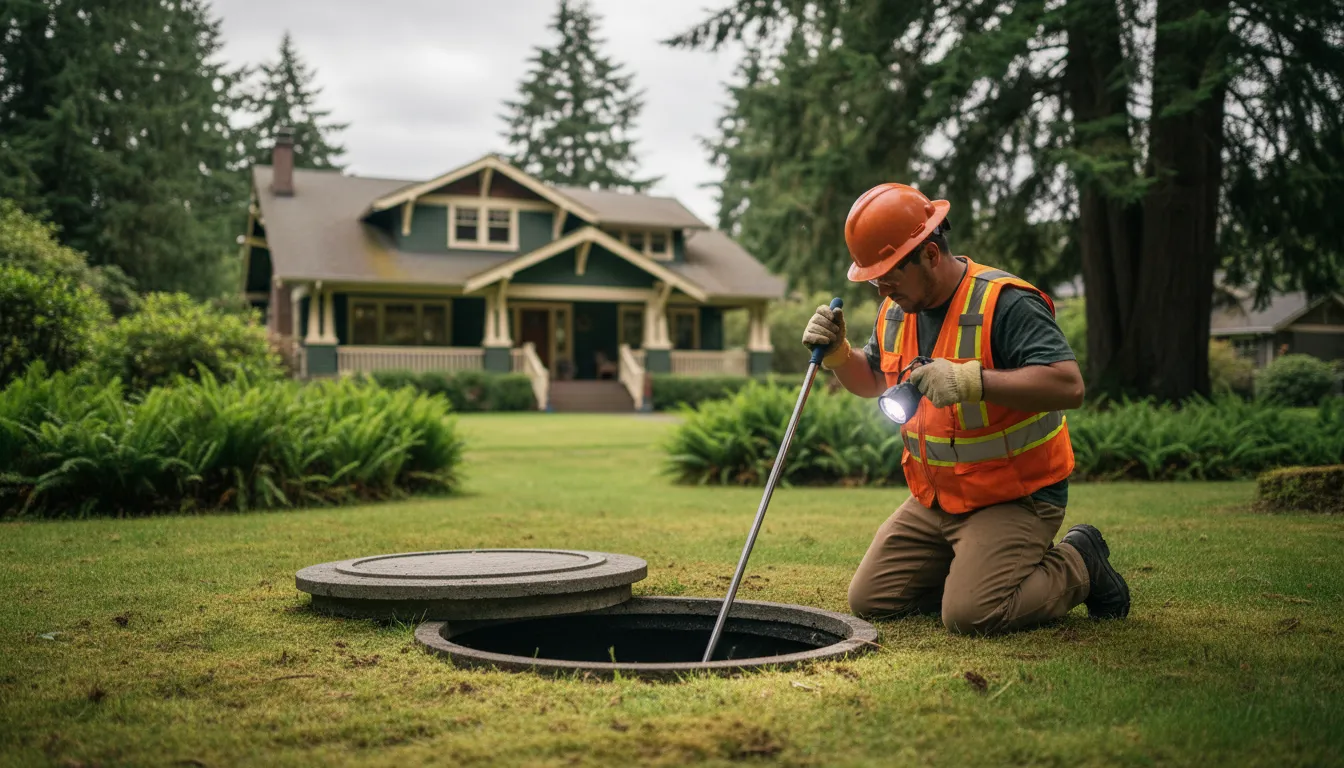
Locate and expose the tank
Our technician uses a locator and soil probe to find the tank, distribution box, and access ports. We remove lids and risers to gain full access.
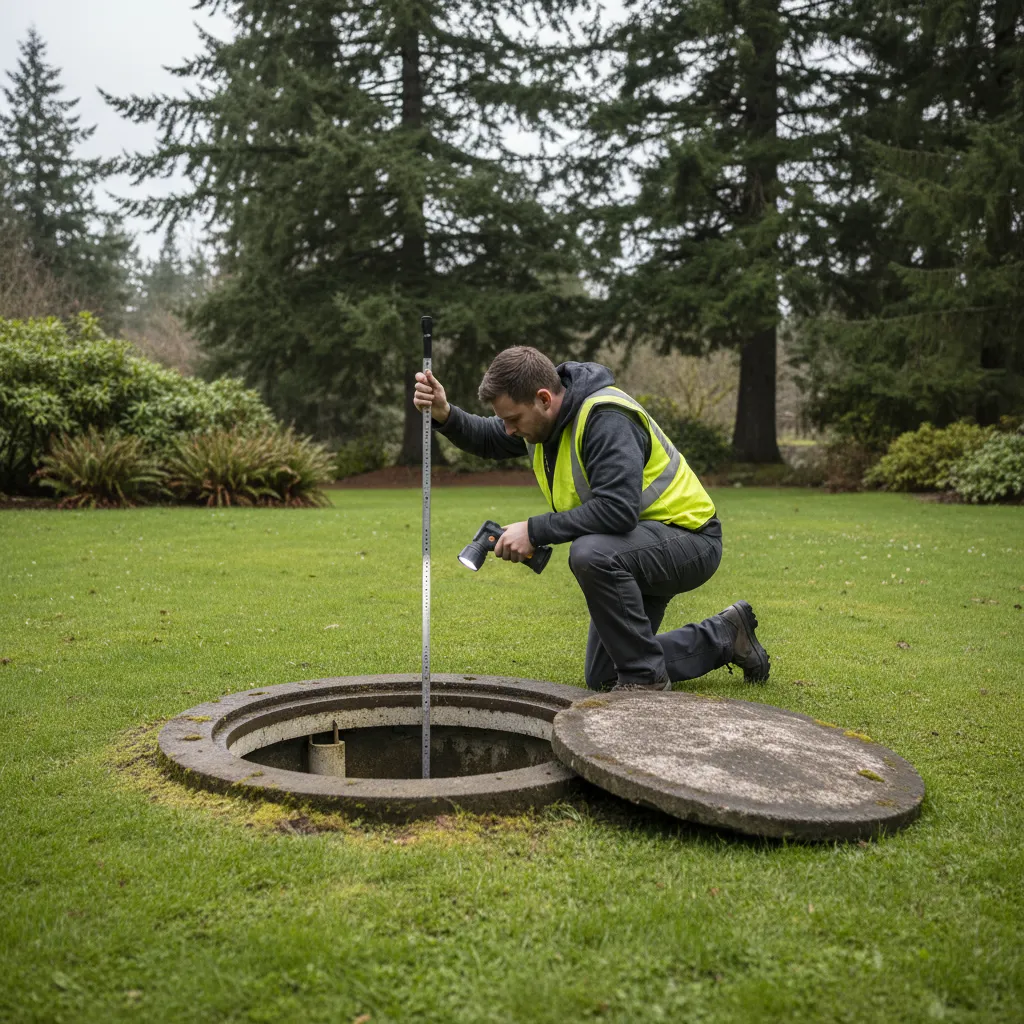
Measure sludge and scum layers
Using a measuring stick and tank gauge, we record sludge depth at the bottom and scum thickness at the top. These measurements determine whether the tank needs pumping before or during the inspection and help estimate future maintenance costs.
Camera-inspect the tank and baffles
Our expert technicians scope the interior to check inlet baffle and outlet baffle condition, look for cracks in the concrete or liner, and assess effluent clarity. If baffles are deteriorated, we identify whether to repair or replace them on the spot.
Inspect the distribution box and lateral lines
We check that the distribution box distributes effluent evenly and that no lateral lines are blocked, collapsed, or saturated. Our team keeps this process quick and thorough to minimize disruption to your property.
Perform a dye test
We flush dye tablets through the system and check the drain field surface and nearby groundwater discharge points for dye surfacing, which indicates a failing leach field. Dye testing also aids in leak detection for systems near water sources.
Document and report
We record all findings in a comprehensive inspection report, note any non-compliant components, and provide clear recommendations. The report includes repair and replacement options, estimated costs, and next steps to keep your system running cleanly and reliably
Never Miss a Pump Date Again
We offer annual and biannual scheduled pumping plans for residential and commercial customers – set it once, stay consistently maintained.
Brands We Use
Septiclear Inc uses trusted, professional-grade equipment and products during every septic system inspection.


We inspect systems regardless of brand or manufacturer. Our technicians are trained to evaluate all tank materials, pump types, and drain field configurations safely.
Other Services
Septic system inspection
Septic tank inspection
Drain field evaluation
Residential septic inspection
Home septic inspection
Leach field assessment
Certified septic inspection
Licensed septic inspector
Effluent and sludge check
Septic inspection report
Septic system evaluation
Health department septic compliance
Real estate septic inspection
Pre-sale septic inspection
Septic dye test and camera scope
Septic installation services
Plumbing services
Leak detection
Same day septic service
Septic repair and replace
Septic system maintenance
Ready to schedule your service?
Prompt arrival windows, transparent pricing, no surprise fees – guaranteed.
FAQs About Septic System Inspection
What is a septic system inspection?
A septic system inspection is a structured evaluation of your entire onsite wastewater system – including the septic tank, inlet and outlet baffles, distribution box, lateral lines, and drain field. A certified expert inspector measures sludge and scum levels, camera-inspects the tank interior, checks baffle condition, and tests drain field performance. It is a comprehensive process designed to keep your system running and help you maintain it before issues become costly repairs.
When do you need a septic inspection?
You need one every one to three years for routine maintenance, before buying or selling a property, after a sewage backup, or when you notice slow drains, odors, wet spots over the leach field, or any leak detection concerns. Our team can schedule same-day service when issues are urgent.
Why does a septic inspection matter?
A failing septic system discharges untreated sewage into the soil and groundwater. Early inspection catches deteriorated baffles, clogged effluent filters, and saturated drain fields before they require full system replacement. Catching problems early reduces costs significantly and makes it easier to maintain a reliable, clean-running system for years to come.
How does a septic inspection work?
Our expert technician locates and exposes the tank, measures sludge and scum depth, camera-inspects the tank and baffles, checks the distribution box, and performs a dye test on the drain field. We document everything in a comprehensive written report, including any repair or replacement recommendations and associated costs. The full process is designed to be quick and minimally disruptive to your property.
Can a septic system pass inspection with a full tank?
A full tank doesn’t automatically fail inspection, but it does indicate the system needs pumping. We assess whether the fullness results from normal accumulation or from a drain field that’s no longer absorbing effluent. If pumping is needed, our team can help you schedule that service to keep your system running properly.
Does Septiclear Inc provide inspection reports for real estate transactions?
Yes. Our inspection reports meet Oregon DEQ, health department, and lender requirements and include all component assessments, measurements, photos, and recommendations in a format ready for submission. Contact us at (503) 542-9660 or [email protected] to schedule your inspection.
Ready to Work With Us?
We’d love to hear from you. Whether you need routine service, a system inspection, or emergency help today, our team is ready.