
Septic System Replacement
When your septic system can’t be repaired, Septiclear Inc replaces it with a properly engineered, fully permitted system built to last. Call (503) 542-9660 for a free site evaluation across Oregon.
Full System Inspection Every Visit
We check baffles, walls, and drain field signs – not just pump and leave
Emergency & Scheduled Service
Same-day emergency response for residential, commercial, and industrial
Written Report After Every Job
Compliant Effluent Disposal
Hauled and disposed at state-approved facilities – groundwater protected
Prompt Arrival Windows
Vetted Local Partners Statewide
All 36 Oregon counties covered through licensed local service partners
5 Highlights on Septic System Replacement
Full system replacement, not a partial fix
Septiclear Inc replaces the entire failed system – tank, drain field, distribution box, risers, and all connections – engineering the new design to meet current Oregon DEQ and local health department standards.
Every system type installed
When your site conditions rule out a conventional replacement, we design and install mound systems, drip irrigation systems, aerobic treatment units, sand filter systems, and other engineered alternatives appropriate for your soil and parcel.
Permits, soil testing, and inspections managed
We conduct the soil evaluation and percolation test, prepare the engineered site plan, submit the permit application, and coordinate all required health department inspections from start to final sign-off.
No subcontractors for critical work
Septiclear Inc does not subcontract excavation, tank installation, drain field construction, or engineering. Every phase of your replacement stays under direct management by our licensed crew.
Workmanship guarantee on every replacement
Every septic system replacement we complete comes with a written workmanship guarantee covering the installation, component placement, and drain field construction.
Across Oregon since founding
Trusted in the Pacific Northwest
All Oregon health & env. codes
Our Septic System Replacement Services:
Need service today? We're ready.
Call now for same-day emergency pumping or schedule your next routine visit.
Why Choose Our Septic System Replacement
Septiclear Inc has been replacing failing and deteriorated septic systems across Oregon since 2012, completing 500+ full system replacements in Multnomah, Clackamas, Washington, Yamhill, Columbia, and Marion counties. Our licensed designers, certified installers, and experienced site crews handle every phase of your system replacement under a single contract.
Our designers assess your site before recommending any system. Soil type, perc rate, depth to groundwater, lot dimensions, setback distances, and your property’s daily wastewater volume all factor into the design. We don’t install a system that won’t pass inspection, and we don’t propose solutions that exceed what your site can support.
All replacement systems we install comply with Oregon DEQ OAR 340-071 and applicable county health department requirements. We pull all permits, manage the review process, and coordinate the final inspection. You get a documented, certified system with a clean permit record.
We use professional-grade equipment for excavation, tank setting, pipe installation, and final grading. When a site requires a mound system, an aerobic treatment unit, or a drip distribution system, we have the design capability and equipment to complete those installations without subcontracting the technical work.
Emergency replacement is available when a system fails without warning. We dispatch quickly, assess the damage, and begin permitting while managing any immediate contamination or sewage exposure risk.
Our replacement work is led by Ryan Lear, an Oregon DEQ-certified septic contractor. Our team holds certifications through the National Association of Wastewater Technicians (NAWT). Every replacement is backed by a 2-year workmanship warranty covering installation labor and component placement. Call (503) 542-9660 for a free site evaluation.
Certified, Insured & Compliant - Every Job, Every Time
State Licensed
Fully licensed by Oregon health & DEQ
Fully Insured
Liability & workers’ comp coverage
Approved Disposal
Licensed effluent disposal facilities only
Written Reports
Documented service record after every job
DEQ Compliant
Full Oregon environmental code compliance
Signs You Need Septic System Replacement
Complete drain field failure:
When your leach field can no longer absorb effluent – confirmed by saturation, surfacing effluent, or a failed percolation test – the soil absorption system is permanently compromised. A biomat-sealed or hydraulically saturated drain field can’t be restored by pumping or jetting.
A structurally failed tank:
Concrete tanks crack. Steel tanks corrode through the wall. Older fiberglass tanks develop stress fractures. When a tank is structurally compromised to the point where patching can’t restore its integrity, replacement is necessary.
A system that fails updated code requirements:
Setback requirements, sizing standards, and treatment level requirements change. A system installed in the 1970s or 1980s may not meet current Oregon DEQ standards for a permit transfer or a real estate transaction, requiring a full replacement to bring the property into compliance.
Repeated repairs that haven't resolved the underlying issue:
If your system has required multiple emergency repairs within a few years and the problem keeps returning, you’re treating symptoms rather than addressing a system that has reached the end of its useful life.
A system that's 25-30 years old with no recent evaluation:
Most conventional systems have a functional lifespan of 25 to 30 years under normal residential use. An aging system without a recent inspection may have deteriorated baffles, a failing tank, and a compromised drain field that has never been formally assessed.
Is It Time to Pump Your Tank?
Our Septic System Replacement Process
Site Evaluation and Soil Testing
We survey your property, excavate test pits, and conduct a percolation test to measure soil absorption rates and depth to groundwater. This data determines the appropriate system type and sizing for your site.
System Design and Permitting
Our licensed designer produces a stamped site plan sized to your hydraulic load and soil conditions, then submits the complete permit application to your local health department. We track the review, respond to any comments, and confirm approval before any excavation begins.
Decommission and Remove the Old System
We pump and properly decommission the existing tank per Oregon DEQ OAR 340-071 requirements, remove or neutralize the failed drain field components, and prepare the site for the new installation.
Install the New System
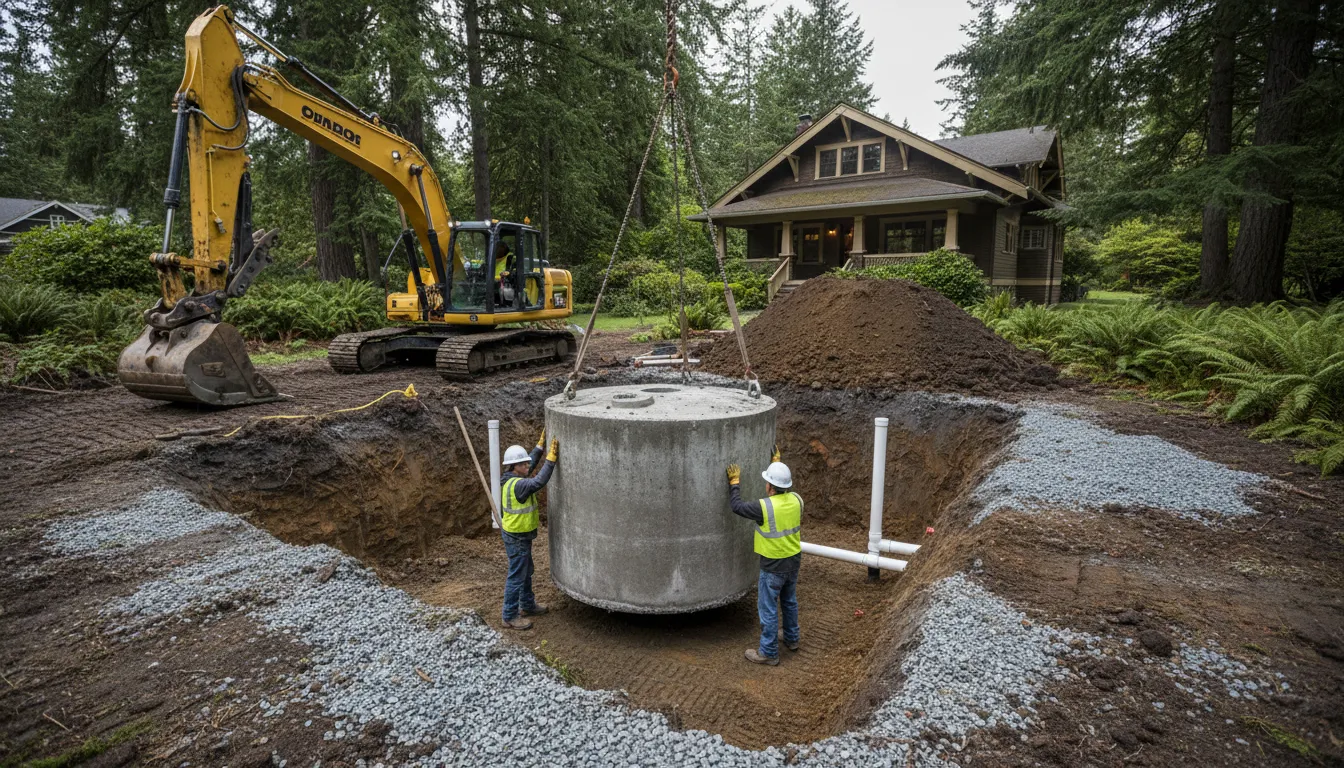
We set the replacement tank, install new inlet and outlet baffles, connect risers and lids, build the distribution box, and lay the new drain field – gravel trenches, perforated pipe, geotextile fabric, and all lateral runs. For mound or alternative systems, we complete the engineered fill and distribution network as designed.
Inspection, Testing, and Documentation
The health department inspector verifies the installation against the approved site plan. We confirm the system passes flow testing, provide you with certified as-built drawings and your permit record, and explain the maintenance schedule that will protect your investment.
Never Miss a Pump Date Again
We offer annual and biannual scheduled pumping plans for residential and commercial customers – set it once, stay consistently maintained.
Brands We Use
Septiclear Inc installs replacement systems using trusted, industry-proven brands that meet Oregon DEQ and county health department requirements.







All brands we install carry the certifications required by state and local health departments.
Other Services
Septic system replacement
Full septic system replacement
Residential septic replacement
Septic tank replacement
Drain field replacement
Failed septic system replacement
Alternative system upgrade
Mound system replacement
Aerobic treatment unit replacement
Commercial septic system replacement
Business septic replacement
Old septic system replacement
Leach field replacement cost
Mound system installation near me
Septic system replacement cost
Ready to schedule your service?
Prompt arrival windows, transparent pricing, no surprise fees – guaranteed.
FAQs About Septic System Replacement
How do I know if I need a full replacement vs. a repair?
Replacement is the right call when the drain field has permanently failed, the tank is structurally compromised beyond patching, or the existing system doesn’t meet current Oregon DEQ or county code requirements. If the failure is localized – a broken baffle, a clogged lateral, or a failed pump – repair is usually the more appropriate and cost-effective path. A camera inspection and site evaluation will determine which applies to your system.
How long does a septic system replacement take?
Most residential replacements require two to four days of active on-site work – excavation, decommissioning, installation, and final grading. The full project timeline, including permit approval, typically runs two to four weeks from initial site visit to final inspection sign-off. Permit review timelines vary by county health department.
Does the old system have to be decommissioned?
Yes. Oregon DEQ OAR 340-071 requires that failed or abandoned tanks be pumped, cleaned, and properly decommissioned before the site can be reused for a new installation. We handle all decommissioning as part of the replacement process.
How much does septic system replacement cost?
Costs depend on system type, lot conditions, soil evaluation results, and local permit fees. In Oregon, conventional gravity-fed replacements typically range from $8,000 to $15,000; mound systems from $15,000 to $30,000; and aerobic treatment units from $12,000 to $25,000. We provide a written site-specific estimate before any work begins. Final pricing is confirmed after the soil evaluation.
Can the drain field be replaced in the same location?
Sometimes. If the soil in the original drain field location has recovered and the old lateral pipes can be removed without damaging adjacent soil layers, the new drain field may be installed in the same area. More often, Oregon DEQ and county health departments require a new drain field location, particularly when the original area shows signs of permanent soil saturation or biomat.
What happens if my site can't support a conventional replacement?
When soil conditions, groundwater depth, or lot size rule out a conventional gravity-fed system, an engineered alternative is required. Mound systems, drip distribution systems, and aerobic treatment units are the most common alternatives. Our designer evaluates your site and recommends the system that meets code while minimizing cost and site disruption.
Does Septiclear Inc handle all the permits?
Yes. We prepare the site plan, conduct the soil evaluation, submit the permit application to your county health department, and coordinate the required inspections under Oregon DEQ OAR 340-071. You don’t need to manage the permitting process.
How do I get an estimate for septic system replacement?
Call (503) 542-9660 or contact Septiclear Inc at [email protected] to schedule a free site evaluation. We’ll assess your system, explain your replacement options, and provide a written estimate before any work is committed.
Ready to Work With Us?
We’d love to hear from you. Whether you need routine service, a system inspection, or emergency help today, our team is ready.