
Alternative Septic System Installation
When your site won’t support a conventional septic system, Septiclear Inc engineers and installs the alternative system your property actually needs. Call (503) 542-9660 to schedule your site evaluation.
Full System Inspection Every Visit
We check baffles, walls, and drain field signs – not just pump and leave
Emergency & Scheduled Service
Same-day emergency response for residential, commercial, and industrial
Written Report After Every Job
Compliant Effluent Disposal
Hauled and disposed at state-approved facilities – groundwater protected
Prompt Arrival Windows
Vetted Local Partners Statewide
All 36 Oregon counties covered through licensed local service partners
5 Highlights on Alternative Septic System Installation
Site-specific engineered design
Septiclear Inc works with licensed soil scientists and environmental engineers to evaluate your site’s soil type, perc rate, hydraulic conductivity, and depth to groundwater, then selects and designs the alternative system that matches your specific conditions.
All major alternative system types installed
From mound systems on high-water-table lots to drip distribution systems on tight parcels to aerobic treatment units with nitrogen reduction, we have the equipment, licensing, and experience to install the system your site and local regulations require.
Full permit procurement and agency coordination
We prepare the permit application, engineering drawings, soil evaluation reports, and all supporting documentation required by your county health department and Oregon DEQ, and we manage the review process through to approval.
Licensed installers with hands-on alternative system experience
Alternative septic systems are more complex to install and maintain than conventional gravity systems. Our technicians are trained on pressurized drip fields, pump chambers, dosing timers, control panels, and aerobic unit oxygen injection systems.
Written workmanship guarantee and as-built documentation
Every alternative system installation includes a written workmanship guarantee and a complete set of as-built drawings showing component locations, pipe routing, and control panel specifications.
Across Oregon since founding
Trusted in the Pacific Northwest
All Oregon health & env. codes
Need service today? We're ready.
Call now for same-day emergency pumping or schedule your next routine visit.
Why Choose Our Alternative Septic System Installation
Septiclear Inc has been engineering and installing alternative septic systems across Oregon since 2012, serving Multnomah, Clackamas, Washington, Yamhill, Columbia, and Marion counties. Alternative systems require a different level of engineering expertise, site evaluation discipline, and equipment capability than conventional installations – and we bring all three to every project.
We don’t size alternative systems based on rules of thumb. We conduct perc tests, dig test pits, examine soil horizons, and measure the seasonal high water table before we propose a design. The engineering matches your actual site conditions – not a generic template.
All our alternative system designs comply with Oregon DEQ OAR 340-071 and applicable county health department technical standards. We pull all required permits, coordinate with county sanitarians, and schedule final inspection before we close the job.
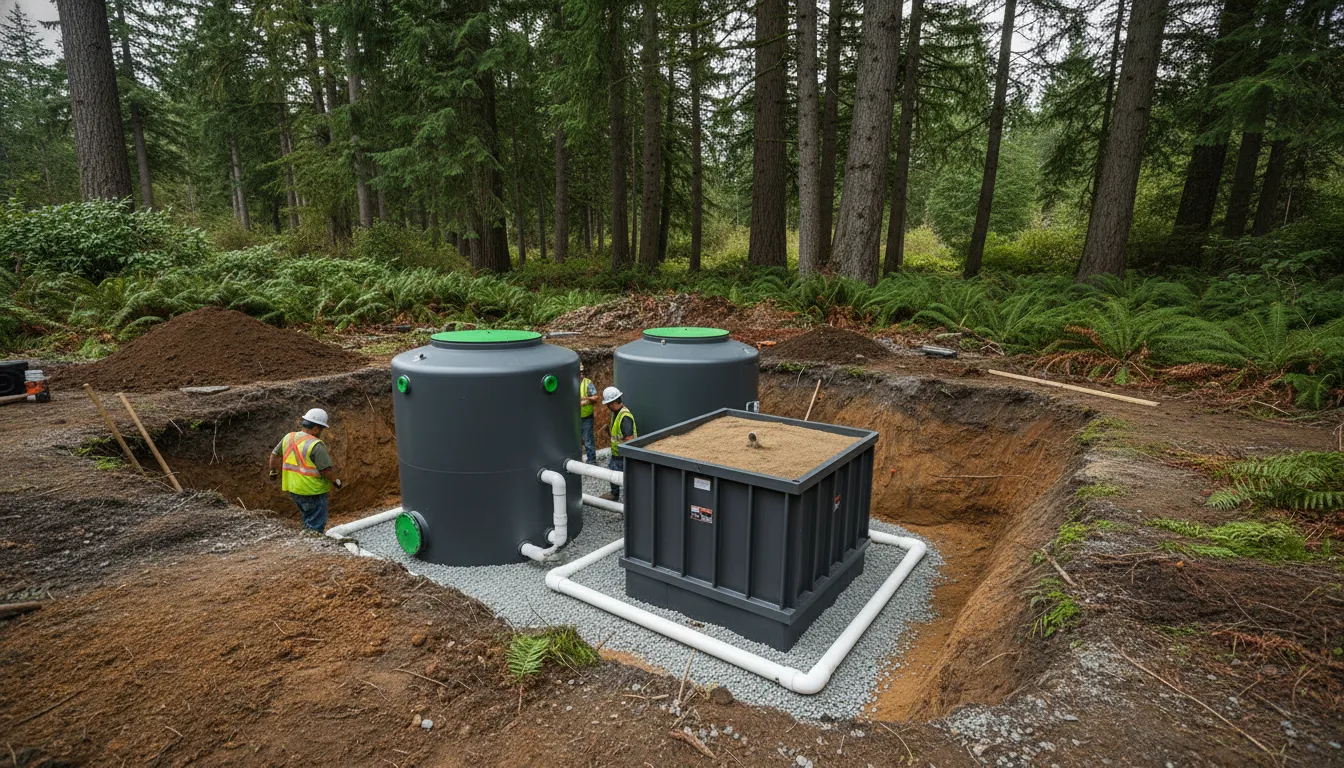
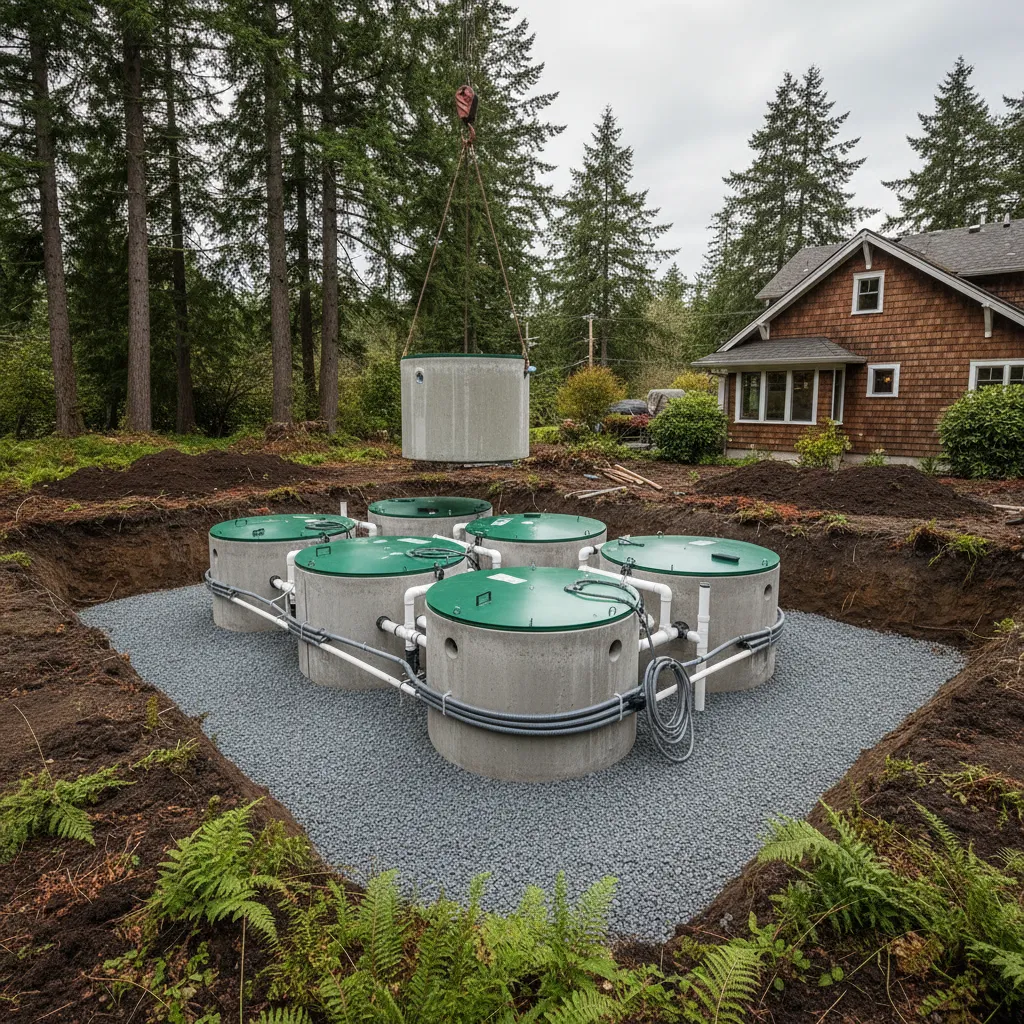
Our crews operate the equipment needed for mound system construction – laser-guided grading for precise slope tolerances, pump chamber setting equipment, and drip line installation tooling. We don’t subcontract the technical components of an alternative system installation to general excavators.
We’re also available after installation for effluent sampling, pump maintenance, control panel service, and annual inspection. Alternative systems require more active management than conventional systems, and we support you through the full life of the installation.
Our installation work is led by Ryan Lear, an Oregon DEQ-certified septic contractor. Our team is certified through the National Association of Wastewater Technicians (NAWT). Call (503) 542-9660 to get started with a free site evaluation.
Certified, Insured & Compliant - Every Job, Every Time
State Licensed
Fully licensed by Oregon health & DEQ
Fully Insured
Liability & workers’ comp coverage
Approved Disposal
Licensed effluent disposal facilities only
Written Reports
Documented service record after every job
DEQ Compliant
Full Oregon environmental code compliance
Signs You Need Alternative Septic System Installation
Your site failed the percolation test:
A failed perc test means your soil can’t absorb effluent at a rate that would support a conventional drain field. Soils with percolation rates slower than 60 minutes per inch – including clay-heavy soils common in the Willamette Valley – require an alternative system design. Septiclear evaluates failed-perc sites and identifies the system type that will meet Oregon DEQ approval.
High seasonal groundwater table:
Oregon DEQ and county health departments require a minimum vertical separation between the bottom of a drain field and the seasonal high water table. If your site’s water table is too shallow for a conventional system, a mound system or other elevated alternative design may allow installation where a conventional system would be prohibited.
Shallow bedrock or impermeable layers:
Sites with bedrock or hardpan at shallow depths can’t accommodate the excavation required for conventional drain field trenches. Mound systems or drip distribution systems installed above grade can meet setback and separation requirements on these sites where conventional systems cannot.
Insufficient setback distances for a conventional drain field:
Properties near wells, water bodies, wetlands, or steep slopes may not have the room to install a conventional drain field at the required setback distances. Alternative system designs can often fit within more confined setbacks or achieve equivalent treatment with a smaller footprint.
Environmental or regulatory requirements call for enhanced treatment:
Some Oregon counties and watershed protection zones require nitrogen reduction or enhanced effluent treatment beyond what a conventional system provides. Aerobic treatment units, drip distribution systems, and nitrogen-reducing alternative systems can meet those elevated standards.
Is It Time to Pump Your Tank?
Our Alternative Septic System Installation Process
Site Evaluation and Soil Assessment
A licensed soil scientist visits your property to conduct perc tests, dig test pits, and evaluate soil horizons. We measure depth to the seasonal high water table, identify any bedrock or impermeable layers, and confirm the site’s hydraulic conductivity and loading capacity.
Alternative System Selection and Engineering Design
Based on the soil evaluation data, our licensed designer selects the appropriate alternative system type – mound, drip, aerobic treatment unit, sand filter, or engineered alternative – and produces a stamped engineering design that meets Oregon DEQ OAR 340-071 and county health department specifications.
Permit Application and County Coordination
We compile and submit the full permit application package to your county health department – including the soil evaluation report, engineering drawings, site plan, and supporting technical documentation. We track review status and respond to any reviewer comments until your installation permit is approved.
Construction and Installation
Our crew constructs and installs the alternative system components according to the approved design. For mound systems, this includes precise grading of the mound footprint, fill material placement, chamber or perforated pipe installation, pump chamber setting, and electrical connections. For drip systems, we install the pressure manifold, drip laterals, control panel, and effluent filter components.
Inspection, Testing, and Commissioning
The county inspector verifies the installation against the approved plans. We conduct a functional test of the pump, dosing timer, control panel, and alarm system. After sign-off, we deliver a complete set of as-built drawings, operation and maintenance documentation, and your permit record.
Never Miss a Pump Date Again
We offer annual and biannual scheduled pumping plans for residential and commercial customers – set it once, stay consistently maintained.
Brands We Use
Septiclear Inc installs alternative septic systems using trusted, professionally vetted brands recognized by Oregon DEQ, county health departments, and environmental engineers for reliability, regulatory compliance, and long-term performance.







Component selection for each project is driven by soil conditions, system type, and engineering specifications – not supplier convenience.
Other Services
Alternative septic system installation
Mound system installation
Drip distribution septic system
Aerobic treatment unit installation
Sand filter septic system
Engineered alternative septic
Alternative septic system permit
Failed perc test septic solution
High water table septic system
Mound system installation cost
Alternative septic system cost
ATU septic system installation
Pressure distribution system install
Nitrogen reducing septic system
Alternative onsite wastewater system
Ready to schedule your service?
Prompt arrival windows, transparent pricing, no surprise fees – guaranteed.
FAQs About Alternative Septic System Installation
What is an alternative septic system?
An alternative septic system is any engineered onsite wastewater treatment system that differs from a conventional gravity-fed septic tank and drain field. Common examples include mound systems, drip distribution systems, aerobic treatment units, sand filter systems, and pressure distribution systems. These are typically required when a site’s soil, groundwater, or space constraints prevent installation of a conventional system.
When do you need an alternative system instead of a conventional one?
You need an alternative system when your site fails the percolation test, has a seasonal high water table too shallow for conventional drain field separation requirements, has bedrock or impermeable layers at shallow depths, lacks enough space for a conventional drain field at required setback distances, or is located in an environmental protection zone with elevated treatment standards.
What types of alternative systems does Septiclear Inc install?
We install mound systems, drip distribution systems, aerobic treatment units (ATUs), sand filter systems, pressure distribution systems, and engineered alternative systems for sites with challenging soil conditions or regulatory requirements. Our soil scientists and licensed designers evaluate each site individually to select the appropriate system type.
How much does an alternative septic system cost?
Alternative systems cost more than conventional installations due to additional engineering, components, and construction complexity. In Oregon, mound systems typically range from $15,000 to $30,000 and aerobic treatment units from $12,000 to $25,000 depending on lot size, soil conditions, system capacity, and county permit fees. We provide a written estimate after the site evaluation and before any work is contracted.
How long does alternative system installation take?
From initial site evaluation to permit approval to installation completion, most alternative septic system projects take six to twelve weeks. County health department review timelines vary, and complex engineering or variance requests can extend the permitting phase. We keep you informed of the timeline at each stage.
Does Septiclear Inc handle maintenance after installation?
Yes. Alternative systems require more active maintenance than conventional systems – including effluent sampling, pump inspections, control panel service, and aerobic unit servicing. We offer ongoing maintenance support for every system we install. Call (503) 542-9660 to discuss a maintenance plan.
Ready to Work With Us?
We’d love to hear from you. Whether you need routine service, a system inspection, or emergency help today, our team is ready.