
Septic System Installation
Professional septic system installation serving Oregon homeowners and property developers. Call (503) 542-9660 to schedule your site assessment.
Full System Inspection Every Visit
We check baffles, walls, and drain field signs – not just pump and leave
Emergency & Scheduled Service
Same-day emergency response for residential, commercial, and industrial
Written Report After Every Job
Compliant Effluent Disposal
Hauled and disposed at state-approved facilities – groundwater protected
Prompt Arrival Windows
Vetted Local Partners Statewide
All 36 Oregon counties covered through licensed local service partners
5 Highlights on Septic System Installation
Engineered from the ground up
Septiclear Inc assigns a licensed engineer to every installation to size the septic tank, design the drain field, and produce stamped plans that meet Oregon DEQ and county health department requirements before any excavation begins.
Full permit procurement included
We handle the full permit application process with your local county health department, including the percolation test, soil profile, site plan, and all required engineering documentation.
All system types installed
Conventional gravity-fed systems, mound systems, pressure distribution systems, aerobic treatment units, chamber systems, and alternative engineered systems – Septiclear installs the design that fits your property.
Proper excavation and drainage grading
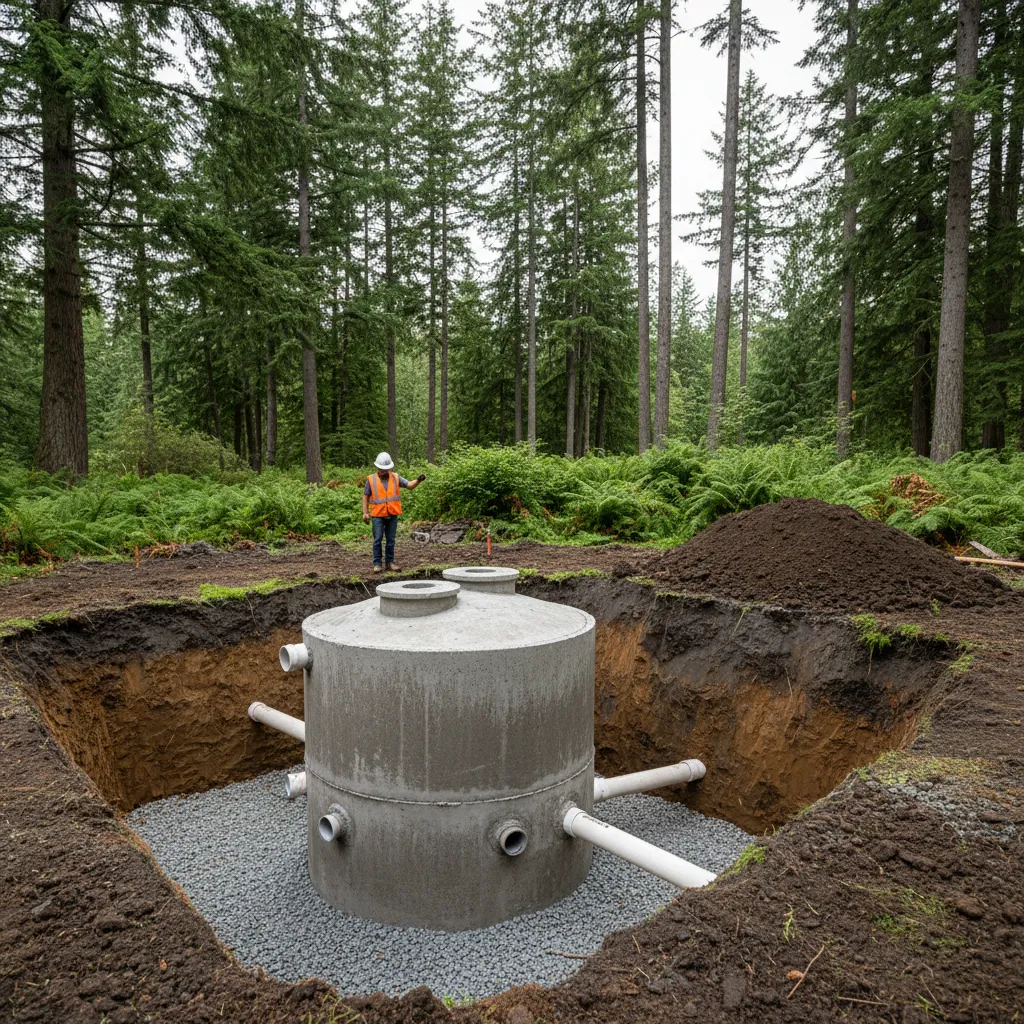
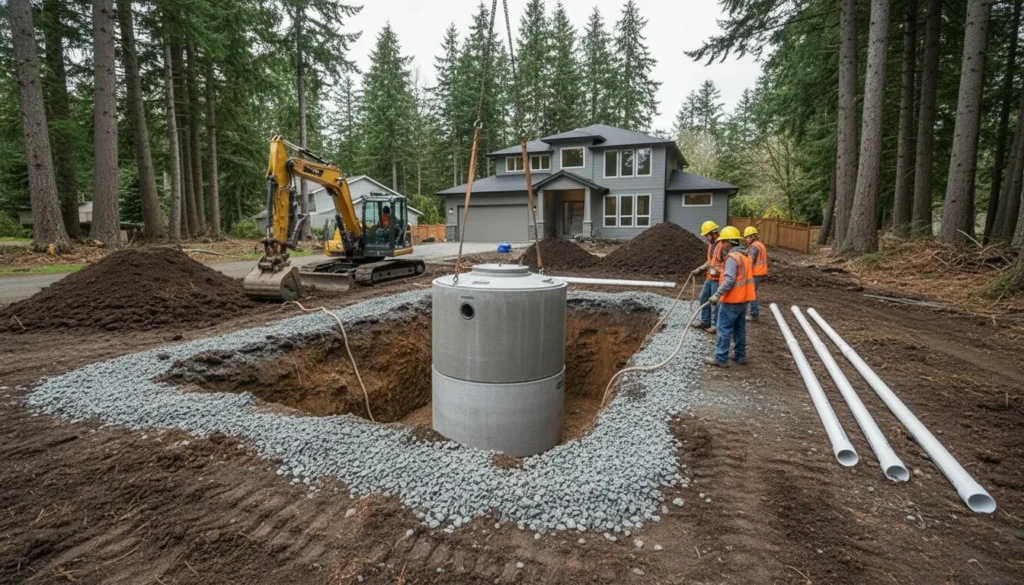
Our crew excavates to the engineered depth and width, installs the tank and drain field components to manufacturer and regulatory specifications, and grades the surface for correct slope and drainage.
Written workmanship guarantee
Every Septiclear installation is backed by a written workmanship guarantee and a complete as-built drawing package ready for your records, future inspections, and property transfer.
Across Oregon since founding
Trusted in the Pacific Northwest
All Oregon health & env. codes
Our Septic System Installation Services:
Need service today? We're ready.
Call now for same-day emergency pumping or schedule your next routine visit.
Why Choose Our Septic System Installation
Septiclear Inc has been installing residential and commercial septic systems across Oregon since 2012, completing 500+ installations in Multnomah, Clackamas, Washington, Yamhill, Columbia, and Marion counties. Our licensed contractors and engineers have installed systems on rural acreage, suburban lots, and commercial parcels – from standard gravity-fed setups to complex engineered mound systems on high-water-table sites.
We manage the entire process from initial site evaluation through final inspection sign-off. You don’t need to coordinate between a soil scientist, a permit agent, and an excavation crew. We pull that work together under one contract and keep you informed at every step.
Every Septiclear installation follows Oregon DEQ OAR 340-071 and applicable county health department standards. All soil evaluations are conducted by qualified professionals, all system designs are stamped by licensed engineers, and all excavation and installation work is performed by licensed contractors who know Oregon soil conditions and climate.
We use professional-grade equipment for excavation, tank setting, pipe installation, and final grading. Our crews work cleanly and restore the surface to match your existing landscaping as closely as possible after installation is complete.
We stand behind our work. If a component fails due to a workmanship defect, we come back and fix it. The written guarantee, the as-built drawings, and the documented permit record protect you as a homeowner and increase your property’s value.
Our installation work is led by Ryan Lear, an Oregon DEQ-certified septic contractor. Our team is certified through the National Association of Wastewater Technicians (NAWT). Call (503) 542-9660 to get started with a free site assessment.
Certified, Insured & Compliant - Every Job, Every Time
State Licensed
Fully licensed by Oregon health & DEQ
Fully Insured
Liability & workers’ comp coverage
Approved Disposal
Licensed effluent disposal facilities only
Written Reports
Documented service record after every job
DEQ Compliant
Full Oregon environmental code compliance
Signs You Need Septic System Installation
New construction on a lot without sewer access:
Building a home or structure on a parcel that isn’t connected to a municipal sewer line requires a permitted septic system before the county will issue a certificate of occupancy. Septiclear Inc handles the soil evaluation, system design, permit application, and installation so your project doesn’t stall waiting on wastewater infrastructure.
Complete failure of an existing system:
When a septic system fails beyond repair – collapsed lateral lines, a deteriorated tank, or a drain field saturated beyond remediation – full replacement is the only compliant solution. Septiclear evaluates the existing system, designs the replacement to current DEQ standards, and installs the new system with minimal disruption to your property.
Replacing a cesspool or substandard installation:
Many Oregon properties built before the 1980s have cesspools, unlined pits, or systems that don’t meet current onsite wastewater treatment requirements. Converting a cesspool to a modern septic system requires a new permit, a new design, and a licensed installation. Septiclear manages the full transition.
Expansion or major system upgrade required:
Adding bedrooms, converting outbuildings to living space, or expanding a commercial facility increases the daily sewage flow beyond what the current system was permitted to handle. Oregon DEQ requires a new or expanded permitted system when the hydraulic load exceeds the original design capacity.
Real estate sale requires system compliance documentation:
Some Oregon counties require proof of a permitted, functional septic system before a property sale can close. If the existing system lacks proper documentation or has known deficiencies, a new installation or permitted upgrade may be required to complete the transaction.
Is It Time to Pump Your Tank?
Our Septic System Installation Process
Site Evaluation and Soil Testing
A licensed professional evaluates your parcel’s soil composition, permeability, depth to groundwater, and setback distances from wells, water features, and property lines. We conduct a percolation test to measure the soil’s absorption rate, which determines the appropriate system type and drain field size.
System Design and Engineering
Based on the site evaluation and perc test results, our licensed engineer designs the septic system – sizing the tank, drain field, distribution box, and any pumping or dosing components required. The design accounts for your household’s daily sewage flow, the soil’s hydraulic loading capacity, and applicable Oregon DEQ design standards.
Permit Application and Approval
We compile the complete permit application package – soil evaluation, engineering plans, site map, and supporting documentation – and submit it to your county health department. We track review status, respond to any reviewer requests, and secure your installation permit before any excavation begins.
Excavation and Installation
Our licensed crew excavates the tank location, drain field trenches, and distribution box according to the approved plans. We set the tank, install the inlet and outlet baffles, connect the distribution lines, lay the perforated drain pipe in gravel trenches or chamber components, and backfill to the engineered grade.
Final Inspection and As-Built Documentation
The county inspector verifies that the installation matches the approved plans. After sign-off, we provide a complete as-built drawing package showing the final system layout, component locations, and depth measurements. You receive a copy of the approved permit and inspection record for your property file.
Never Miss a Pump Date Again
We offer annual and biannual scheduled pumping plans for residential and commercial customers – set it once, stay consistently maintained.
Brands We Use
Septiclear Inc installs systems using trusted, professional-grade brands recognized by Oregon DEQ and county health departments for reliability and long-term performance.






Every brand we install carries the certifications required by Oregon DEQ and county health departments. We select components based on site conditions and system type, not convenience.
Other Services
Septic system installation
New septic system install
Residential septic installation
Commercial septic installation
Business septic system install
Mound system installation
Alternative septic system install
Aerobic treatment unit install
Pressure distribution system install
Leach field installation
Drain field installation
Septic tank and drain field install
Biomat, saturated field, system remediation
Cesspool conversion septic install
New construction septic system
Ready to schedule your service?
Prompt arrival windows, transparent pricing, no surprise fees – guaranteed.
FAQs About Septic System Installation
How long does septic system installation take?
Most residential septic installations take one to three days of on-site work after permits are approved. The full timeline from initial site evaluation to permit approval to installation completion typically runs four to eight weeks depending on county health department review times and soil testing scheduling.
Do you handle the permits?
Yes. We manage the complete permit process, including soil evaluation, engineering plan preparation, and submission to your county health department. All applications follow Oregon DEQ OAR 340-071 requirements. We track the review, respond to any comments, and confirm approval before scheduling excavation.
What type of septic system do I need?
The right system type depends on your soil’s percolation rate, depth to groundwater, lot size, and daily sewage flow. Conventional gravity systems work well on sites with suitable soil and adequate space. Mound systems are required when the water table is too shallow or soils are too dense. Aerobic treatment units and chamber systems serve sites with specific site constraints. Our site evaluation and percolation test determine which option applies to your property.
How much does a septic system installation cost?
Costs vary by system type, lot conditions, and county permit fees. Conventional gravity systems in Oregon typically range from $8,000 to $18,000. Mound systems and engineered alternatives typically range from $15,000 to $35,000 depending on complexity. We provide a written estimate after the site evaluation and before any work begins.
Does Septiclear Inc handle both the design and installation?
Yes. Septiclear Inc manages the complete project from site evaluation and engineering design through permit procurement, excavation, installation, and final inspection sign-off. You work with one contractor from start to finish.
What happens if the system has a problem after installation?
Pumping removes the liquid and solid contents of the tank. Cleaning includes rinsing and scrubbing the tank interior walls to remove residual solids and biofilm that remain after pumping. We perform both as part of our standard pump-out service.
Ready to Work With Us?
We’d love to hear from you. Whether you need routine service, a system inspection, or emergency help today, our team is ready.