
Commercial Septic Tank Pumping
Scheduled, documented, and fully permitted commercial septic tank pumping for restaurants, office complexes, multi-unit housing, industrial facilities, and municipal properties across Oregon. Call (503) 542-9660 to schedule service or request a commercial account.
Full System Inspection Every Visit
We check baffles, walls, and drain field signs – not just pump and leave
Emergency & Scheduled Service
Same-day emergency response for residential, commercial, and industrial
Written Report After Every Job
Compliant Effluent Disposal
Hauled and disposed at state-approved facilities – groundwater protected
Prompt Arrival Windows
Vetted Local Partners Statewide
All 36 Oregon counties covered through licensed local service partners
5 Highlights on Commercial Septic Tank Pumping
Large-capacity vacuum trucks
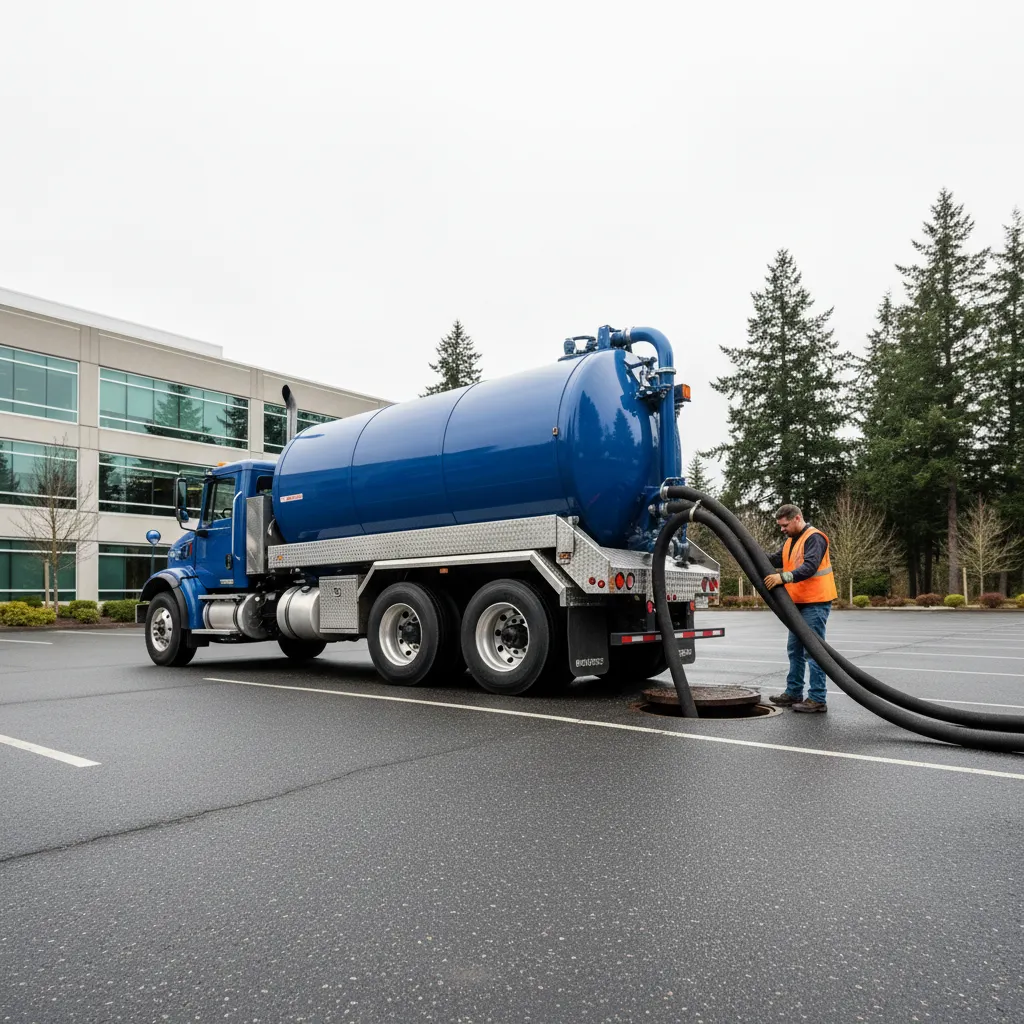
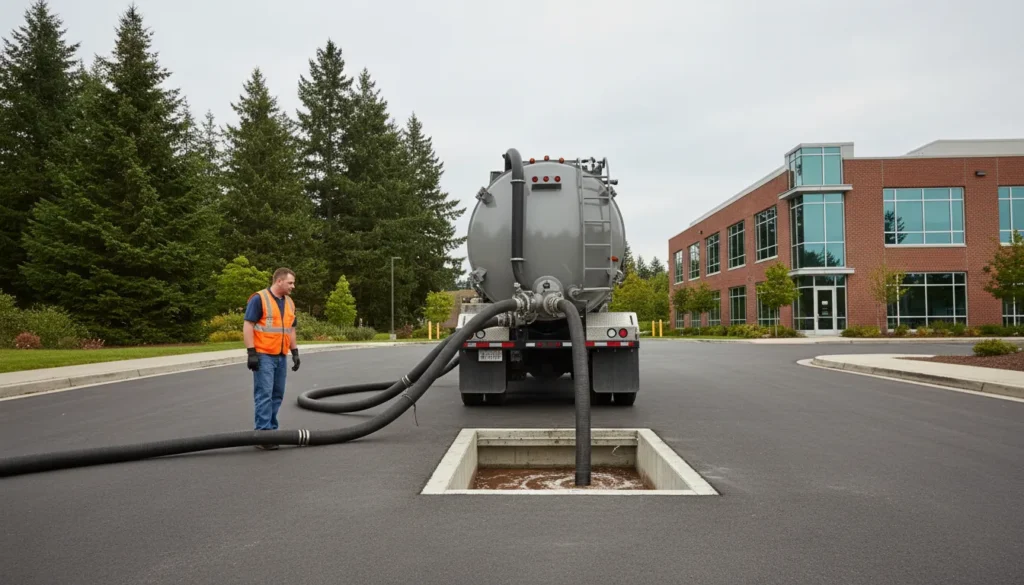
Septiclear Inc operates commercial-grade vacuum trucks capable of handling high-volume multi-compartment tanks, pump chambers, dosing chambers, and force main systems found in restaurants, industrial facilities, and multi-unit commercial properties.
Full compliance documentation
Every commercial pump-out includes a completed waste hauler manifest, disposal facility receipt, and service report – the documentation your regulatory compliance officer, health inspector, or property manager needs for the file.
Scheduled service contracts
We set up maintenance schedules for commercial accounts that align with your operational calendar, health department requirements, and tank capacity – so you don’t have to track intervals manually.
Emergency response for commercial properties
Septiclear Inc provides emergency dispatch for commercial properties experiencing sewage backups, alarm activations, or overflow situations that can’t wait for a scheduled service window.
OSHA confined space protocols followed on every job
Our technicians are trained in OSHA confined space entry requirements applicable to vacuum truck operations. Commercial clients receive a safety-compliant service that meets general industry standards for pump-out work.
Across Oregon since founding
Trusted in the Pacific Northwest
All Oregon health & env. codes
Need service today? We're ready.
Call now for same-day emergency pumping or schedule your next routine visit.
Why Choose Our Commercial Septic Tank Pumping
Septiclear Inc has been servicing commercial septic systems across Oregon since 2012, serving Multnomah, Clackamas, Washington, Yamhill, Columbia, and Marion counties. Our commercial accounts include restaurants, food processing facilities, office complexes, multi-unit residential properties, retail centers, and industrial operations. We understand the regulatory and operational requirements that commercial clients face.
Commercial septic systems operate under different demands than residential tanks. High-volume kitchens, frequent occupancy changes, and larger tank sizes all affect pumping frequency and service complexity. Our technicians assess the full system – tank compartments, dosing chambers, effluent filters, and drain field – at every service visit.
We hold all required contractor licenses, certified hauler permits, and insurance coverage. All waste is transported in licensed vehicles and disposed of at Oregon DEQ-approved treatment facilities in full compliance with Oregon DEQ OAR 340-071 and applicable county health department regulations. Every commercial service visit includes a completed manifest and disposal receipt for your records.
We provide written quotes before any work begins, no surprise charges after service, and a written service report on every visit. For facility managers who need documentation for health department inspections, property audits, or regulatory filings, we provide the full paper trail.
Satisfaction guarantee: if a service issue is attributed to our work, we return at no additional charge to address it. Our commercial clients retain us on contract because they know each visit will be completed correctly and documented thoroughly.
Our commercial pumping work is led by Ryan Lear, an Oregon DEQ-certified septic contractor. Our technicians are certified through the National Association of Wastewater Technicians (NAWT) and trained to OSHA confined space entry standards. Call (503) 542-9660 to set up a commercial service account.
Certified, Insured & Compliant - Every Job, Every Time
State Licensed
Fully licensed by Oregon health & DEQ
Fully Insured
Liability & workers’ comp coverage
Approved Disposal
Licensed effluent disposal facilities only
Written Reports
Documented service record after every job
DEQ Compliant
Full Oregon environmental code compliance
Signs You Need Commercial Septic Tank Pumping
Alarm activation on the control panel:
When the float switch or dosing pump alarm triggers, the pump chamber has reached a high-water condition. This often means the pump has failed, the dosing cycle is not completing correctly, or the drain field is saturated and not accepting effluent. A commercial property cannot defer this – the alarm is a compliance and health risk indicator that needs same-day response.
Slow drainage across multiple fixtures or floor drains:
Slow or gurgling drains across multiple areas of a commercial building – restrooms, utility sinks, kitchen drains – indicate the tank is nearing capacity or the distribution box is failing to route effluent properly. In a high-traffic commercial setting, a slow drain issue escalates faster than in a residential context.
Odors near the tank, cleanout, or drain field:
Sewage or sulfur odors near the tank access, inspection risers, or the drain field surface indicate the tank is at or over capacity, or effluent is surfacing through a failed soil absorption zone. For commercial properties subject to health inspections, surface odors are a compliance trigger that must be addressed before the next inspection cycle.
Wet soil or standing water over the drain field:
Soggy or saturated ground above the lateral lines, or visible water pooling over the leach field, indicates the soil absorption system is overwhelmed. This often results from an overfull tank sending solids into the drain field and accelerating biomat formation. Commercial properties with this condition need emergency pumping and a drain field assessment.
Your facility has not been serviced within the required interval:
Health departments in Oregon set pumping interval requirements for commercial properties based on usage type and tank capacity. A restaurant with a 1,000-gallon tank typically needs service every 6 to 12 months. An office complex with a 5,000-gallon tank may be able to go 2 to 3 years. If your service records are out of date, schedule a compliance pump-out before your next health department inspection.
Is It Time to Pump Your Tank?
Our Commercial Septic Tank Pumping Process
Site assessment and access confirmation
Our crew confirms tank location, access point dimensions, and site conditions before equipment is deployed. For commercial properties with limited access or underground tank maps, we coordinate with your facilities team in advance.
Vacuum truck setup and OSHA protocol
We position the vacuum truck, set up confined space entry procedures if required, and connect to the tank access ports. Our technicians follow OSHA confined space protocols throughout the pump-out.
Evacuation of all compartments
We evacuate all tank compartments – sludge, effluent, and scum layers – using the full draw capacity of the vacuum truck. We break up compacted solids and confirm complete evacuation of each compartment before moving to the next.
Interior inspection and backwash
After evacuation, we backwash the interior walls, inspect the baffles, effluent filter, and outlet pipes using a camera or probe as conditions allow, and confirm the tank structure is intact before sealing access.
Manifest completion and documentation
We complete the hauler manifest, confirm disposal destination, and provide the signed service report. Your compliance documentation is delivered to the facility manager or property owner before we leave the site.
Never Miss a Pump Date Again
We offer annual and biannual scheduled pumping plans for residential and commercial customers – set it once, stay consistently maintained.
Brands We Use
Septiclear Inc uses commercial-grade vacuum and inspection equipment from trusted industry manufacturers recognized across the septic and wastewater services industry.






All equipment meets Oregon DEQ standards and OSHA requirements for confined space and wastewater operations.
Other Services
Commercial septic tank pumping
Commercial septic pumping service
Septic sludge removal business
Septic tank pump out commercial
Industrial septic tank evacuation
Multi-unit septic pumping
Restaurant septic tank pumping
Office building septic service
Commercial waste hauler septic
Affordable commercial septic tank pumping
Trusted septic pumping contractor
Commercial septic maintenance contract
Emergency commercial septic pumping
Licensed commercial septic hauler
Oregon DEQ compliant septic pumping
Ready to schedule your service?
Prompt arrival windows, transparent pricing, no surprise fees – guaranteed.
FAQs About Commercial Septic Tank Pumping
How often does a commercial septic system need pumping?
Commercial pumping frequency depends on the property type, occupancy level, tank capacity, and local health department requirements. General benchmarks in Oregon: restaurants and food service facilities typically need service every 6 to 12 months; multi-unit housing and office properties every 1 to 3 years; industrial facilities vary based on wastewater volume and composition. Your county health department may have published interval requirements for your property type – we can help identify those.
What documentation do we receive after a commercial pump-out?
Every commercial pump-out includes a completed waste hauler manifest documenting tank volumes, disposal destination, and technician certification as required under Oregon DEQ OAR 340-071. You receive the signed manifest, a disposal facility receipt, and our written service report – the complete documentation package your compliance officer or health department inspector may request.
Does Septiclear Inc offer scheduled maintenance contracts?
Yes. We set up annual service agreements for commercial accounts that define pumping intervals, service scope, documentation delivery, and emergency response terms. A maintenance contract ensures your facility stays current with health department requirements without requiring manual tracking on your end.
What does commercial septic tank pumping cost?
Commercial pump-out pricing depends on tank size, number of compartments, access conditions, and disposal volumes. Standard commercial tanks in the 1,000 to 3,000 gallon range typically run $400 to $900 per service. Larger industrial tanks and multi-compartment systems are quoted per job. We provide a written quote before any work begins. Call (503) 542-9660 to request a commercial account estimate.
Can Septiclear Inc service all types of commercial septic systems?
Yes. We service conventional multi-compartment tanks, pump chambers, dosing chambers, aerobic treatment units, holding tanks, and systems with force mains. Our vacuum trucks are sized for commercial property demands, and our technicians are trained on the full range of commercial system configurations encountered in Oregon.
How do I schedule commercial service?
Call (503) 542-9660 or email [email protected]. We can set up one-time service, recurring maintenance intervals, or emergency response accounts for commercial properties. Let us know your facility type, tank size if known, and current service history and we’ll recommend the right service interval for your operation.
Ready to Work With Us?
We’d love to hear from you. Whether you need routine service, a system inspection, or emergency help today, our team is ready.