
Soil Percolation Testing
Septiclear Inc delivers accurate, certified soil percolation testing to determine the suitability of your property for septic systems – before you build, permit, or install.
Full System Inspection Every Visit
We check baffles, walls, and drain field signs – not just pump and leave
Emergency & Scheduled Service
Same-day emergency response for residential, commercial, and industrial
Written Report After Every Job
Compliant Effluent Disposal
Hauled and disposed at state-approved facilities – groundwater protected
Prompt Arrival Windows
Vetted Local Partners Statewide
All 36 Oregon counties covered through licensed local service partners
5 Highlights on Soil Percolation Testing
Percolation rate measurement
We dig and probe test pits to calculate exactly how fast water infiltrates your soil horizon, giving you a precise hydraulic load figure for septic system design services.
Soil profile analysis
Our team samples each boring hole layer by layer, identifying sandy, clayey, loamy, or gravelly compositions that directly affect drain field performance across residential and commercial properties.
Groundwater and water table assessment
We measure the depth to your water table and evaluate setback distances to protect aquifers from effluent contamination and properly assess sewage disposal suitability.
Permit-ready documentation
Every percolation test we perform produces certified reports that meet county sanitarian and engineer requirements for septic system permits, including building permits and subdivision planning applications.
Absorption field sizing
Proper disposaAbsorption field sizing l at licensed facilities
Across Oregon since founding
Trusted in the Pacific Northwest
All Oregon health & env. codes
Need service today? We're ready.
Call now for same-day emergency pumping or schedule your next routine visit.
Why Choose Our Soil Percolation Testing
Septiclear Inc has been providing qualified, expert-level soil percolation testing to residential and commercial properties across Oregon since 2012, serving Multnomah, Clackamas, Washington, Yamhill, Columbia, and Marion counties. Our certified professional soil scientists and licensed engineers perform every test – not subcontractors, not trainees.
We follow ASTM and Oregon DEQ OAR 340-071 protocols when we excavate test pits, measure infiltration rates, and evaluate subsurface soil conditions. That means your percolation test results hold up with local sanitarians and permitting offices the first time you submit them.
Our team uses calibrated measuring gauges and standardized timing intervals to record percolation rates accurately. We don’t estimate. We don’t cut corners on boring hole depth or soil sample collection.
We’ve tested hundreds of soil profiles across a range of site conditions – compacted clay lots, gravelly hillside parcels, silty floodplain edges, and sandy coastal soils. That field experience lets us identify problem horizons, flag impermeable layers, and recommend the right absorption field design before your contractor breaks ground.
Septiclear Inc also coordinates directly with your engineer, inspector, or contractor to keep your project on schedule. You get a trusted partner providing design services and full support – from percolation test through final permit approval for any septic system.
Our soil percolation testing is led by Ryan Lear, an Oregon DEQ-certified septic contractor. Our team is certified through the National Association of Wastewater Technicians (NAWT) and operates in full compliance with Oregon DEQ OAR 340-071. Call (503) 542-9660 to schedule your site visit.
Certified, Insured & Compliant - Every Job, Every Time
State Licensed
Fully licensed by Oregon health & DEQ
Fully Insured
Liability & workers’ comp coverage
Approved Disposal
Licensed effluent disposal facilities only
Written Reports
Documented service record after every job
DEQ Compliant
Full Oregon environmental code compliance
Signs You Need Soil Percolation Testing
You're applying for a new septic system permit:
Most counties require a certified percolation test before they’ll issue a permit for a new septic tank and drain field installation. Without a valid perc test on file, your permit application stalls. Septiclear Inc produces the documentation sanitarians and engineers need to move your project forward – including for proposed building permits and subdivision planning.
Your property has never been tested:
Undeveloped lots, rural parcels, and inherited land often have no soil percolation data on record. Before you design a leach field or absorption field, you need access to your soil’s actual infiltration rate and suitability for sewage disposal systems. Clayey or compacted soils may require a sand mound or alternative system rather than a standard lateral drain field – including for single-family and multi-family homes.
You're expanding or replacing an existing system:
When you add bedrooms, increase hydraulic load, or replace a failing drain field, the original percolation test may no longer apply. A new test pit and updated percolation rate calculation, properly performed, ensures your replacement system is sized correctly for current usage.
You're purchasing land for development:
Before you close on a property intended for residential or commercial construction – including subdivision development – a certified professional soil evaluation confirms the site can support septic systems. Impermeable soil, a high water table, or inadequate setback distances can make a parcel unbuildable without that data in hand. Access to this information before any proposed construction begins is essential.
Is It Time to Pump Your Tank?
Our Soil Percolation Testing Process
Site Review
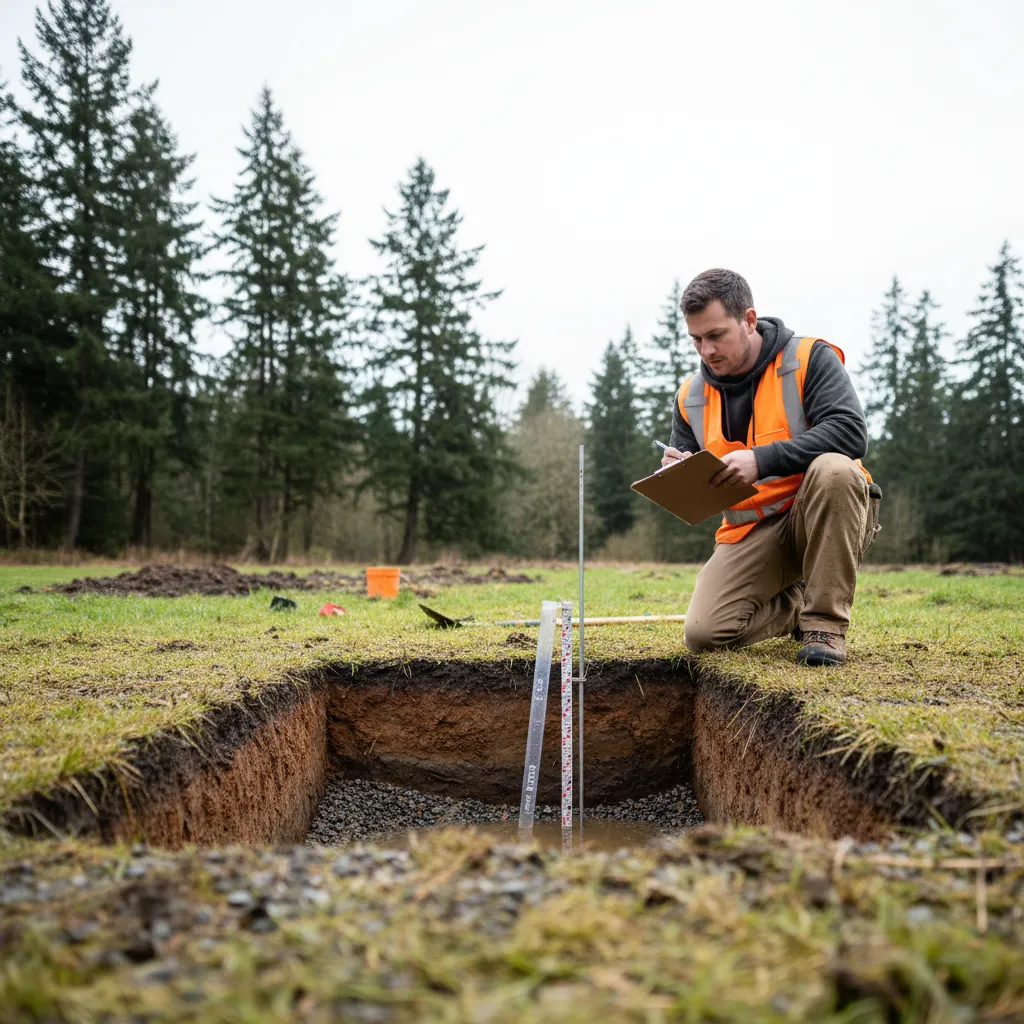
We review your property’s soil maps, topographic data, and any existing boring records before we arrive. This lets us identify the most representative locations to dig test pits and excavate boring holes, including areas proposed for building construction or subdivision lots.
Test Pit Excavation
Our crew excavates test pits to the required depth, exposing the full soil profile. We log each soil horizon – noting texture, color, structure, and any restrictive layers like hardpan or seasonal water table indicators – to properly assess suitability for sewage disposal systems.
Percolation Hole Preparation
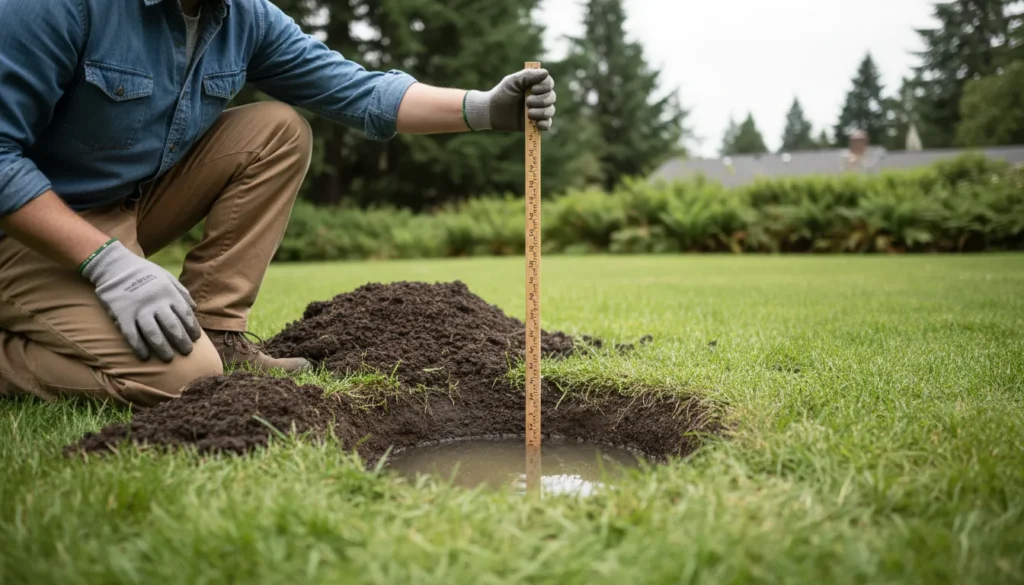
We bore percolation holes to the prescribed depth, pre-soak them according to protocol, and allow the soil to reach a saturated baseline condition before timing begins.
Infiltration Timing and Measurement
Using calibrated measuring gauges, we record water drop intervals at timed increments. We perform the percolation rate calculation in minutes per inch for each test hole, determining the site’s hydraulic load capacity for the proposed septic systems.
Report and Certification
We compile all soil sample data, percolation rates, water table depths, and setback distances into a certified report. Our certified professional team submits it directly to your engineer, sanitarian, or permitting office and can provide support to contact any relevant agencies on your behalf.
Never Miss a Pump Date Again
We offer annual and biannual scheduled pumping plans for residential and commercial customers – set it once, stay consistently maintained.
Brands We Use
Septiclear Inc uses professional-grade equipment and trusted product brands to conduct accurate, reliable soil percolation testing on every job site.






All equipment we bring to your site is calibrated, maintained, and inspected before each percolation test.
Other Services
Soil percolation testing
Perc test
Infiltration rate measurement
Soil percolation test service
Percolation rate testing
Drain field soil evaluation
Professional soil percolation testing
Septic perc test
Soil absorption field assessment
Residential soil percolation testing
Land percolation test
Hydraulic load soil analysis
Certified soil percolation testing
Soil infiltration test
Septic system soil evaluation
Subdivision planning perc test
Sewage disposal soil test
Residential commercial soil testing
Certified professional soil evaluation
Septic system suitability test
Certified professional perc testing
Ready to schedule your service?
Prompt arrival windows, transparent pricing, no surprise fees – guaranteed.
FAQs About Soil Percolation Testing
What is a soil percolation test?
A soil percolation test measures how fast water infiltrates the soil at a specific depth. The result – expressed as a percolation rate in minutes per inch – tells engineers and sanitarians whether the soil can properly absorb effluent from septic systems, and helps determine suitability for sewage disposal.
When do you need a percolation test?
You need one before installing a new septic system, replacing a failing leach field, or developing a parcel that has no existing soil data on record. Many counties also require an updated perc test when you expand a structure and increase the hydraulic load on an existing system. This includes building permits for family homes and subdivision planning projects.
Why does the percolation rate matter?
The percolation rate determines the size and type of absorption field your property requires. Under Oregon DEQ OAR 340-071, standard gravity drain fields are approved for sites with percolation rates between 1 and 60 minutes per inch. Soil that drains too fast – below 1 min/inch, like coarse gravel – may not filter effluent adequately before it reaches the water table. Soil that drains too slowly – above 60 min/inch, like dense clay – can’t handle the daily sewage disposal and effluent load without saturating and backing up. Sites outside the standard range require alternative systems such as mound systems, pressure distribution, or aerobic treatment units.
How does Septiclear Inc conduct a percolation test?
We excavate test pits, log the soil profile, bore percolation holes, pre-soak them, and then measure water drop at timed intervals using calibrated gauges. Every test is performed by our certified professional soil scientists and engineers following ASTM and Oregon DEQ OAR 340-071 protocols, and we compile the data into a certified report ready for permit submission.
Can a property fail a percolation test?
Yes. Impermeable soil, a shallow water table, or inadequate setback distances from an aquifer can disqualify a standard drain field design. In those cases, we assess whether a sand mound, aerobic treatment unit, or alternative system can properly meet your site’s conditions for residential and commercial septic systems.
Does Septiclear Inc handle the permit paperwork?
We provide the certified percolation test report and coordinate with your engineer, sanitarian, or local permitting office to make sure the documentation meets all submission requirements. Call (503) 542-9660 to schedule your perc test or discuss your project.
Ready to Work With Us?
We’d love to hear from you. Whether you need routine service, a system inspection, or emergency help today, our team is ready.