
Full Septic System Replacement
When a failing septic system can no longer be repaired, Septiclear Inc provides a complete, licensed full septic system replacement – from soil evaluation and permit management through excavation, installation, and final inspection. Call (503) 542-9660 to schedule your site assessment.
Full System Inspection Every Visit
We check baffles, walls, and drain field signs – not just pump and leave
Emergency & Scheduled Service
Same-day emergency response for residential, commercial, and industrial
Written Report After Every Job
Compliant Effluent Disposal
Hauled and disposed at state-approved facilities – groundwater protected
Prompt Arrival Windows
Vetted Local Partners Statewide
All 36 Oregon counties covered through licensed local service partners
5 Highlights on Full Septic System Replacement
Full system, not a partial fix
Septiclear Inc replaces your entire failed septic system – tank, distribution box, lateral lines, and drain field – engineered to your site’s soil conditions and sized to your daily wastewater volume.
Designed for your specific property
Every full replacement begins with a site evaluation and percolation test that determines your soil’s hydraulic loading capacity. We then design a system that matches those conditions, whether that means a conventional gravity system, a mound system, or an aerobic treatment unit.
All permits and inspections managed
Septiclear Inc prepares the stamped site plan, submits the permit application to your county health department under Oregon DEQ OAR 340-071, and coordinates all required inspections before and after installation.
In-house crew, no subcontracting
Our licensed crew handles every phase of your replacement directly. No third-party excavators, no separately contracted engineers. The crew who evaluates your site installs your system.
Written workmanship guarantee
Every full septic system replacement is backed by a written workmanship guarantee on all installation labor and component placement. Materials carry applicable manufacturer warranties.
Across Oregon since founding
Trusted in the Pacific Northwest
All Oregon health & env. codes
Need service today? We're ready.
Call now for same-day emergency pumping or schedule your next routine visit.
Why Choose Our Full Septic System Replacement
Septiclear Inc has been performing full septic system replacements across Oregon since 2012, serving Multnomah, Clackamas, Washington, Yamhill, Columbia, and Marion counties. Our licensed contractors have replaced systems on compacted clay lots, sandy loam parcels, high-groundwater sites, and steep-slope terrain – across residential and commercial properties of all sizes.
We assess the site before recommending any system. Perc test results, soil horizon depth, groundwater elevation, parcel setbacks, and daily hydraulic load all inform the design. We don’t install one-size-fits-all systems. What we install matches your site’s conditions and passes inspection the first time.
Our installations follow Oregon DEQ OAR 340-071 and applicable county health department standards. We manage the permit process from application through final sign-off. Every replacement includes in-house excavation, tank setting, inlet and outlet baffle installation, distribution box construction, and drain field or alternative system installation – with the same licensed team from start to finish.
We carry full general liability insurance and workers’ compensation coverage. You receive documented proof of insurance before we set foot on your property.
Our replacement systems use NSF/ANSI-compliant tanks, effluent filters, distribution boxes, and absorption components. We source components from manufacturers our county health departments recognize and accept.
Our replacement work is led by Ryan Lear, an Oregon DEQ-certified septic contractor. Our team is certified through the National Association of Wastewater Technicians (NAWT). Every full replacement is backed by a 2-year workmanship warranty covering all installation labor and component placement. Call (503) 542-9660 for a free site evaluation.
Certified, Insured & Compliant - Every Job, Every Time
State Licensed
Fully licensed by Oregon health & DEQ
Fully Insured
Liability & workers’ comp coverage
Approved Disposal
Licensed effluent disposal facilities only
Written Reports
Documented service record after every job
DEQ Compliant
Full Oregon environmental code compliance
Signs You Need Full Septic System Replacement
Sewage backup into the structure:
When raw sewage surfaces through floor drains, toilets, or plumbing fixtures – especially after the tank has been recently pumped – the system can no longer manage hydraulic load. A failed distribution box, a collapsed lateral line, or a permanently saturated drain field can all produce this symptom. When it keeps returning after pumping and jetting, the system is at end of life.
Wet soil, pooling effluent, or saturated ground above the drain field:
Standing water or persistently wet soil directly above your lateral lines and leach field means effluent is surfacing instead of percolating. A biomat layer – formed from accumulated organic solids and anaerobic bacteria – seals the soil surface over time. Once established, biomat cannot be cleared by pumping or treatment alone.
Failed percolation test results:
A perc test that shows your soil has lost its hydraulic loading capacity means the absorption system can no longer function as designed. This happens when soil compacts over time, when biomat has migrated into the soil profile, or when groundwater levels have permanently risen.
Structural failure of the tank or system components:
Concrete tanks develop cracks at inlet and outlet pipe connections. Steel tanks rust through. Older fiberglass tanks develop stress fractures. When the tank itself is compromised and patching can’t maintain structural integrity, replacement is the only viable option.
A system that no longer meets current code requirements:
Systems installed decades ago may no longer satisfy current setback requirements, sizing standards, or treatment level requirements under Oregon DEQ OAR 340-071 and local county standards. A full replacement is often required to bring a property into compliance for a real estate transaction or permit transfer.
Is It Time to Pump Your Tank?
Our Full Septic System Replacement Process
Site Evaluation and Soil Testing
Our licensed evaluator visits your property to conduct soil profiling, test pits, and a percolation test. We document the soil horizon depth, hydraulic conductivity, and depth to seasonal high groundwater. We also confirm setback distances from wells, surface water, and property lines. This data drives every subsequent decision.
System Design and Engineering
We design the replacement system using the site evaluation data – sizing the tank, drain field, and all components to your lot’s hydraulic capacity and daily wastewater flow. The engineered site plan is stamped by a licensed designer and includes all documentation required for permit submission.
Permit Application and County
Coordination We submit the complete permit package to your county health department, track the review, respond to any comments, and confirm approval before excavation begins. We don’t break ground on unpermitted work.
Decommission and Remove the Old System
The failed system is pumped, decommissioned, and removed according to Oregon DEQ OAR 340-071 requirements. The site is prepared for the new installation.
Install, Inspect, and Document
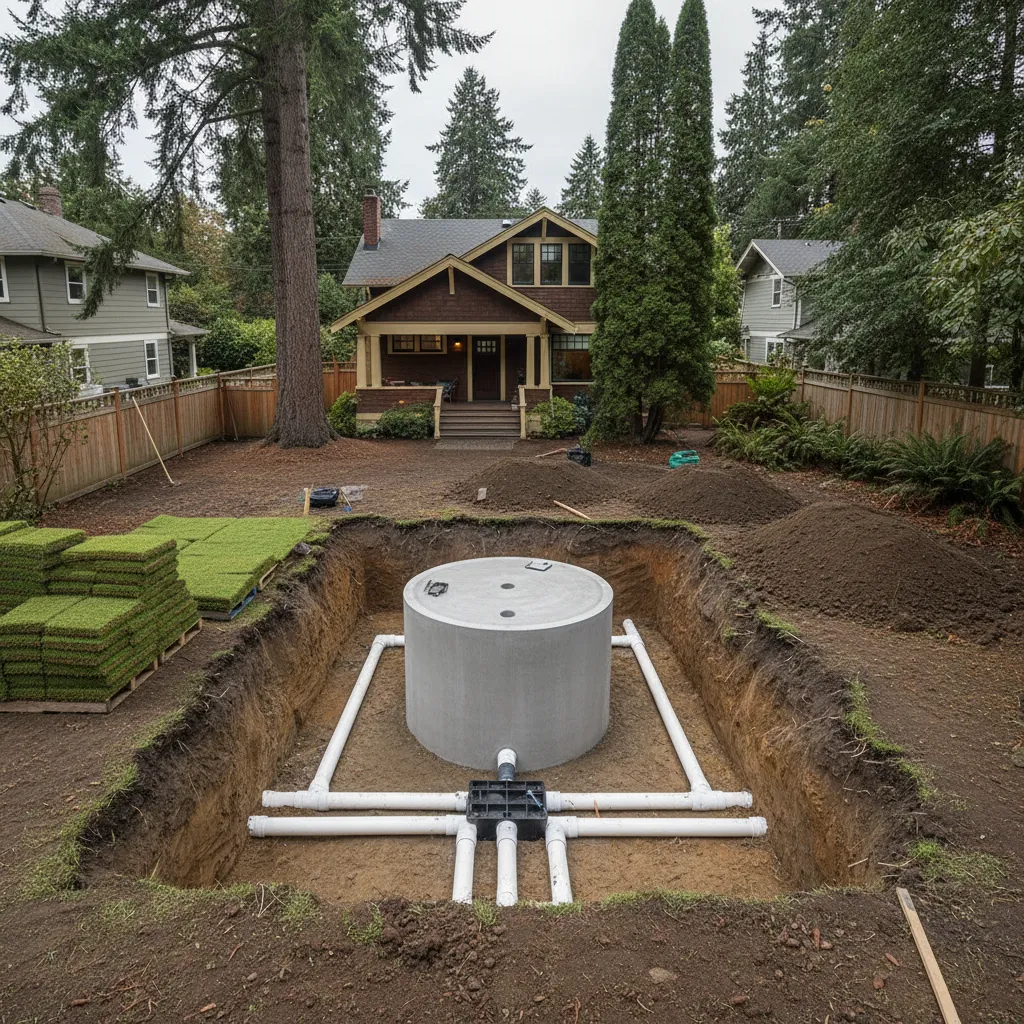
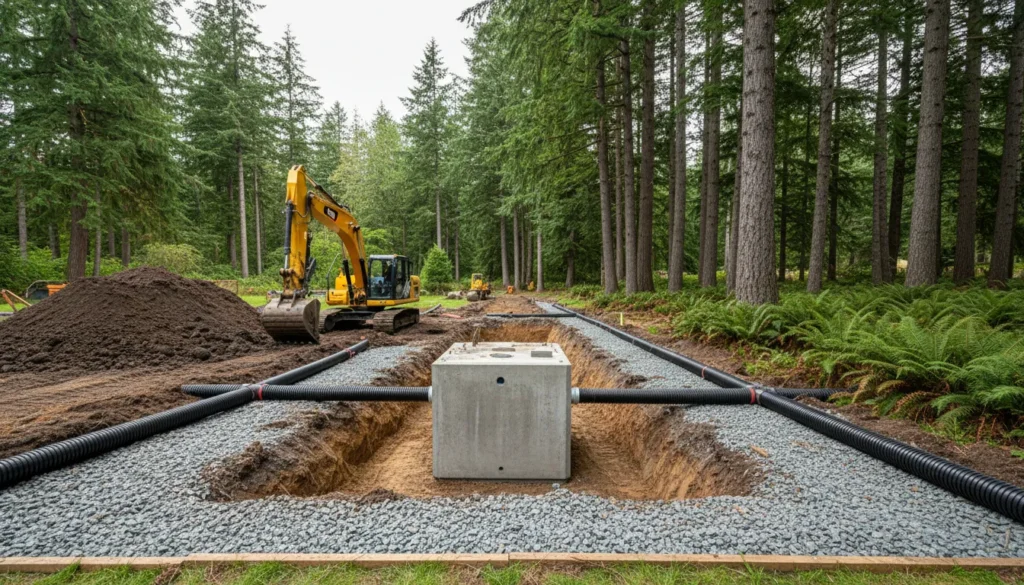
Our crew installs the replacement system – tank, distribution box, drain field or alternative system components, risers, and access ports – and schedules the county inspection. After sign-off, we deliver certified as-built drawings and the permit record.
Never Miss a Pump Date Again
We offer annual and biannual scheduled pumping plans for residential and commercial customers – set it once, stay consistently maintained.
Brands We Use
Septiclear Inc uses NSF/ANSI-compliant, professionally-sourced components from manufacturers recognized by Oregon DEQ and local county health departments.







We select components based on system type, site conditions, and the manufacturer specifications your county health department accepts.
Other Services
Full septic system replacement
Complete septic system replacement
Residential septic system replacement
Commercial septic system replacement
Full septic replacement service
Conventional gravity system replacement
Mound system replacement
ATU septic system replacement
Failed drain field replacement
Leach field replacement near me
Septic replacement contractor
Licensed septic installer Oregon
Septic system replacement cost
Failed septic system repair or replace
County permit septic replacement
Ready to schedule your service?
Prompt arrival windows, transparent pricing, no surprise fees – guaranteed.
FAQs About Full Septic System Replacement
How do I know I need a full replacement instead of a repair?
A repair handles localized failures – a cracked baffle, a clogged filter, a failed pump. Replacement is the right call when the drain field has permanently failed, the tank is structurally compromised beyond patching, the system no longer meets current regulatory standards, or a combination of problems across multiple components makes repair economically equivalent to replacement. Our site evaluation will confirm which applies to your system.
How long does a full replacement take?
Most residential replacements take two to four days of active on-site work from excavation to final grading. The full project timeline, including permit approval from county health departments, typically runs two to four weeks from the initial site visit. Permit processing times vary by county and by workload at your local health department.
What does a full septic system replacement cost?
In Oregon, costs depend on system type, site conditions, lot access, and local permit fees. As a general guide: conventional gravity-fed systems typically range from $8,000 to $15,000; mound systems from $15,000 to $30,000; and aerobic treatment units from $12,000 to $25,000. County permit fees, soil testing costs, and tank material selection all affect the total. We provide a written, site-specific estimate before any work begins.
Does the old system need to be decommissioned?
Yes. Under Oregon DEQ OAR 340-071, failed tanks must be pumped, cleaned, and properly decommissioned before the site is prepared for a new installation. We handle decommissioning as a standard part of every full replacement project.
Can the new system go in the same location as the old one?
Sometimes. If the soil in the original drain field location has recovered and setback requirements can still be met, the new system may be installed in the same general area. In many cases, however, Oregon DEQ and county health departments require the new drain field to be sited in an undisturbed area to avoid the compacted, contaminated soil left by the old system.
What does the workmanship warranty cover?
Every full septic system replacement is backed by a 2-year written workmanship warranty covering all installation labor and component placement by our crew. If a defect in our workmanship causes a failure within that period, we return and correct it at no charge. Manufacturer warranties apply separately to installed components such as pumps, tanks, and control panels.
How long will a replacement septic system last?
Most conventional replacement systems are designed for 25 to 40 years of functional life with proper maintenance – routine pumping every 3 to 5 years, periodic inspection, and conservative water usage habits. Aerobic treatment units and pressurized alternative systems have shorter intervals for electrical component maintenance. Call (503) 542-9660 to schedule your site evaluation and get a written estimate for your replacement.
Ready to Work With Us?
We’d love to hear from you. Whether you need routine service, a system inspection, or emergency help today, our team is ready.