
Septic Pump Repair and Replacement
Keep your septic system running with professional pump repair and replacement services built for reliability. Homeowners and businesses across Oregon count on Septiclear Inc to service all types of septic systems – from standard gravity-fed setups to advanced aerobic treatment units.
Full System Inspection Every Visit
We check baffles, walls, and drain field signs – not just pump and leave
Emergency & Scheduled Service
Same-day emergency response for residential, commercial, and industrial
Written Report After Every Job
Compliant Effluent Disposal
Hauled and disposed at state-approved facilities – groundwater protected
Prompt Arrival Windows
Vetted Local Partners Statewide
All 36 Oregon counties covered through licensed local service partners
5 Highlights on Septic Pump Repair and Replacement
Full pump diagnostics on every visit
Septiclear Inc tests the motor, impeller, float switch, capacitor, and control panel before recommending any repair or replacement, so you get an accurate picture of what’s actually failing and which issues require immediate attention.
Same-day pump replacement available
When a failed pump backs up effluent into your home or floods the pump chamber, fast action matters. Our crews carry submersible pumps, force main components, and wiring supplies on every truck.
Certified installation for all system types
We repair and replace pumps in aerobic units, mound systems, drip systems, dosing chambers, and holding tanks, covering the full range of residential and commercial septic configurations.
Control panel and alarm system service
Beyond the pump itself, we inspect the relay, timer, circuit breaker, conduit, and float switch wiring to confirm the entire electrical system is operational and compliant.
Licensed, permitted, and fully insured
Every pump repair and replacement Septiclear Inc performs meets local health department and environmental regulations, keeping your system certified and your property protected.
Across Oregon since founding
Trusted in the Pacific Northwest
All Oregon health & env. codes
Need service today? We're ready.
Call now for same-day emergency pumping or schedule your next routine visit.
Why Choose Our Septic Pump Repair and Replacement
Septiclear Inc has been servicing septic pumps across Oregon since 2012, completing hundreds of pump repairs and replacements in Multnomah, Clackamas, Washington, Yamhill, Columbia, and Marion counties. Our technicians are licensed, certified, and trained on the full range of pump systems – from basic submersible units in residential wet wells to complex dosing pumps in commercial aerobic systems.
We don’t guess. Every septic pump repair starts with a thorough diagnostic evaluation of the motor, shaft, bearing, seal, volute, and impeller. We measure voltage, test the capacitor, check the float switch calibration, and inspect the control box wiring before we touch a single component. That process keeps repair costs accurate and prevents unnecessary replacements.
When replacement is the right call, we install top-rated pump brands matched to your system’s pressure requirements, flow rates, and chamber dimensions – in full compliance with Oregon DEQ OAR 340-071 and county health department requirements. We handle the full scope: extracting the old unit, installing the replacement, and restoring the site.
Our team also services the control panel, alarm system, and circuit breaker to make sure the entire pump assembly functions as a complete, regulated system. We pull the required permits, document the work, and leave your system fully operational and inspected.
Our pump repair and replacement work is led by Ryan Lear, an Oregon DEQ-certified septic contractor. Our technicians are certified through the National Association of Wastewater Technicians (NAWT). We back every pump installation with a 1-year workmanship warranty covering parts and labor. You get expert service, clear pricing, and a team that treats your property with care.
Certified, Insured & Compliant - Every Job, Every Time
State Licensed
Fully licensed by Oregon health & DEQ
Fully Insured
Liability & workers’ comp coverage
Approved Disposal
Licensed effluent disposal facilities only
Written Reports
Documented service record after every job
DEQ Compliant
Full Oregon environmental code compliance
Signs You Need Septic Pump Repair and Replacement
Sewage backing up into drains or toilets:
When effluent stops moving through the force main and backs up into the home, the pump has likely failed or the impeller is clogged with sludge or scum. This is a direct sign the pump chamber isn’t discharging properly.
The alarm is sounding on your control panel:
A triggered alarm on your septic control box signals that the float switch has detected a high liquid level in the dosing chamber or wet well. The pump may be inoperable, the relay may have failed, or the timer may be misconfigured. Don’t silence the alarm without diagnosing the cause.
Slow drains throughout the house:
Sluggish drains across multiple fixtures often point to a pump that’s losing pressure or cycling incorrectly. A worn motor, damaged seal, or failing capacitor can reduce flow enough to slow the entire system without triggering a full backup.
Gurgling sounds near the tank or pump chamber:
Gurgling near the septic tank inlet or outlet baffle, or around the distribution box, can indicate that the pump is struggling to move effluent through the lateral lines or perforated pipe. Blocked check valves or a cracked manifold can produce the same symptom.
Visible flooding or saturated ground near the drain field:
When the pump fails to dose effluent at the correct rate, the leach field becomes oversaturated. Compacted or flooded soil near the lateral lines, combined with odorous discharge, confirms the pump isn’t distributing effluent properly through the drip system or mound system.
Is It Time to Pump Your Tank?
Our Septic Pump Repair and Replacement Process
Inspection and Diagnosis
We start by locating the pump chamber riser and lid, then opening the inspection port to assess liquid levels, sludge accumulation, and visible damage to the pump, float switch, and wiring.
Electrical and Mechanical Testing
Our technician tests the motor, capacitor, relay, and circuit breaker using diagnostic equipment. We check the float switch range, measure voltage at the control box, and inspect the conduit and wiring for corrosion or damage.
Repair or Replacement Decision
If the motor, seal, or bearing is repairable, we complete the repair on-site. If the pump is cracked, corroded, or inoperable beyond repair, we recommend a direct replacement matched to your system’s specifications.
Pump Extraction and Installation
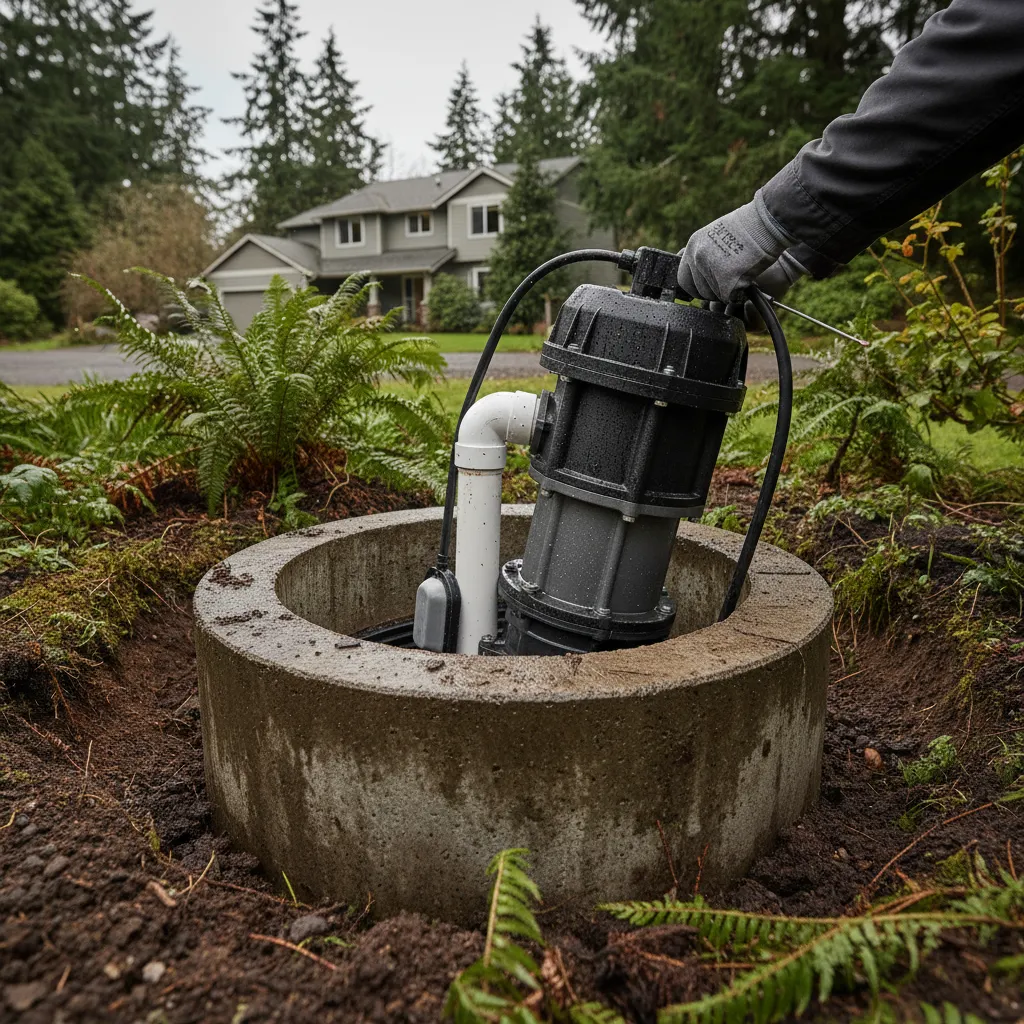
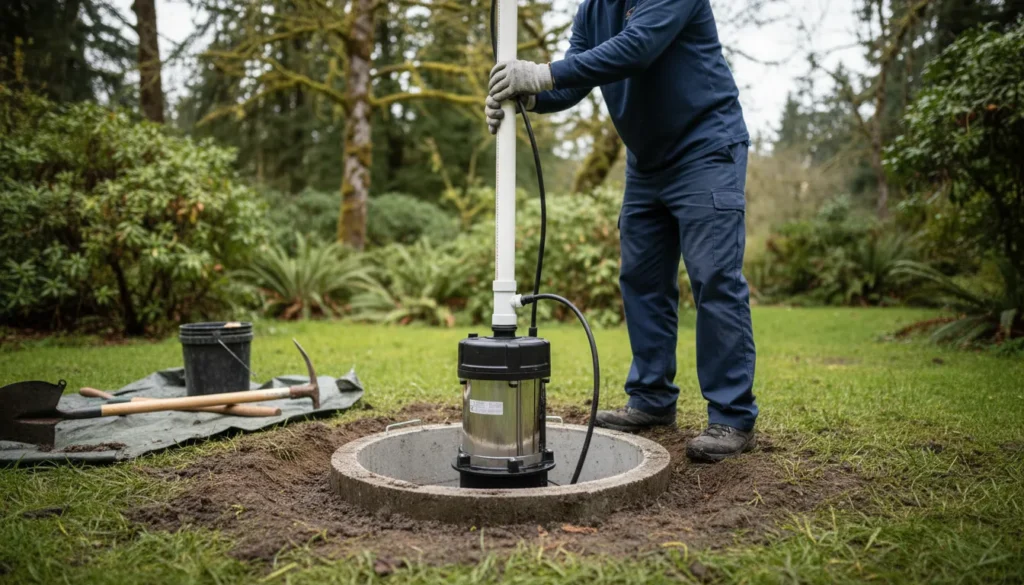
We extract the old unit from the wet well or dosing chamber, disconnect the force main and wiring, and install the new pump. We reconnect the check valve, pressure valve, and control panel, then test the full system.
System Verification and Documentation
We run the pump through a full cycle, confirm the alarm and float switch are calibrated, and verify effluent is flowing correctly through the distribution box and lateral lines. We document the work and provide a service report.
Never Miss a Pump Date Again
We offer annual and biannual scheduled pumping plans for residential and commercial customers – set it once, stay consistently maintained.
Brands We Use
Septiclear Inc installs and services pump equipment from the most reliable manufacturers in the septic industry:









We only install pumps and control components that meet manufacturer specifications and local regulatory standards.
Other Services
Septic pump repair
Septic pump service
Submersible effluent pump repair
Septic pump replacement
Replace septic pump
Dosing pump installation
Septic pump repair near me
Local septic pump technician
Float switch and control panel repair
Aerobic septic pump repair
Aerobic unit pump replacement
Septic alarm and relay service
Mound system pump replacement
Drip system pump repair
Force main and check valve repair
Ready to schedule your service?
Prompt arrival windows, transparent pricing, no surprise fees – guaranteed.
FAQs About Septic Pump Repair and Replacement
What does a septic pump do?
A septic pump moves treated effluent from the septic tank, pump chamber, or dosing chamber through the force main and into the drain field, leach field, or drip system. In systems that require active pumping – such as mound systems, drip systems, and aerobic treatment units – the pump ensures proper distribution of wastewater. Without a functioning pump, effluent can’t distribute properly and the system backs up.
When does a septic pump need to be replaced?
Most submersible septic pumps last 5 to 15 years depending on usage, maintenance, and water quality. A pump needs replacement when the motor burns out, the impeller cracks, the seal fails, or the unit becomes inoperable despite electrical repairs.
Why is my septic alarm going off?
The alarm signals that the float switch has detected a high liquid level in the wet well or dosing chamber. Common causes include a failed pump, a tripped circuit breaker, a faulty relay, or a clogged check valve blocking discharge.
How does Septiclear Inc diagnose a pump problem?
We test the motor, capacitor, float switch, and control panel wiring using diagnostic tools. We also inspect the impeller, seal, and volute for physical damage and check the force main and check valve for blockages.
Can a septic pump be repaired instead of replaced?
Yes. If the capacitor, float switch, relay, or wiring is the issue, we repair the specific component. Our technicians walk you through both options and explain the cost difference. Full replacement is only recommended when the motor, shaft, or pump housing is damaged beyond repair.
Does Septiclear Inc pull permits for pump replacement?
Yes. We pull all required permits under Oregon DEQ OAR 340-071 and document every installation to keep your system compliant with local health and environmental regulations.
Does Septiclear Inc offer a warranty on repair work?
Yes. We back every pump installation with a 1-year workmanship warranty covering parts and labor. Manufacturer warranties apply to installed pump units and control panel components and may extend beyond that period. Ask about specific warranty coverage when we provide your written estimate.
How long does a pump replacement take?
Most residential pump replacements take 2 to 4 hours from excavation to system verification, depending on access, chamber depth, and electrical work required. To schedule service, contact our team at (503) 542-9660 or [email protected].
Ready to Work With Us?
We’d love to hear from you. Whether you need routine service, a system inspection, or emergency help today, our team is ready.