
Septic System Repair
Professional septic system repair services that restore function, protect your property, and keep your system running safely. Call (503) 542-9660 – Septiclear Inc delivers complete repair solutions for all your septic needs across Oregon.
Full System Inspection Every Visit
We check baffles, walls, and drain field signs – not just pump and leave
Emergency & Scheduled Service
Same-day emergency response for residential, commercial, and industrial
Written Report After Every Job
Compliant Effluent Disposal
Hauled and disposed at state-approved facilities – groundwater protected
Prompt Arrival Windows
Vetted Local Partners Statewide
All 36 Oregon counties covered through licensed local service partners
5 Highlights on Septic System Repair
Fast diagnosis, faster repairs
Septiclear Inc uses camera scoping and electronic locators to pinpoint cracked tanks, collapsed lateral lines, and failed distribution boxes without unnecessary excavation – including hidden damage beneath slabs, driveways, and landscaping.
Full-system repair coverage
We repair concrete tanks, fiberglass tanks, inlet and outlet baffles, effluent filters, lift pumps, grinder pumps, and perforated drain field pipes. Our installation services extend to new pumps, risers, filters, and control panels.
Licensed and permitted work
Every septic system repair we complete meets local health department requirements, and we pull all necessary permits before work begins.
Drain field restoration included
We assess biomat buildup, soil saturation, and percolation failure in leach fields and mound systems, then repair or rehabilitate the soil absorption system directly.
Emergency repair response
Backed-up sewage, flooded drain fields, and collapsed inlet baffles don’t wait for business hours – Septiclear Inc responds when your system fails. Call (503) 542-9660 any time.
Across Oregon since founding
Trusted in the Pacific Northwest
All Oregon health & env. codes
Our Septic System Repair Services:
Why Choose Our Septic System Repair
Septiclear Inc has been repairing septic systems across Oregon since 2012, serving Multnomah, Clackamas, Washington, Yamhill, Columbia, and Marion counties. Our certified operators, licensed contractors, and experienced technicians bring hands-on experience with conventional systems, aerobic treatment units, pressure distribution systems, chamber systems, and mound systems across residential and commercial properties.
We don’t guess. We camera-scope the tank, inspect the baffles, probe the drain field, and run a dye test before we recommend any repair. That diagnostic process means you get an accurate repair scope – not an oversized job that costs more than it should.
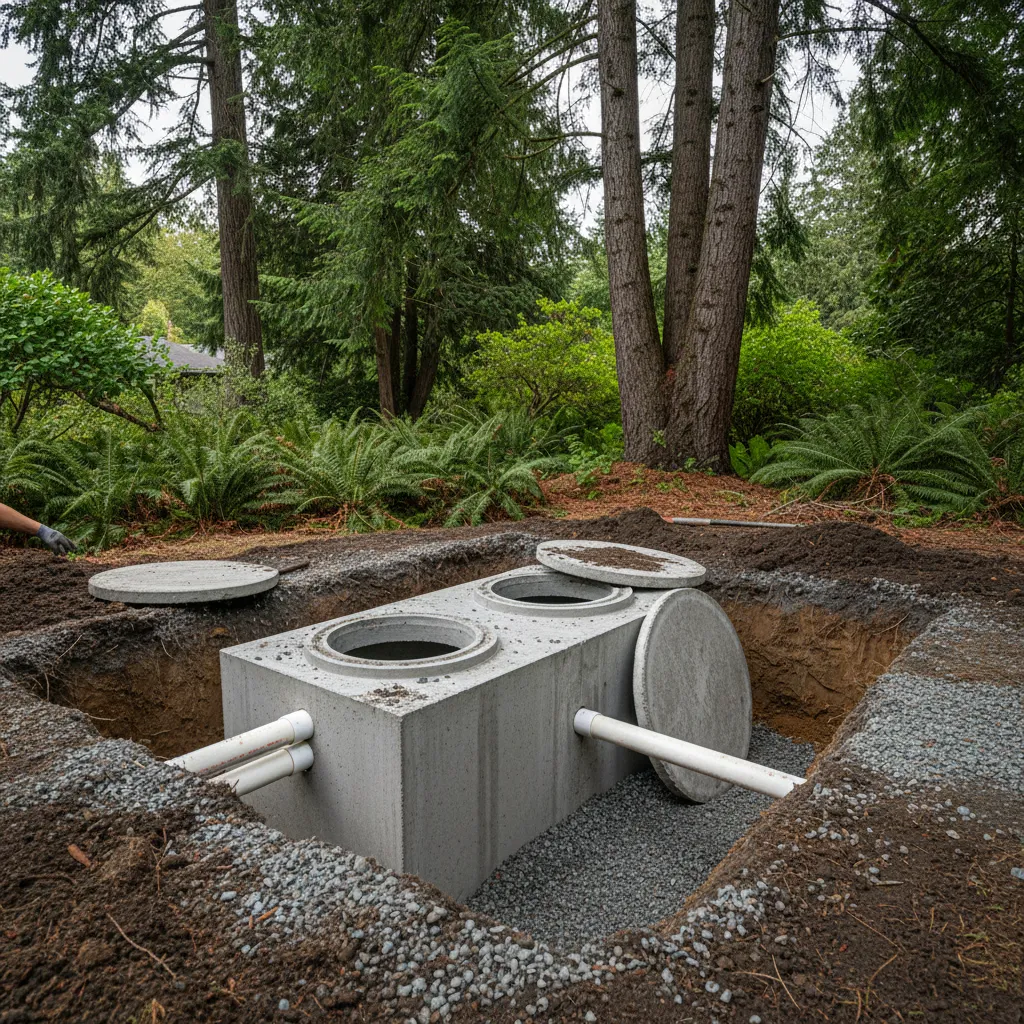
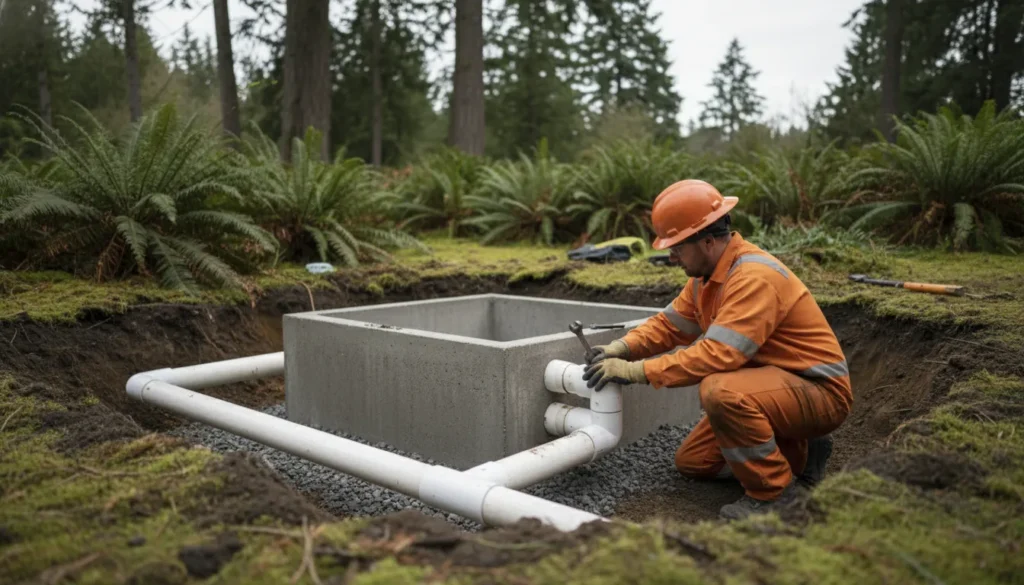
Our repair work covers the full system – in compliance with Oregon DEQ OAR 340-071 and all applicable county health department requirements. We patch cracked concrete tanks, reline deteriorated fiberglass tanks, replace corroded outlet baffles, rebuild distribution boxes, and restore collapsed perforated pipe in leach fields. When a lift pump or float switch fails, we replace it with a tested, compatible unit and verify the control panel and alarm function correctly before we leave.
Every repair comes with a written inspection report. We document the condition of your septic tank, drain field, and all accessible components so you have a clear record for the health department, your property records, or a future real estate transaction.
Our repair work is led by Ryan Lear, an Oregon DEQ-certified septic contractor. Our team is certified through the National Association of Wastewater Technicians (NAWT) and carries full liability insurance. We are licensed, insured, and certified – and we stand behind every repair we complete. Call (503) 542-9660 to schedule service.
Certified, Insured & Compliant - Every Job, Every Time
State Licensed
Fully licensed by Oregon health & DEQ
Fully Insured
Approved Disposal
Licensed effluent disposal facilities only
Written Reports
Documented service record after every job
DEQ Compliant
Full Oregon environmental code compliance
Signs You Need Septic System Repair
Sewage backing up into drains or toilets:
A backed-up septic system is the clearest sign of a failure. Slow drains throughout the house, gurgling pipes, and sewage surfacing at floor drains or backing up through faucets and fixtures point to a blocked inlet baffle, a full tank, or a collapsed lateral line that needs immediate repair.
Wet or soggy ground over the drain field:
A saturated leach field means effluent isn’t percolating through the soil properly. This happens when biomat clogs the perforated pipe, the soil becomes compacted and impermeable, or the distribution box fails and overloads one section of the field. Standing water over a drain field is a repair situation, not a maintenance one.
Strong odors near the tank or yard:
Odorous gases escaping from the ground or from indoor drains indicate a cracked tank, a failed outlet baffle, or a broken cleanout plug. Untreated effluent reaching the surface carries biological and bacterial contamination that requires fast repair.
Unusually green or lush grass over the leach field:
Grass growing faster and greener directly above the drain field lines signals that liquid effluent is surfacing and fertilizing the soil. That’s a leaking lateral line or a failing soil absorption system.
Alarm or control panel alerts on an aerobic treatment unit:
A triggered float switch alarm, a blower that’s stopped running, or a compressor fault on an aerobic treatment unit means the system isn’t treating wastewater. Ignoring those alerts leads to untreated sewage discharge and potential regulatory violations.
Hidden damage within the plumbing system:
A slow leak at a tank fitting, a crack in the inlet pipe, or a corroded connection can go undetected until effluent backs up or the yard becomes saturated. Regular inspections catch hidden problems before they turn into costly emergencies.
Is It Time to Pump Your Tank?
Our Septic System Repair Process
Locate and access the system
We use an electronic locator and probe to find the septic tank, distribution box, and drain field lines. We expose the tank lid, riser, and access ports without unnecessary digging.
Inspect and diagnose
We camera-scope the inlet and outlet baffles, check the effluent filter, measure sludge and scum layers, and assess the condition of the tank walls. We probe the drain field and run a dye test to trace effluent flow through the system.
Pump and clean
We pump the tank using a vacuum truck, remove accumulated sludge and scum, and flush the tank interior before beginning any structural repair work. Drain cleaning of inlet and outlet lines is completed when blockages are present.
Repair the identified components
We record sludge and scum measurements, note baffle and tank condition, document any findings that need follow-up, and provide a written service reportTest and document. We run water through the system, verify flow through the drain field, and confirm all alarms and float switches operate correctly. We provide a written inspection report and maintenance recommendations before we leave the site.. All waste is transported to a licensed Oregon treatment facility.
Test and document
We run water through the system, verify flow through the drain field, and confirm all alarms and float switches operate correctly. We provide a written inspection report and maintenance recommendations before we leave the site.
Never Miss a Pump Date Again
We offer annual and biannual scheduled pumping plans for residential and commercial customers – set it once, stay consistently maintained.
Brands We Use
Septiclear Inc sources repair components from trusted, industry-proven manufacturers to ensure every septic system repair holds up long-term.






We use manufacturer-specified parts for every repair.
Other Services
Septic system repair
Septic tank repair
Drain field restoration
Septic repair service
Fix septic system
Leach field repair
Broken septic system repair
Septic line repair
Outlet baffle replacement
Emergency septic repair
Septic system failure repair
Effluent filter replacement
Residential septic repair
Commercial septic repair
Soil absorption system repair
Pipe repair
Drain cleaning
Installation services
Ready to schedule your service?
Prompt arrival windows, transparent pricing, no surprise fees – guaranteed.
FAQs About Septic System Repair
What does septic system repair include?
Septic system repair covers any failed or damaged component in the system – cracked tanks, broken baffles, clogged effluent filters, collapsed lateral lines, failed lift pumps, damaged distribution boxes, and saturated drain fields. The scope depends on what the inspection and camera-scope reveal. We provide a written estimate before any work begins.
When do I need a repair vs. a full replacement?
A repair works when the damage is localized – a cracked baffle, a failed pump, or a single collapsed pipe section. Replacement becomes necessary when the tank has structurally deteriorated beyond patching, the drain field has failed completely, or the system design no longer meets current Oregon DEQ OAR 340-071 and health department standards.
How long does a septic system repair take?
Most repairs take one to two days. A baffle replacement or effluent filter swap takes a few hours. Drain field repairs that require excavation and pipe replacement take longer, typically one to three days depending on the size of the system and site conditions.
Can a failing drain field be repaired without full replacement?
Yes, in many cases. Biomat buildup in a leach field can be treated and the perforated pipe cleaned or replaced in sections. Soil fracturing and aeration can restore percolation in a compacted field. A full site evaluation determines whether repair or replacement is the right path.
Does Septiclear Inc pull permits for repairs?
Yes. Any repair that involves structural work on the tank, drain field modification, or pump system replacement requires a permit from the local health department under Oregon DEQ OAR 340-071. We handle the permit process and schedule the required inspection.
Does Septiclear Inc offer a warranty on repair work?
Yes. We back our repair work with a 1-year workmanship warranty covering both parts and labor on installed components such as pumps, filters, and control panels. Manufacturer warranties may provide additional coverage. Ask about warranty specifics when we provide your written estimate.
Does Septiclear Inc handle heater installation or other plumbing services?
Our primary focus is septic system repair, but we work closely with licensed plumbers to coordinate heater installation and other plumbing needs when a repair involves the broader plumbing system. We can refer you to trusted local partners for work outside our direct scope.
How much does septic system repair cost?
Repair costs vary based on the component, the extent of the damage, and whether excavation is required. Minor repairs such as baffle replacement or effluent filter swap typically range from $200 to $800. Drain field repairs requiring excavation and pipe replacement typically range from $1,500 to $8,000 depending on the extent of damage. We provide a written estimate after the diagnostic inspection. Call (503) 542-9660 to schedule your assessment.
Ready to Work With Us?
We’d love to hear from you. Whether you need routine service, a system inspection, or emergency help today, our team is ready.