
Septic Tank Pumping
Keep your septic system running clean and trouble-free with professional septic tank pumping from Septiclear Inc. Call (503) 542-9660 to schedule service across Oregon.
Full System Inspection Every Visit
We check baffles, walls, and drain field signs – not just pump and leave
Emergency & Scheduled Service
Same-day emergency response for residential, commercial, and industrial
Written Report After Every Job
Compliant Effluent Disposal
Hauled and disposed at state-approved facilities – groundwater protected
Prompt Arrival Windows
Vetted Local Partners Statewide
All 36 Oregon counties covered through licensed local service partners
5 Highlights on Septic Tank Pumping
Full tank pump-out
Septiclear Inc removes all sludge, scum, and effluent from your tank using a commercial vacuum truck, ensuring the tank is fully evacuated rather than partially emptied.
Interior inspection included
After pumping, our technician inspects the inlet and outlet baffles, tank walls, riser seals, and effluent filter for cracks, corrosion, or deterioration that could cause problems before your next service interval.
Written service report
Every pump-out produces a written report documenting sludge depth, scum layer thickness, baffle condition, and any findings that need follow-up.
Residential, commercial, and emergency service
We pump tanks of all sizes – residential tanks from 750 to 2,500 gallons, commercial multi-compartment tanks, and systems that require emergency pumping due to active backup or overflow.
Proper disposal at licensed facilities
All waste removed from your tank is transported and disposed of at state-licensed treatment facilities in compliance with Oregon DEQ OAR 340-071.
Across Oregon since founding
Trusted in the Pacific Northwest
All Oregon health & env. codes
Our Septic Tank Pumping Services:
Need service today? We're ready.
Call now for same-day emergency pumping or schedule your next routine visit.
Why Choose Our Septic Tank Pumping
Septiclear Inc has been pumping residential and commercial septic tanks across Oregon since 2012, serving Multnomah, Clackamas, Washington, Yamhill, Columbia, and Marion counties. Our certified technicians use commercial-grade vacuum trucks and professional inspection equipment to complete every pump-out efficiently and thoroughly.
We don’t just pump and leave. Every service visit includes a full interior inspection of baffles, tank walls, access risers, and the effluent filter. If we find a deteriorated outlet baffle, a cracked riser, or a clogged filter, we tell you what needs attention before it causes a problem.
Septiclear Inc is fully licensed, bonded, and insured. We pump in compliance with Oregon DEQ OAR 340-071, and all waste is disposed of at state-licensed treatment facilities. No surprise fees, no unauthorized work, no cutting corners on disposal. You receive a written service report on every visit.
Our scheduling is flexible. We offer regular maintenance intervals, same-day bookings, and emergency response for active sewage backups and overflows.
Our pumping work is led by Ryan Lear, an Oregon DEQ-certified septic contractor. Our technicians are certified through the National Association of Wastewater Technicians (NAWT). Call (503) 542-9660 to schedule your pump-out.
Certified, Insured & Compliant - Every Job, Every Time
State Licensed
Fully licensed by Oregon health & DEQ
Fully Insured
Liability & workers’ comp coverage
Approved Disposal
Licensed effluent disposal facilities only
Written Reports
Documented service record after every job
DEQ Compliant
Full Oregon environmental code compliance
Signs You Need Septic Tank Pumping
Slow drains throughout the house:
When multiple fixtures drain slowly at the same time – sinks, tubs, and toilets – the problem is often a full or nearly full tank rather than a blocked drain line. A tank that’s reached capacity can’t receive new wastewater efficiently, causing backpressure throughout the system.
Sewage odors inside or outside:
A functioning septic system contains gases below ground and behind properly functioning baffles. When you smell sewage near the tank lid, cleanout access, or drain field, it often means the tank is at or near capacity and gases are escaping through the vent stack or outlet pipe.
Pooling water or wet soil above the drain field:
When the tank overflows because it hasn’t been pumped, solids migrate into the drain field and begin clogging the soil absorption layer. Wet or soggy ground above the leach field lines is one of the earliest visible signs that this is happening.
Sewage backup through drains or fixtures:
Sewage backing up through floor drains, toilets, or sinks is a clear sign the tank is full and the system is overwhelmed. This is an emergency situation requiring immediate pumping before additional damage occurs to the drain field.
Gurgling sounds from drains or toilets:
Gurgling after flushing or draining indicates pressure building in the lines from a tank that can no longer accept flow properly. This often appears before a full backup and is an early warning to schedule pumping.
It's been more than three to five years since your last pump-out:
Most residential tanks serving a family of four need pumping every three to five years. High-use households or smaller-capacity tanks may need service more frequently. If you don’t have a service record on file, your tank is likely overdue.
Is It Time to Pump Your Tank?
Our Septic Tank Pumping Process
Locate and expose the tank
Our technician locates the tank using service records or a locating device, then removes the lid or access port cover to gain full access to the tank interior.
Pre-pump inspection
Before pumping begins, our technician measures sludge depth at the bottom and scum layer thickness at the top. We inspect the inlet and outlet baffles, check the effluent filter, and look for any visible structural issues inside the tank.
Full pump-out
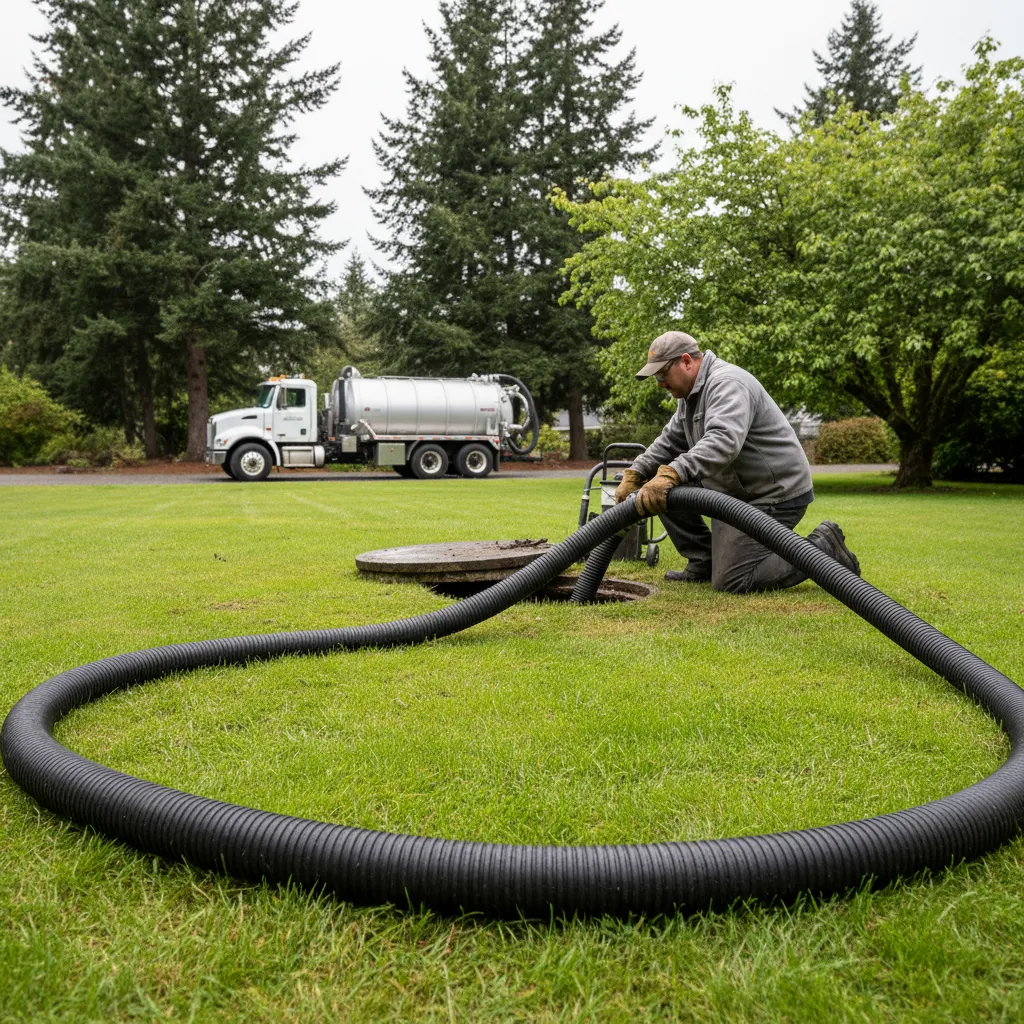
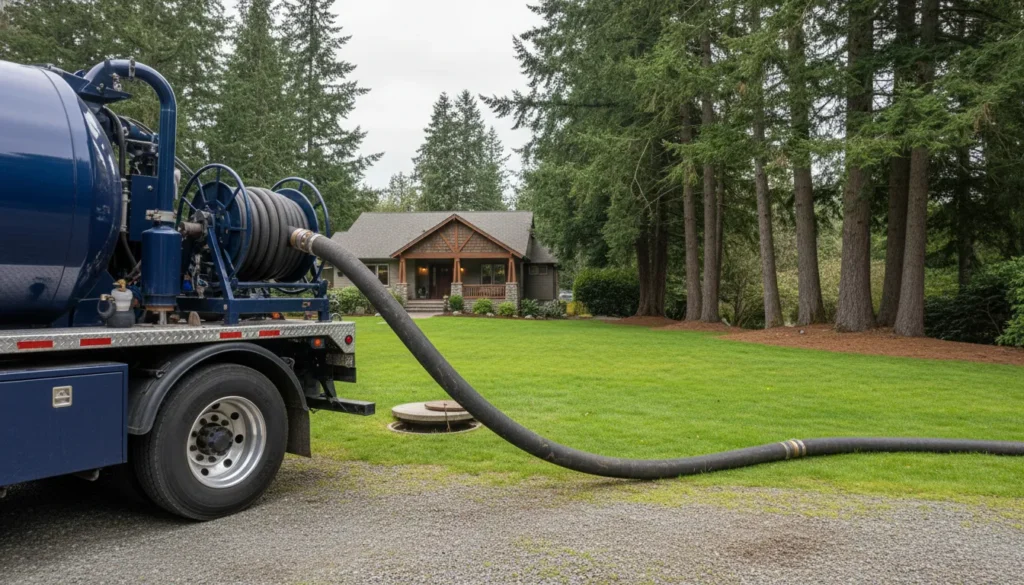
We insert the vacuum hose and remove all contents from the tank – sludge, effluent, and scum. We work the hose to break up compacted solids and ensure full evacuation rather than leaving residual material behind.
Rinse and re-inspect
After pumping, we rinse the interior walls and baffle area to remove residual solids and give us a clear view of the tank structure. We confirm baffle integrity, check riser seals, and inspect the effluent filter before replacing the lid.
Service report and documentation
We record sludge and scum measurements, note baffle and tank condition, document any findings that need follow-up, and provide a written service report. All waste is transported to a licensed Oregon treatment facility.
Never Miss a Pump Date Again
We offer annual and biannual scheduled pumping plans for residential and commercial customers – set it once, stay consistently maintained.
Brands We Use
Septiclear Inc uses professional-grade vacuum equipment and components from trusted industry manufacturers on every pump-out service.






All equipment and products meet Oregon DEQ standards.
Other Services
Septic tank pumping
Septic tank cleaning
Residential septic pumping
Emergency septic pumping
Commercial septic pumping
Septic tank emptying
Septic tank pump out service
Routine septic maintenance
Sludge removal service
Scum layer, wastewater treatment
Drain field protection, biomat prevention
Outlet baffle inspection
Septic tank inspection
Effluent filter cleaning
Septic system pumping
Ready to schedule your service?
Prompt arrival windows, transparent pricing, no surprise fees – guaranteed.
FAQs About Septic Tank Pumping
How often does my septic tank need pumping?
Most residential tanks serving a family of four need pumping every three to five years. Single-person households and large-capacity tanks may go longer; high-use households and smaller tanks may need service every two to three years. The best indicator is the sludge and scum measurements from your last pump-out. Our technician recommends a service interval based on what we find during each visit.
What does septic tank pumping cost?
Most residential septic tank pump-outs in Oregon range from $250 to $500 for standard tanks up to 1,500 gallons. Larger tanks, difficult access conditions, and emergency service may cost more. We provide a written estimate before any work begins and charge no surprise fees. Call (503) 542-9660 for a same-day assessment.
What happens during a pump-out?
We locate and expose the tank, measure sludge and scum levels, pump out all contents using a commercial vacuum truck, rinse the interior, and inspect the baffles and effluent filter before sealing the tank. You receive a written service report with all findings.
Where does the waste go?
All pumped waste is transported in sealed vacuum trucks and disposed of at state-licensed treatment facilities under Oregon DEQ OAR 340-071. We do not dispose of waste on-site or at unlicensed locations.
Can pumping fix a sewage backup?
Yes, if the backup is caused by a full tank. We pump the tank to relieve pressure and restore flow. If the backup is caused by a collapsed lateral line, a failed baffle, or a saturated drain field, pumping alone won’t resolve the underlying issue – but we’ll diagnose the cause during the visit and recommend the right next step.
What's the difference between pumping and cleaning?
Pumping removes the liquid and solid contents of the tank. Cleaning includes rinsing and scrubbing the tank interior walls to remove residual solids and biofilm that remain after pumping. We perform both as part of our standard pump-out service.
How do I schedule a pump-out?
Call (503) 542-9660 or email [email protected] to schedule service. We serve residential and commercial properties across Oregon and can typically schedule routine pump-outs within a few business days. Emergency same-day service is available for active sewage backups.
Ready to Work With Us?
We’d love to hear from you. Whether you need routine service, a system inspection, or emergency help today, our team is ready.