
Conventional Septic System Installation
Professional conventional septic system installation built to last, designed to code, and backed by licensed engineers and certified installers. Call (503) 542-9660 to schedule your site evaluation across Oregon.
Full System Inspection Every Visit
We check baffles, walls, and drain field signs – not just pump and leave
Emergency & Scheduled Service
Same-day emergency response for residential, commercial, and industrial
Written Report After Every Job
Compliant Effluent Disposal
Hauled and disposed at state-approved facilities – groundwater protected
Prompt Arrival Windows
Vetted Local Partners Statewide
All 36 Oregon counties covered through licensed local service partners
5 Highlights on Conventional Septic System Installation
Full site evaluation included
Septiclear Inc conducts soil tests, perc tests, and hydraulic capacity assessments before any excavation begins, so your system is sized and sited correctly from day one.
Licensed engineers design every system
Each conventional septic system installation is engineered to meet local health department permit requirements, setback rules, and loading rate specifications for your lot and soil type.
Precast concrete and polyethylene tanks available
We install septic tanks with inlet and outlet baffles, effluent filters, and properly sealed risers and lids to protect groundwater and meet residential and commercial code.
Gravity-fed drain field installation
Our crews excavate and backfill perforated pipe trenches in gravel aggregate, graded and sloped to distribute effluent evenly across the absorption field.
Permit and inspection coordination handled
Septiclear Inc manages the full permit process with your local permit office, schedules required inspections, and delivers a compliant, certified installation.
Across Oregon since founding
Trusted in the Pacific Northwest
All Oregon health & env. codes
Need service today? We're ready.
Call now for same-day emergency pumping or schedule your next routine visit.
Why Choose Our Conventional Septic System Installation
Septiclear Inc has been completing conventional septic system installations across Oregon since 2012, serving Multnomah, Clackamas, Washington, Yamhill, Columbia, and Marion counties. Our team includes state-licensed contractors, certified installers, and experienced soil scientists who assess each site individually – ensuring your system is designed correctly the first time. We don’t guess at soil conditions. We test, sample, and survey before we design.
Choosing the right professional septic contractor is a key factor in how reliably your system performs for decades. Our engineers produce stamped site plans that satisfy local regulations and health department requirements. Every system we install meets or exceeds the hydraulic capacity and loading rate standards for your parcel. We pull the permits, coordinate inspections, and certify compliance so you don’t have to chase paperwork.
We use professional-grade precast concrete and polyethylene septic tanks, perforated PVC lateral pipe, and properly graded gravel aggregate in compliance with Oregon DEQ OAR 340-071 and county health department standards. Our crews compact and backfill each installation to prevent settling and protect the drain field from surface damage. Every installation is backed by a 1-year workmanship warranty covering defects in labor and installation – if a defect in our work causes a failure within that period, we repair it at no charge.
Our installations are led by Ryan Lear, an Oregon DEQ-certified septic contractor. Our team is certified through the National Association of Wastewater Technicians (NAWT). When homes and businesses need a reliable, experienced service provider who treats your property with care and gets the job done right, call (503) 542-9660.
Certified, Insured & Compliant - Every Job, Every Time
State Licensed
Fully licensed by Oregon health & DEQ
Fully Insured
Liability & workers’ comp coverage
Approved Disposal
Licensed effluent disposal facilities only
Written Reports
Documented service record after every job
DEQ Compliant
Full Oregon environmental code compliance
Signs You Need Conventional Septic System Installation
You're building on a lot with no municipal sewer connection:
New residential and commercial construction in rural or suburban areas without access to a municipal sewer line requires an on-site waste management system. A conventional septic system installation is the standard solution for permeable soil sites that pass a perc test and meet setback requirements from groundwater, wells, and property lines.
Your existing cesspool or seepage pit is failing:
Older cesspools and seepage pits don’t treat wastewater the way a properly engineered management system does. If your cesspool is clogged, saturated, or noncompliant with local regulations, your health department may require you to decommission it and install a conventional septic system in its place.
Your current system is beyond repair:
A drain field with heavy biomat, corroded or deteriorated pipe, and compacted soil that no longer infiltrates effluent can’t be restored by pumping or jetting alone. When the absorption field has failed and the tank is structurally compromised, a full system replacement is the right call.
You're replacing a holding tank or vault:
Holding tanks require frequent pumping and hauling. They’re expensive to maintain and don’t treat waste on-site. Converting to a conventional septic system with a gravity-fed leach field reduces long-term costs, improves system performance, and brings your property into compliance.
Your perc test results support a conventional system:
If your soil scientist confirms that your site has permeable, unsaturated loam or sandy soil with an acceptable perc rate and adequate depth to bedrock and groundwater, a conventional gravity-fed septic system installation is the most cost-effective and code-compliant option available.
Is It Time to Pump Your Tank?
Our Conventional Septic System Installation Process
Site Evaluation and Soil Testing.
We survey your lot, collect soil samples, and conduct a perc test to determine hydraulic capacity and loading rate. Our soil scientist documents local soil conditions, depth to bedrock, and groundwater levels to ensure we design a system tailored to your land.
System Design and Permitting
Our licensed engineer designs a conventional septic system sized to your property’s daily wastewater flow. We produce a stamped site plan and submit it to the health department permit office for approval, ensuring full compliance with local regulations and Oregon DEQ OAR 340-071.
Excavation and Site Preparation
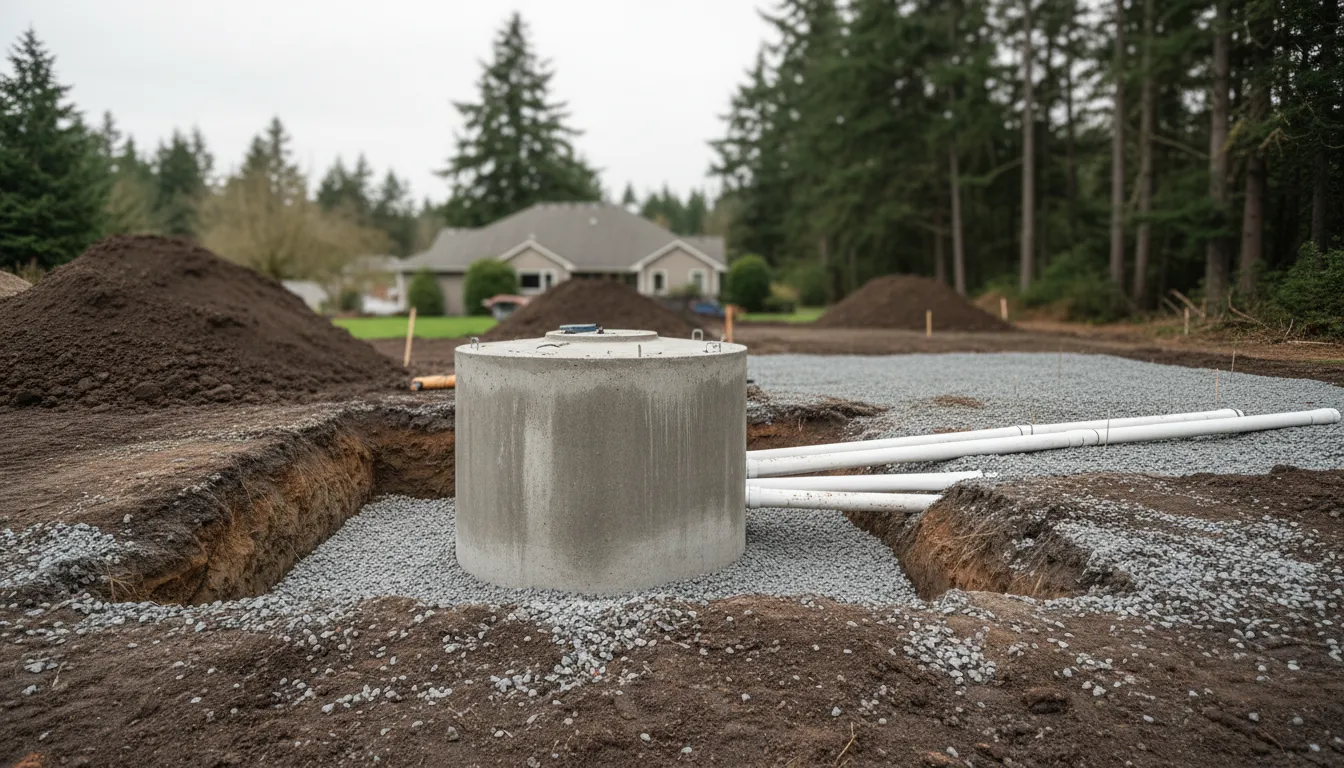
Our crew performs land clearing and site preparation, excavates the tank location and trench lines, and marks and protects all gas, sewer, and utility lines before any installation work begins.
Septic Tank Installation
We set the precast concrete or polyethylene septic tank, connect the inlet and outlet baffles, install the effluent filter, and seal the risers and lids. Every component is selected for quality and durability to ensure long-term system performance.
Drain Field Construction
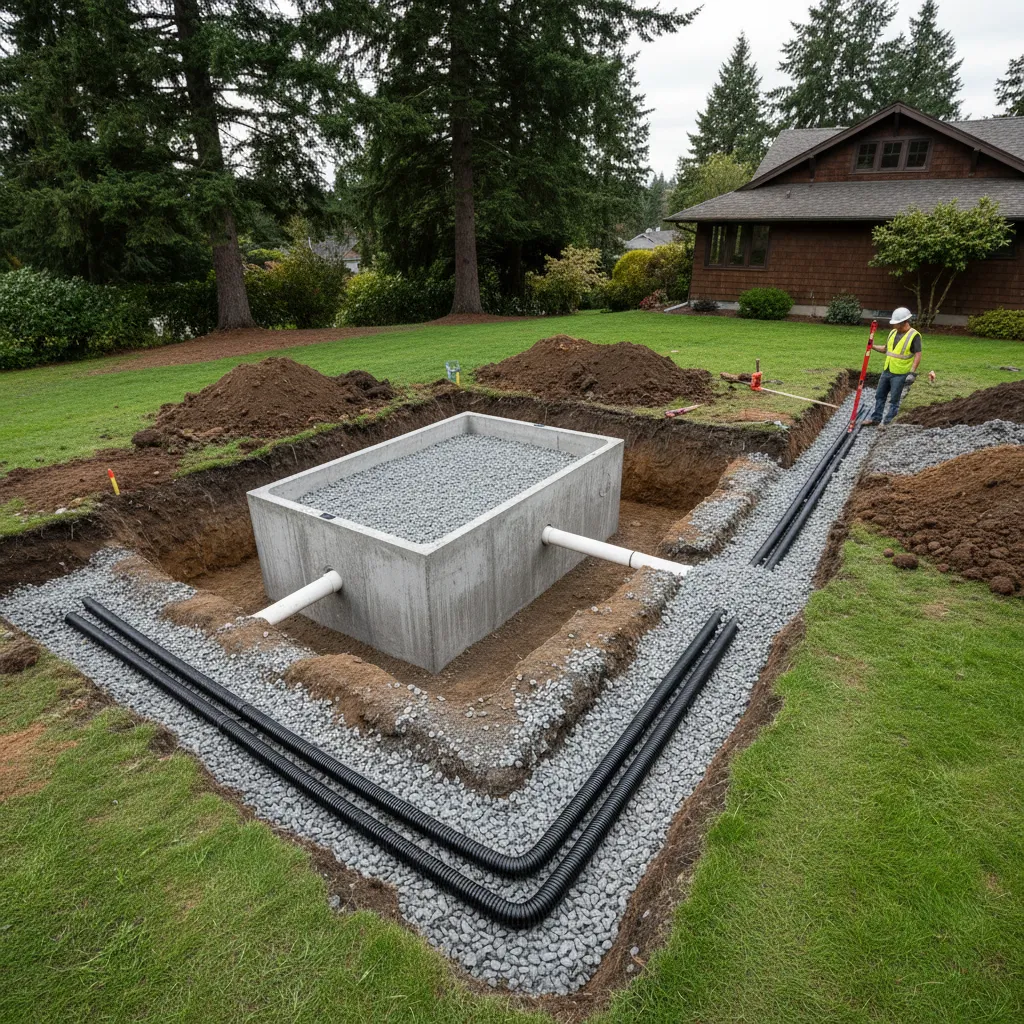
We excavate perforated pipe trenches at the engineered slope and grade, lay gravel aggregate, route the distribution box, and install perforated PVC lateral pipe across the absorption field. Proper drain field installation is essential to the system’s ability to manage effluent efficiently over time.
Backfill, Grading, and Final Inspection
We backfill and compact each trench, grade the surface to direct runoff away from the leach field, and schedule the required health department inspection. Once the system passes, we certify the installation and provide you with all permit documentation and as-built drawings.
Never Miss a Pump Date Again
We offer annual and biannual scheduled pumping plans for residential and commercial customers – set it once, stay consistently maintained.
Brands We Use
Septiclear Inc installs conventional septic systems using trusted, industry-proven brands that meet residential and commercial code requirements.






All septic system components we install are selected for structural integrity, chemical resistance, and long-term performance in buried, subsurface conditions.
Other Services
Conventional septic system installation
Septic system installation service
Drain field installation
Residential septic system installation
Home septic system installation
Septic tank installation
New septic system installation
Full septic system installation
Distribution box, perforated pipe
Septic system installation cost
Affordable septic system installation
Septic permit, health department approval
Licensed septic system installer
Certified septic contractor near me
Septic engineer, site plan, hydraulic capacity
Ready to schedule your service?
Prompt arrival windows, transparent pricing, no surprise fees – guaranteed.
FAQs About Conventional Septic System Installation
What is a conventional septic system?
A conventional septic system is a buried, gravity-fed waste management system made up of a septic tank and a drain field. Wastewater flows from the home into the tank, where solids settle as sludge and scum floats to the top. Clarified effluent exits through the outlet baffle, passes through an effluent filter, and flows into a distribution box that routes it through perforated pipe laterals buried in gravel-filled trenches. The soil absorbs and filters the effluent as it infiltrates downward.
When do I need a conventional septic system installation?
You need one when you’re building on a lot without municipal sewer access, replacing a failed or noncompliant system, or decommissioning a cesspool or holding tank. Your site must pass a perc test and meet setback requirements before we can design and permit the system.
How long does a conventional septic system installation take?
Most residential installations take two to five days from excavation to final backfill, depending on site conditions, tank size, and drain field length. Permit approval timelines from county health departments vary and can add one to four weeks before we break ground.
How deep does a septic system get installed?
Septic tanks are typically buried two to four feet below grade. Drain field trenches are usually 18 to 36 inches deep, depending on soil depth, groundwater levels, and local code requirements.
Can a conventional system work on any property?
No. Your soil must be permeable enough to pass a perc test and have adequate depth to bedrock and groundwater. Sites with clay-heavy, saturated, or impermeable soil conditions may require an alternative system type such as a mound system or drip system instead.
What factors affect the total cost?
Installation costs depend on property size, system size, local soil conditions, site preparation needs, and local permit fees. Most conventional residential septic system installations in Oregon range from $6,000 to $15,000 depending on lot size, tank capacity, drain field length, and county requirements. Septiclear Inc provides a written estimate before any work begins.
Does Septiclear Inc handle the permits?
Yes. We manage the full permit process, including soil testing, site plan submission, health department coordination, and final inspection scheduling.
What regular maintenance does a conventional system need?
Most systems need routine pumping every 3 to 5 years, annual inspections, and basic water conservation practices. Regular maintenance helps extend system life and prevents costly repairs. Septiclear Inc backs every installation with a 1-year workmanship warranty and offers maintenance services to keep your system running reliably. Call (503) 542-9660 to schedule service.
Ready to Work With Us?
We’d love to hear from you. Whether you need routine service, a system inspection, or emergency help today, our team is ready.