
Drain Field Remediation
Restore your failing drain field without the cost of full replacement.
Full System Inspection Every Visit
We check baffles, walls, and drain field signs – not just pump and leave
Emergency & Scheduled Service
Same-day emergency response for residential, commercial, and industrial
Written Report After Every Job
Compliant Effluent Disposal
Hauled and disposed at state-approved facilities – groundwater protected
Prompt Arrival Windows
Vetted Local Partners Statewide
All 36 Oregon counties covered through licensed local service partners
5 Highlights on Drain Field Remediation
Biomat elimination
Septiclear Inc targets the anaerobic biomat layer responsible for clogging perforated pipes and blocking soil absorption, restoring hydraulic flow through the treatment zone without excavating the entire leach field.
Soil fracturing technology
Our fracturing tools break up compacted soil and clay-based horizons, reopening the infiltration rate in degraded drain fields that no longer percolate effluent properly.
Restoration agent injection
We inject bacterial enzymes and bioactive restoration agents directly into the soil matrix, decomposing organic sludge buildup and reactivating the aerobic treatment zone.
Pressure distribution inspection
Our technicians inspect the distribution box, manifold, and laterals for cracks, silting, and hydraulic imbalance that cause uneven effluent loading across the drain field.
Compliant, documented results:
Every drain field remediation job includes a perk test evaluation, soil profile assessment, and written documentation confirming the system meets residential or commercial compliance standards.
Across Oregon since founding
Trusted in the Pacific Northwest
All Oregon health & env. codes
Need service today? We're ready.
Call now for same-day emergency pumping or schedule your next routine visit.
Why Choose Our Drain Field Remediation
Drain field remediation is what Septiclear Inc does every day. We don’t subcontract. Our certified technicians have been serving Oregon property owners since 2012, restoring hundreds of drain fields across Multnomah, Clackamas, Washington, Yamhill, Columbia, and Marion counties. We carry hands-on experience with conventional systems, mound systems, chamber systems, and pressure distribution systems across residential and commercial properties.
We use proven fracturing tools, hydro-jetters, and bioactive restoration agents – not guesswork. Our process starts with a full inspection of the septic tank, outlet pipe, distribution box, and laterals before we treat anything. That diagnostic step separates us from companies that apply a one-size solution to every failing drain field.
Septiclear Inc is led by Ryan Lear, an Oregon DEQ-certified septic contractor. Our technicians are certified through the National Association of Wastewater Technicians (NAWT) and follow all Oregon DEQ and local county health department regulations for subsurface wastewater treatment. We carry full liability insurance and stand behind our work with a written service guarantee.
Our drain field remediation services cost a fraction of full leach field replacement. We’ve restored hundreds of drain fields that other companies wrote off as total failures. We give you an honest assessment, a clear scope of work, and a fair price before any work begins. Call (503) 542-9660 to schedule a same-day drain field inspection.
You get a qualified team, professional equipment, and a restored drain field – without the disruption of excavation.
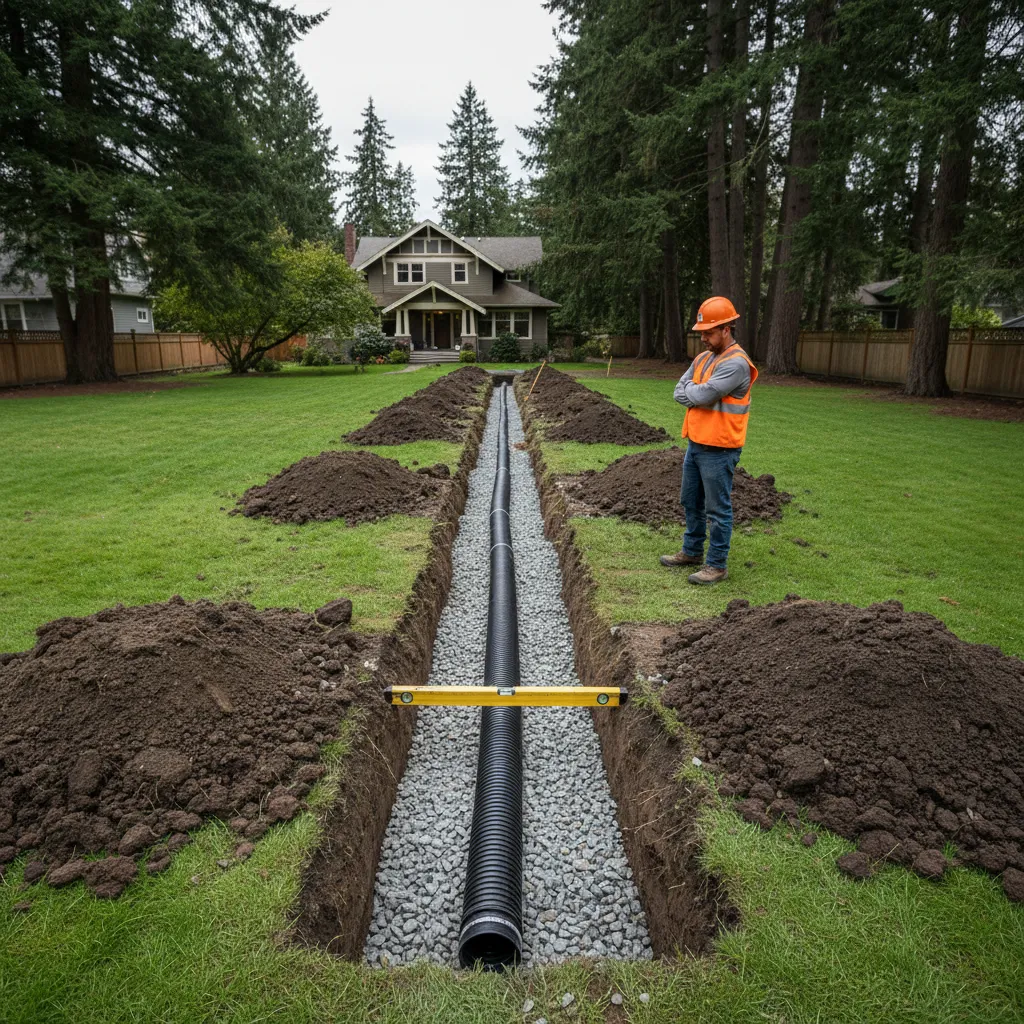
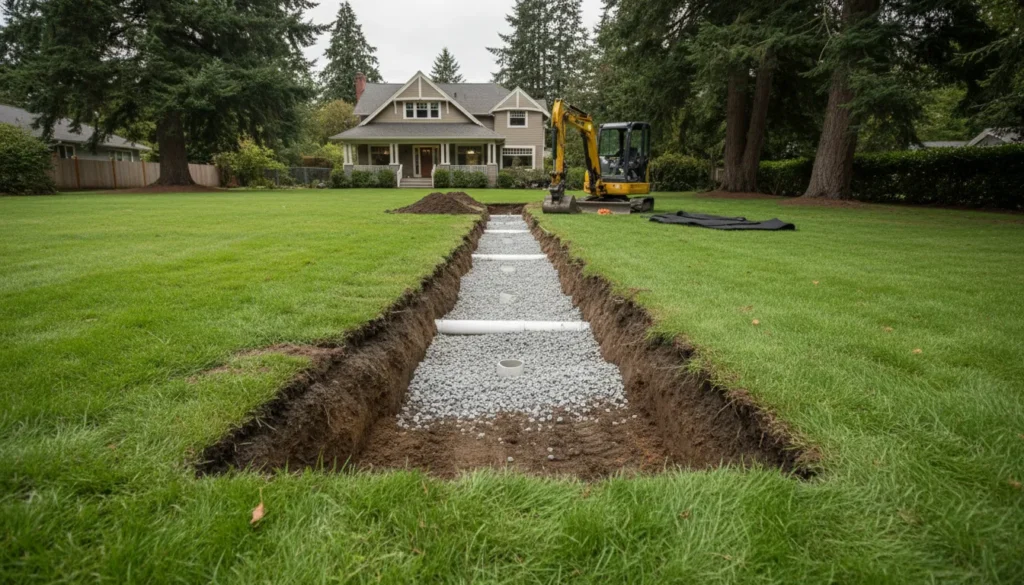
Certified, Insured & Compliant - Every Job, Every Time
State Licensed
Fully licensed by Oregon health & DEQ
Fully Insured
Liability & workers’ comp coverage
Approved Disposal
Licensed effluent disposal facilities only
Written Reports
Documented service record after every job
DEQ Compliant
Full Oregon environmental code compliance
Signs You Need Drain Field Remediation
Slow drains throughout the house:
When every fixture drains slowly and the septic tank isn’t overfull, the drain field is likely the problem. A saturated or clogged leach field can’t absorb effluent fast enough, causing hydraulic backpressure through the outlet pipe and into the home’s drainpipe network.
Wet or soggy ground above the leach field:
Standing water or persistently soggy soil directly above the laterals signals that the soil absorption system has failed to percolate effluent downward. The treatment zone is overwhelmed, and untreated wastewater is surfacing instead of filtering through the soil matrix.
Odorous smells near the drain field:
If your drain field has started to smell bad, a strong sewage odor near the leach field or mound system confirms that anaerobic decomposition is occurring at or near the surface. Biomat buildup along the perforated pipe walls and gravel bed traps effluent and produces hydrogen sulfide gas as bacteria break down organic waste without oxygen.
Sewage backing up into the home:
Blackwater or greywater backing up through floor drains or toilets is a direct sign the drain field can’t accept hydraulic load. The distribution box may be silted, the laterals may be blocked, or the soil percolation rate has dropped to near zero.
Lush, unusually green grass over the field:
A strip of thick, dark green grass growing directly above the leach field trenches indicates effluent is surfacing and fertilizing the soil from below. This is a noncompliant condition that requires immediate drain field remediation to prevent groundwater contamination.
Is It Time to Pump Your Tank?
Our Drain Field Remediation Process
Inspect and locate
We probe and map the full drain field layout, including the distribution box, manifold, laterals, and perforated pipes. We use inspection ports and cleanouts to assess flow, check for sludge accumulation, and identify blocked or collapsed sections.
Pump and flush the septic tank
We pump the septic tank to remove sludge and scum, then flush the outlet pipe and inlet to the distribution box. This clears the hydraulic path before we treat the drain field itself.
Hydro-jet and unclog laterals
Our hydro-jetter performs thorough cleaning of perforated pipes and the gravel bed, clearing biomat buildup, silting, and accumulated organic matter. This restores flow through the laterals and prepares the soil matrix for restoration agent injection.
Fracture and aerate the soil
We use fracturing tools to break up compacted, clay-based, or impermeable soil horizons. This reopens the infiltration rate and allows effluent to percolate and filter through the treatment zone again.
Inject restoration agents
We inject bacterial enzymes and bioactive agents into the soil absorption system to decompose residual biofilm and restore aerobic conditions in the drain field.
Test and document
We run a perk test, evaluate the hydraulic load, and provide written documentation confirming the drain field is restored and compliant.
Never Miss a Pump Date Again
We offer annual and biannual scheduled pumping plans for residential and commercial customers – set it once, stay consistently maintained.
Brands We Use
Septiclear Inc uses trusted, professional-grade products and equipment for every drain field remediation job. These brands are recognized across the septic system services industry for performance and reliability.





All restoration agents, bacterial treatments, and mechanical equipment are applied by licensed technicians following manufacturer specifications and local regulatory guidelines.
Other Services
Drain field remediation
Leach field restoration
Soil absorption system repair
Drain field repair
Failed drain field fix
Septic drain field treatment
Drain field remediation services
Drain field rehabilitation
Biomat removal drain field
Professional drain field remediation
Drain field restoration service
Septic system drain field repair
Affordable drain field remediation
Drain field remediation cost
Drain field percolation restoration
Ready to schedule your service?
Prompt arrival windows, transparent pricing, no surprise fees – guaranteed.
FAQs About Drain Field Remediation
What is drain field remediation?
Drain field remediation is the process of restoring a failed or degraded leach field so it can absorb and treat effluent again. It involves clearing biomat buildup, fracturing compacted soil, flushing perforated pipes, and injecting bacterial restoration agents into the soil matrix.
When do I need drain field remediation?
You need drain field remediation when your leach field shows signs of failure – slow drains, sewage odors, soggy ground above the laterals, or sewage backing up into the home. The sooner you act, the better the outcome. A partially failed drain field responds better to remediation than a fully saturated one.
Why choose remediation over replacement?
Full drain field replacement requires excavating the existing trench system, disposing of contaminated gravel and soil, and installing new laterals and aggregate. Remediation restores the existing system at a fraction of that cost – often 60 to 80 percent less – with no major excavation required.
How does drain field remediation work?
Our technicians inspect, flush, hydro-jet, fracture, and treat the drain field using professional equipment and bioactive restoration agents. The process reopens the infiltration rate, eliminates biomat, and reactivates aerobic bacterial activity in the treatment zone – so the system works the way it was designed to.
Can all drain fields be remediated?
Most drain fields respond well to professional remediation, especially when the failure is caused by biomat buildup, compacted soil, or hydraulic overload. Drain fields with collapsed pipes, severely degraded soil horizons, or structural damage to the distribution box may require partial or full replacement. We assess every system before recommending a course of action.
Does drain field remediation last?
Yes. A properly remediated drain field, combined with regularly scheduled septic tank pumping and proper maintenance, can perform reliably over time. We recommend setting up a maintenance schedule with annual inspections to monitor the soil absorption system and catch early signs of biomat or sludge accumulation.
Ready to Work With Us?
We’d love to hear from you. Whether you need routine service, a system inspection, or emergency help today, our team is ready.